
Caldo galego or simply caldo (in Galician), also known as caldo gallego (in Spanish), meaning literally “Galician broth”, is a traditional soup dish from Galicia. It is essentially a regional derivative (with added beans and turnip greens) of the very similar caldo verde, the traditional soup dish of neighbouring Portugal.
https://en.wikipedia.org/wiki/Caldo_galego
We’re going back to Spain for todays post. Caldo Gallego, (pronounced kal·dow gah·yeh·go) which translates to Galician broth in English, is a soup that originated in Galicia, which is the northwestern part of Spain, basically the bit north of Portugal that actually touches the west coast of the Iberian Peninsula.
Caldo Gallego contains beans, smoked pork, chorizo, potatoes, turnips and some variety of greens, traditionally the leaves from the turnips. It’s a close cousin to Portugal’s famous caldo verde, or green soup.
In modern times this soup has spread across Spain and the Spanish diaspora. Several of the recipes I looked at came from Cubans, who of course put their own spin on it (I think the green pepper in my recipe snuck in from the Cuban recipes).
Honestly, I was a little disappointed with this dish. For now I’m blaming low quality ingredients, until I have a chance to try it again and see if I can redeem it. It sounds delicious, but it came out tasting kind of flat. I tried a different brand of chorizo, because the one store in town that used to carry genuine Spanish chorizo now only offers it in pre sliced packages at the deli for something like $12 for two ounces, so I went to Amazon and thought the Iberia brand looked like it might be good. I should have stuck with Palacios. I didn’t think it was possible for chorizo to be basically flavorless.
On top of that, somehow my ham hock didn’t impart much flavor to the broth either. I was expecting chorizo and ham hock to impart a nice smoky flavor to the broth, but somehow that was lacking. I guess I should have used a higher ratio of stock to water. (At first I thought that 17 cups of liquid was way too much, but it reduced somewhat, and with 9 cups of leafy greens added it turned out to be just about the perfect quantity.
I also used only 2 cans of beans, which in retrospect is probably a little low compared to what you would get from 1 lb. of dry beans.
As I said traditionaly the greens from the turnips that go in the soup are used, but just about any hearty green can be substituted. I used both turnip greens and kale, which made for a soup that was pretty heavy on the greens. You could just use one or the other if you prefers less leaves in your soup.
I have tweaked the recipe slightly to account for those findings.






Caldo Gallego
Serves: 8
Prep: 1 hour
Cook: 1:45
Total 2:45, plus soaking time if using dry beans.
3 15 oz. cans cannellini beans, with liquid
OR
1 lb. dried navy beans
OR
1 lb dried cannellini beans
2 Tablespoons olive oil
1 medium onion, diced small
1 small green bell pepper, diced
2 links Spanish chorizo, sliced
1 smoked ham hock
OR
2 thick slices smoked ham, diced
5-6 cloves garlic, minced
1-2 bay leaves
1 ½ teaspoons sweet Spanish paprika
12 cups chicken stock
5 cups water
3 medium potatoes, diced
2 medium turnips, diced
5 ½ cups turnip greens, chopped
AND/OR
4 cups kale
1 teaspoon salt, or to taste
Black pepper to taste
Optional:
1 ⅛ teaspoon dried oregano
2 cups collard greens, chopped
1 large piece salted pork
1 bunch Swiss chard, chopped
If using dry beans, pick over the beans and remove any bad beans or foreign objects. Rinse, drain, and cover with fresh water. Leave to soak overnight.
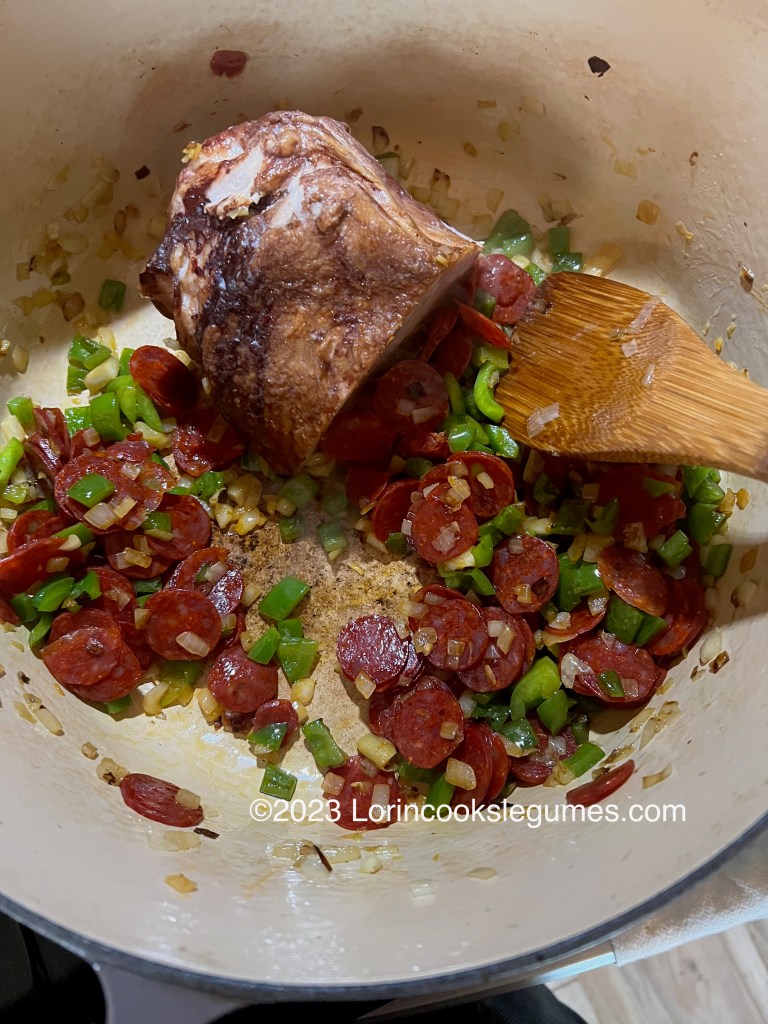
Heat olive oil in a heavy bottomed soup pot over medium heat. Add the onion and bell pepper and sauté until soft, about 10 minutes.
Add the chorizo and ham hock or diced ham, and continue to sauté until chorizo just begins to brown, about 5 minutes.
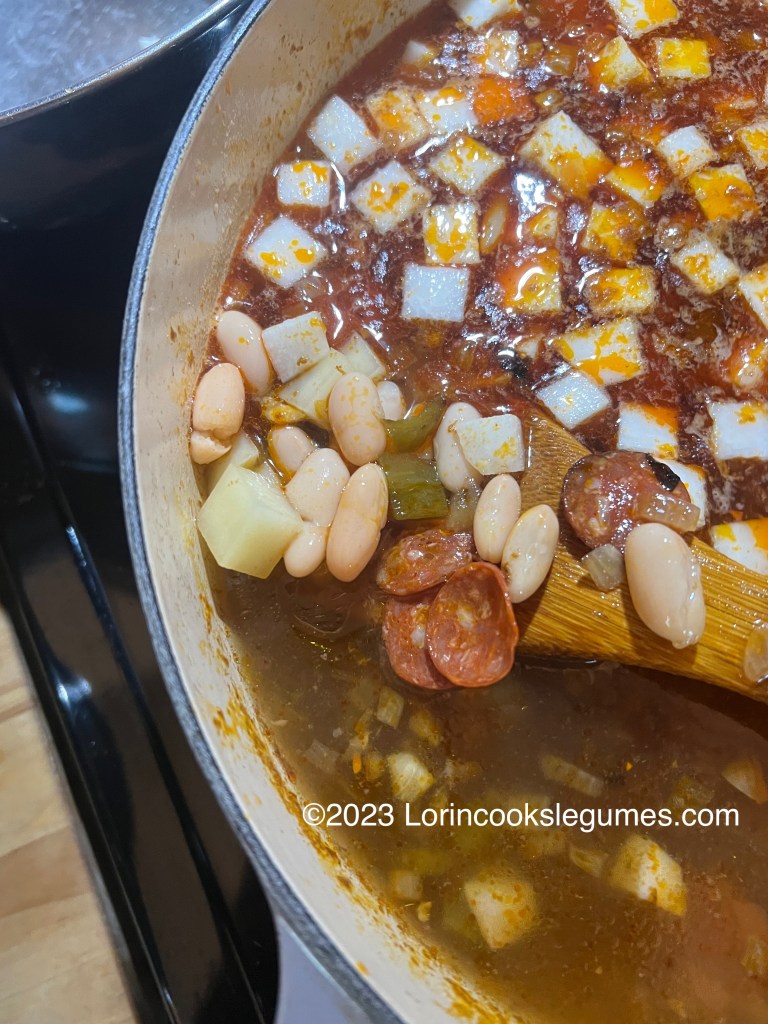
Add the garlic, bay leaf, and paprika and sauté for 1-2 minutes, just until fragrant. Add the chicken stock, water, and soaked beans. (If using canned beans, wait and add them with the potatoes in the next step). Bring to a boil, reduce heat, and simmer for about 1 hour, stirring occasionally, until beans are beginning to soften. Remove ham hock and set it aside to cool slightly.
Add the potatoes, turnips, turnip greens and kale to the pot, (along with the canned beans if using), and continue to simmer for 30-45 minutes until beans are beginning to break apart and the potatoes are tender.
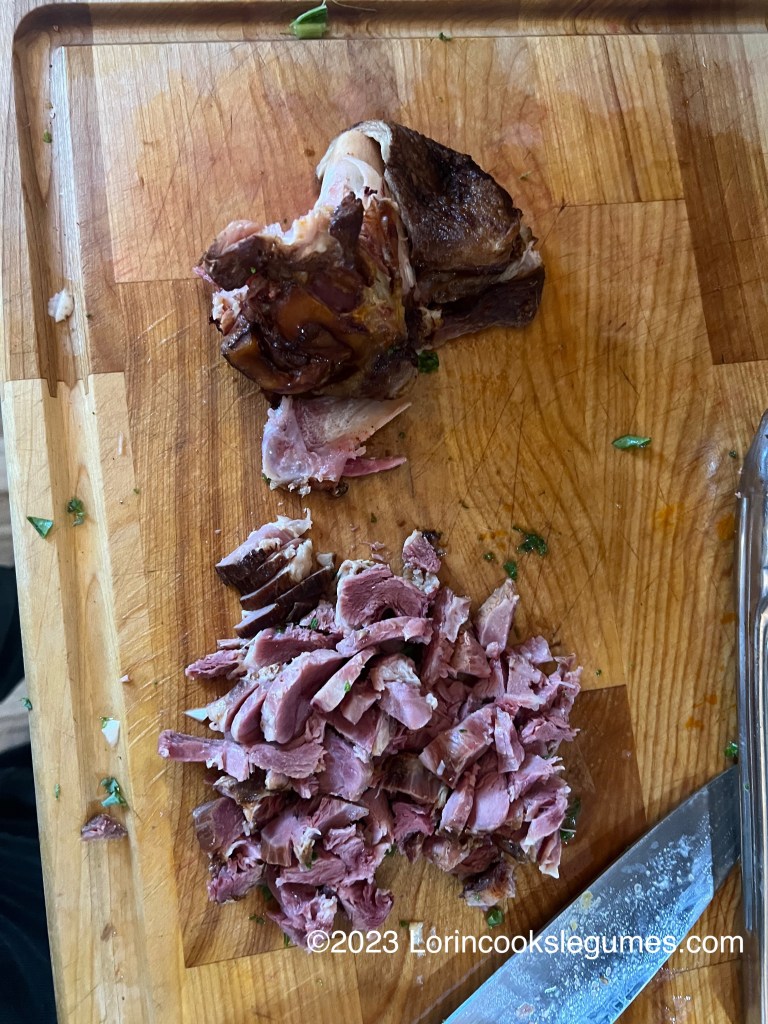
When the ham hock is cool enough to handle, pick the meat off the bones, chop it into bite size pieces and return them to the pot. Discard the skin and bones.
When the soup is done, take a wooden spoon and mash a few of the vegetables and beans to thicken slightly. Taste for seasoning and add salt and pepper.
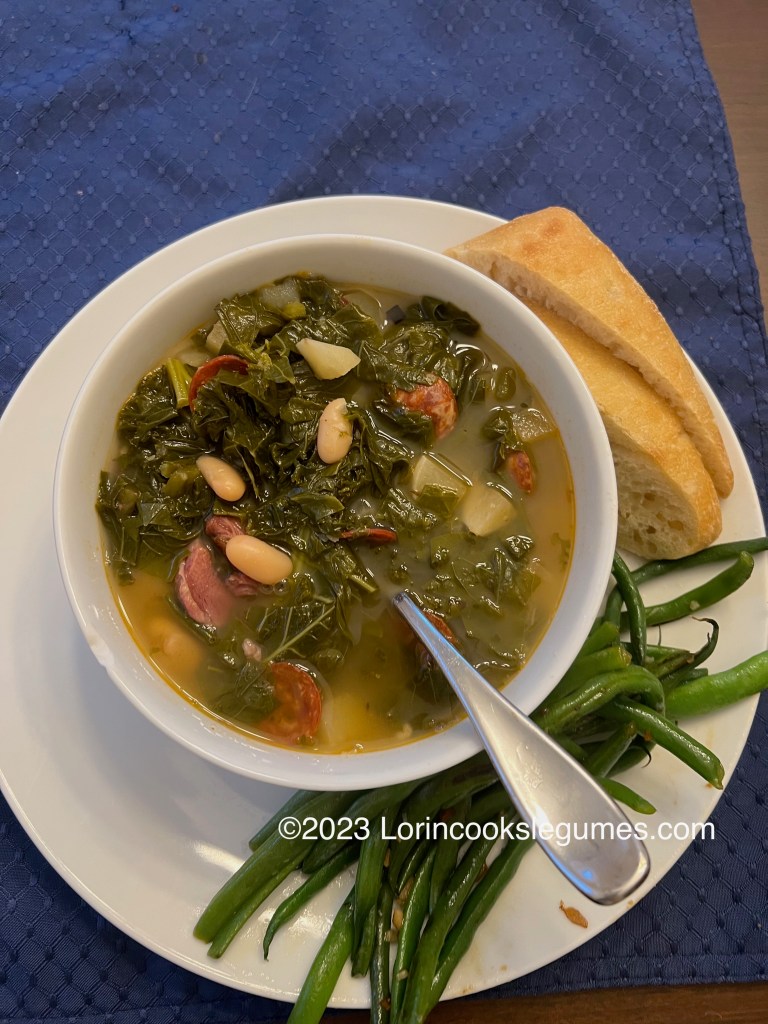
Serve with warm, crusty bread.


I hate to tell you this, but this caldo gallego this recipe is a little disastrous. The main and most important ingredient is missing, like in the majority of today’s caldo gallego’s recipes. It’s called “unto”. According to the old Galician saying, ” If the caldo gallego doesn’t have unto, it is not a caldo gallego”. That particular taste you’ve looking for comes from this particular salty, pork fat that you have to fry (with olive oil) and add it towards the end of the cooking process. Without that, this is another bean soup. This ingredient can be purchased in some od the Latin markets. I’m in Miami, Florida, and can sometimes find it in some of the Sedano’s Supermarkets or in some other small Spanish markets. Moreover, this delicious recipe must be cooked in a segmented, coordinated process in order to achieve the correct results. If not, the various, posible outcomes might affect it, hence becoming kind of frustrating. This information I’m providing to you has been lost, as a result of not being being properly passed down to the younger generations, particularly in the West. If you would like to obtain my mom’s old recipe, feel free to reach out me. You won’t regret it. I can guarantee you that you will never cook caldo gallego in any other way. You will be addicted.
LikeLike
I’m sorry to hear that my recipe doesn’t live up to your standards. I create my recipes by looking at a bunch of recipes online and taking sort of the “average” of them, if you will. Most of my source recipes must have came from those younger generations in the west, so I guess I didn’t get a true picture of how it’s traditionally made.
LikeLike