This post is about three weeks overdue. I’ve spent the last month or so wrestling with a big decision, and apparently working on the blog wasn’t enough of a mindless distraction to get me out of my head when I needed to.
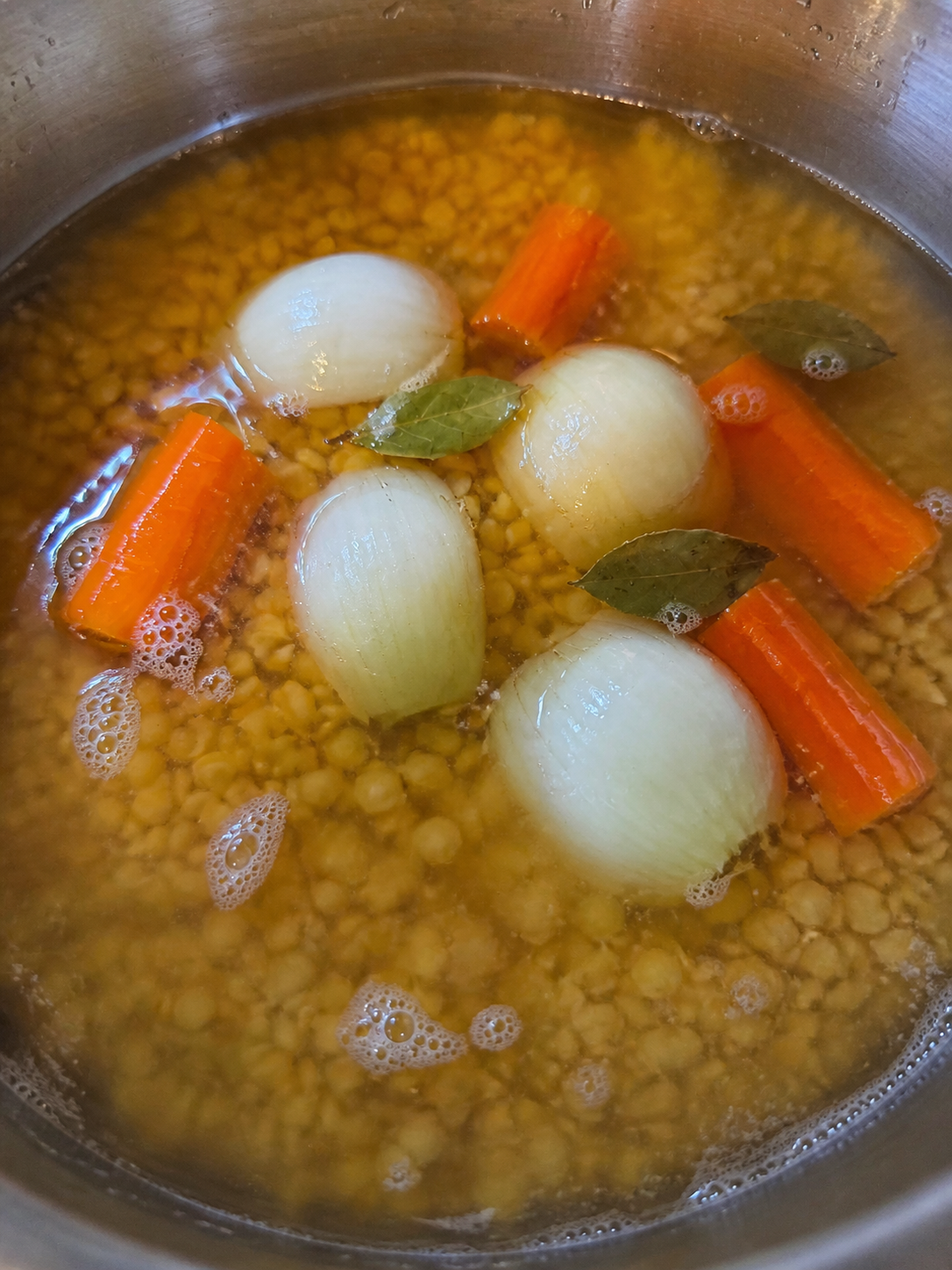
Apparently I was also pretty distracted when I made the recipe, because I only remembered to take one new photo. Luckily, I’m revisiting a recipe I first shared in 2021, so you’ll just have to look at the old pictures!
I don’t have anything new to say about the dish, but figured since I’m exploring pea soup recipes I should bring this forward for more attention.
Keep reading below for the original post, with a few spelling/ grammer corrections and updated links.

Pease pudding, also known as pease porridge, is a savoury pudding dish made of boiled legumes, typically split yellow peas, with water, salt, and spices, and often cooked with a bacon or ham joint. A common dish in the north-east of England, it is consumed to a lesser extent in the rest of Britain, as well as in Newfoundland, Canada.
https://en.wikipedia.org/wiki/Pease_pudding
Pease porridge hot
Pease porridge cold
Pease porridge in the potNine days old
Some like it hotSome like it cold
Some like it in the pot
Nine days old
old English nursery rhyme
Many of us probably heard that nursery rhyme growing up. That’s probably about all we know about pease porridge, or pease pudding, as it is often called. Unlike some other famous nursery rhymes, I don’t think that there’s any hidden meaning in this one. It’s really just a rhyme about one of the more common peasant meals in medieval England.
Pease porridge is basically just split pea soup with less water. Peas were likely introduced to England by the Romans, and because they grow well in the cooler climate, they became a staple dish and are still quite popular in the north-east of England, although eaten throughout the country.
The dish is made from dry field peas, not fresh sweet peas. Peas, of course, are a variety of legume, so they have a similar texture and cooking method to dry beans. Split peas have had their skins removed, which causes them to naturally split, shortening their cooking time and letting the peas break down into a fairly smooth purée.
Traditionally, pease pudding was cooked in a pot over the fire, and then left in the pot with additional ingredients being added to it over many days, as the nursery rhyme alludes to. Modern food safety practices frown on the idea of eating nine-day-old food, even if it’s been refrigerated, but the practice of the never-ending kettle of pottage, simply throwing whatever food today brought in to stew with yesterday’s leftovers, was apparently fairly common a few centuries ago.
If you’ve ever made split pea soup, you know that it thickens considerably once it’s cold, so the idea of a pease pudding shouldn’t be too hard to picture. I saw recipes where the hot product was basically soup, and I saw a recipe from the 1750s where you boiled the peas in a linen bag*, and then had a ball of pudding that you literally sliced. I didn’t specify how much water you should use, so you can decide how thick you want your peas to be. I used just enough water to submerge the onion and carrot sitting on top of the peas, probably about 1 inch over the peas, and the finished product was very much the texture of porridge.
Some of the recipes I looked at included more vegetables, and left them in rather than removing them. You could certainly chop them a little smaller, and leave them in, for a more soup-like dish. It’s also common to include ham or bacon in the dish, as opposed to on the side. The recipe that cooked it in the bag actually suggested boiling your ham and pease pudding simultaneously in the same pot.
Apparently, in North East England the traditional pease porridge meal includes boiled ham and stottie cake*, a dense, flat bread, traditionally made with leftover dough after baking other breads, and perfect for scooping up the peas. The leftovers (pease porridge cold) are then used as a sandwich spread to make a delicious ham sandwich.


Pease Porridge
Serves: 4
Prep: 5 minutes
Cook: 1 hour
Total: 1:05 plus soaking time
(As an Amazon Associate, I earn from qualifying purchases.)
13 oz. yellow split peas
1 medium onion, peeled and quartered
1 carrot, peeled and quartered
2 bay leaves
¼ teaspoon salt
⅓ teaspoon black pepper
1 ½ Tablespoons butter, cut into pieces.
Optional:
2 Tablespoons Malt Vinegar
White pepper, in place of black
13 oz. whole dried peas, in place of split
1 Tablespoon fresh mint
Cover split peas with about 2 inches of cold water and leave to soak overnight.
Drain peas and place in a heavy soup pot, along with the onion, carrot, bay leaves, and enough water to cover. Bring to a boil and reduce heat. Simmer, stirring occasionally, until peas are falling apart, about one hour.
Remove the onion, carrot, and bay leaves. Mash peas, leaving a few chunks for texture, and season with salt and pepper. Stir in butter a little at a time.
Serve hot with boiled ham, or cold as a sandwich spread or hummus-like dip.
*As an Amazon Associate I earn from qualifying Amazon purchases.
I receive no compensation for mentioning any other website or product.

