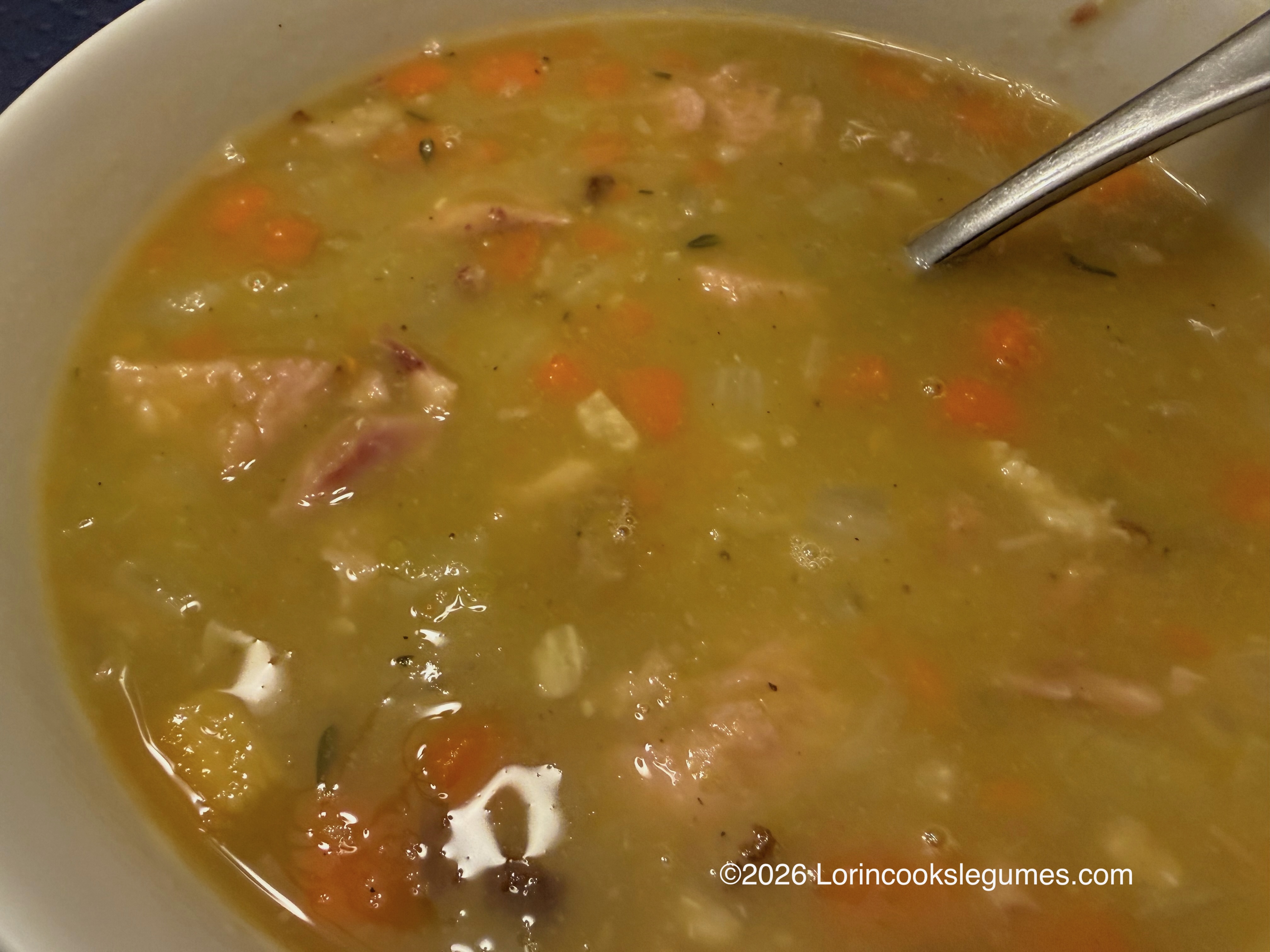
Pea soup or split pea soup is soup made typically from dried peas, such as the split pea. It appears in the cuisine of many cultures, with a wide range of variations. It is most often greyish-green or yellow in color depending on the regional variety of peas used; all are cultivars of Pisum sativum. Pea soup has been eaten since antiquity and is mentioned in the works of Aristophanes.
https://en.wikipedia.org/wiki/Pea_soup
Pea soup has been a staple in many European cuisines (and beyond) pretty much forever. Peas were among the first crops to be domesticated, along with wheat and barley, around 10,000 years ago, and I would guess that they were probably introduced to Europe right alongside the idea of agriculture.
This post kicks off another round of in-depth exploration on variations on a dish across different places. To be fair, I’m not expecting major differences across a bunch of Northern European recipes, but we shall see! For this first recipe, I didn’t try to narrow down my search at all, and just searched for “split pea soup recipes”. You can probably call this the American version.
This actually isn’t the first pea soup recipe on this blog. I may revisit some of the older ones in the coming weeks, but if you’re looking for other ideas now, pease porridge is basically the simplest form of pea soup. There’s also my Jamaican split pea soup recipe as well as several dal recipes that use split peas.
So, what goes into a good split pea soup?
Well, split peas to start with. Peas are the seed of the Pisum Sativum plant, which can be eaten either fresh, with or without their pods (snow, snap, and green garden peas), or dried, usually with their skins removed, which causes them to naturally split in half, hence split peas. As we learned when I was exploring dal recipes, removing the skin makes them easier to digest and allows them to cook faster.
Split peas generally come in either green or yellow. Although a true connoisseur might notice subtle flavor differences, the two are interchangeable in terms of cooking times and behavior.
The age of your split peas, however, can make a big difference in cooking time. A fresh bag of peas can cook in as little as 30 minutes, while older peas can take well over an hour. We always seemed to have a jar of split peas on hand when I was growing up, but didn’t actually cook them very often, and I remember one pot of soup where the peas just never got soft because they were several years old. Unfortunately, you don’t really know how long the peas in the grocery store have been on the shelf, so you’ll have to keep an eye on your soup to determine when they’re cooked.
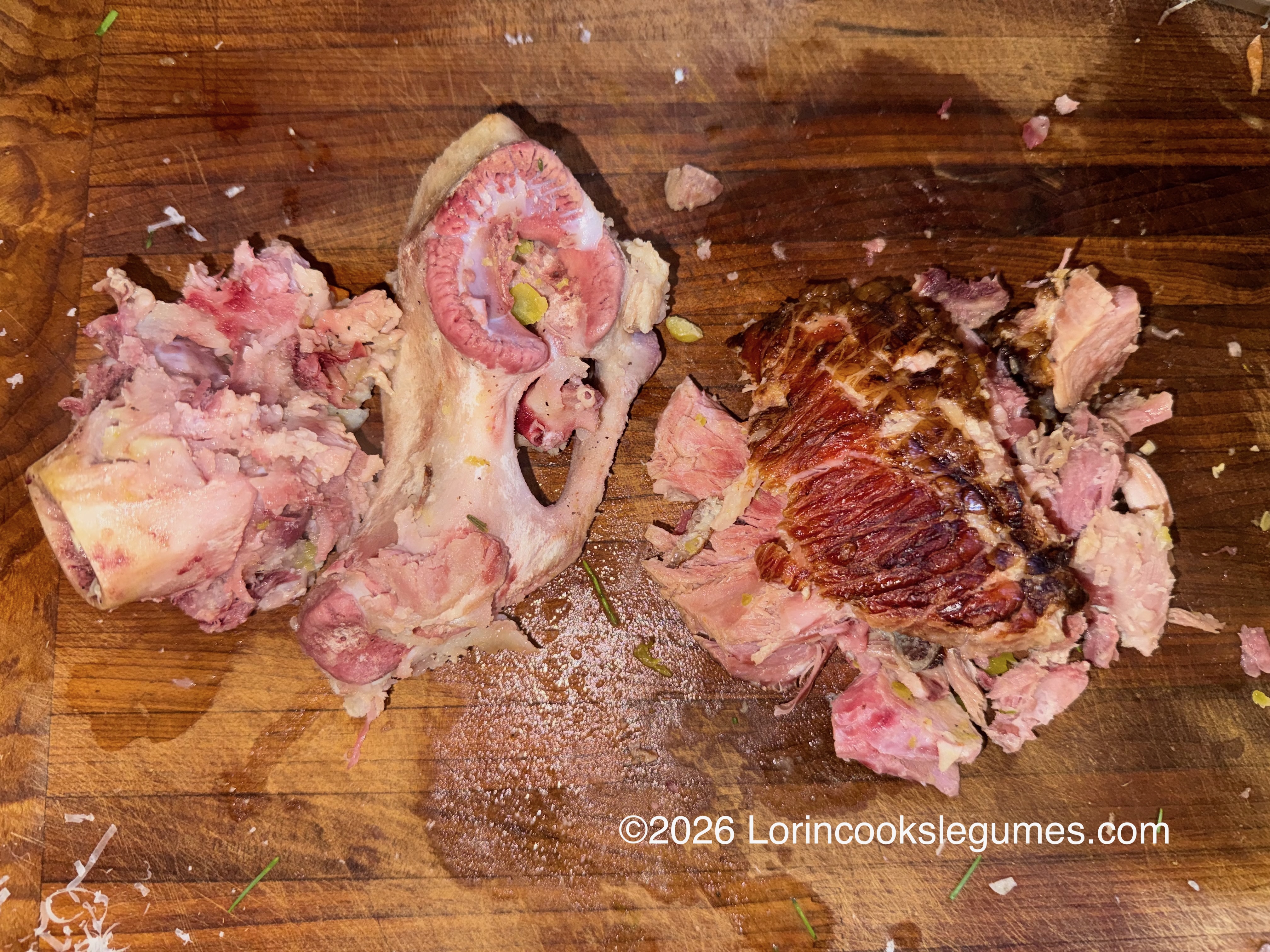
While you can certainly make an excellent vegetarian split pea soup, most recipes use either a ham bone or smoked ham hocks. Many families have a tradition of split pea soup a day or two after big holidays where a ham is served, in order to use the bone. I didn’t actually have a ham bone on hand, but I decided to make a ham just to have the bone available for this soup! Certainly buying a ham hock would probably have been easier and cheaper, but now I’ve got ham in the freezer for other uses.
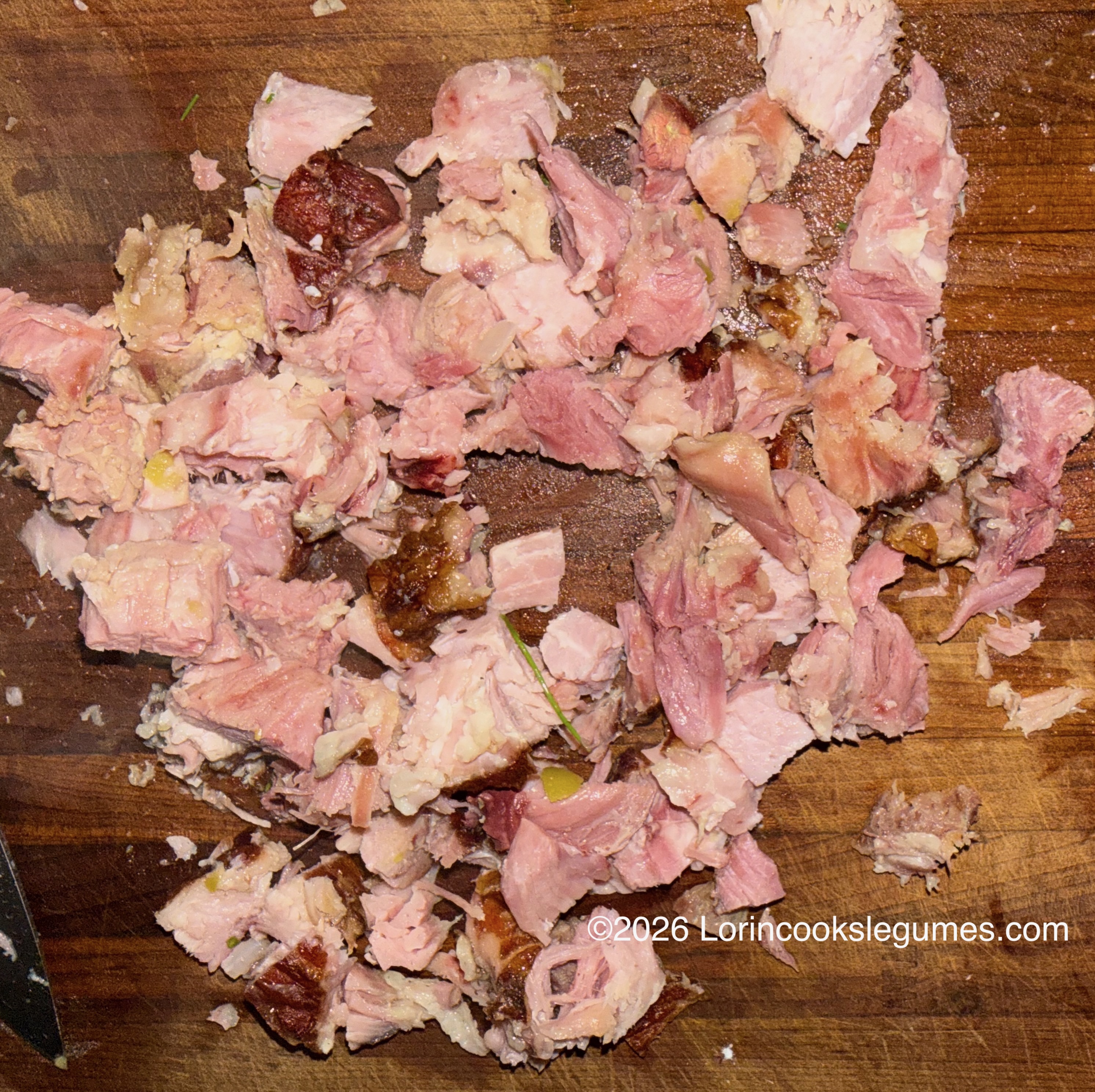
Depending on how much meat is left on your bone, you may also want to add some additional ham to the soup at the end. I call for 1 ⅔ cup of ham, which I expect to mostly be picked off the ham bone. I wound up using an extra handful of ham beyond what I had left on the bone to reach that amount.
Otherwise, there aren’t really any unusual ingredients in this recipe, just your basic mirepoix vegetables, some oil, a few herbs, chicken stock, and water.
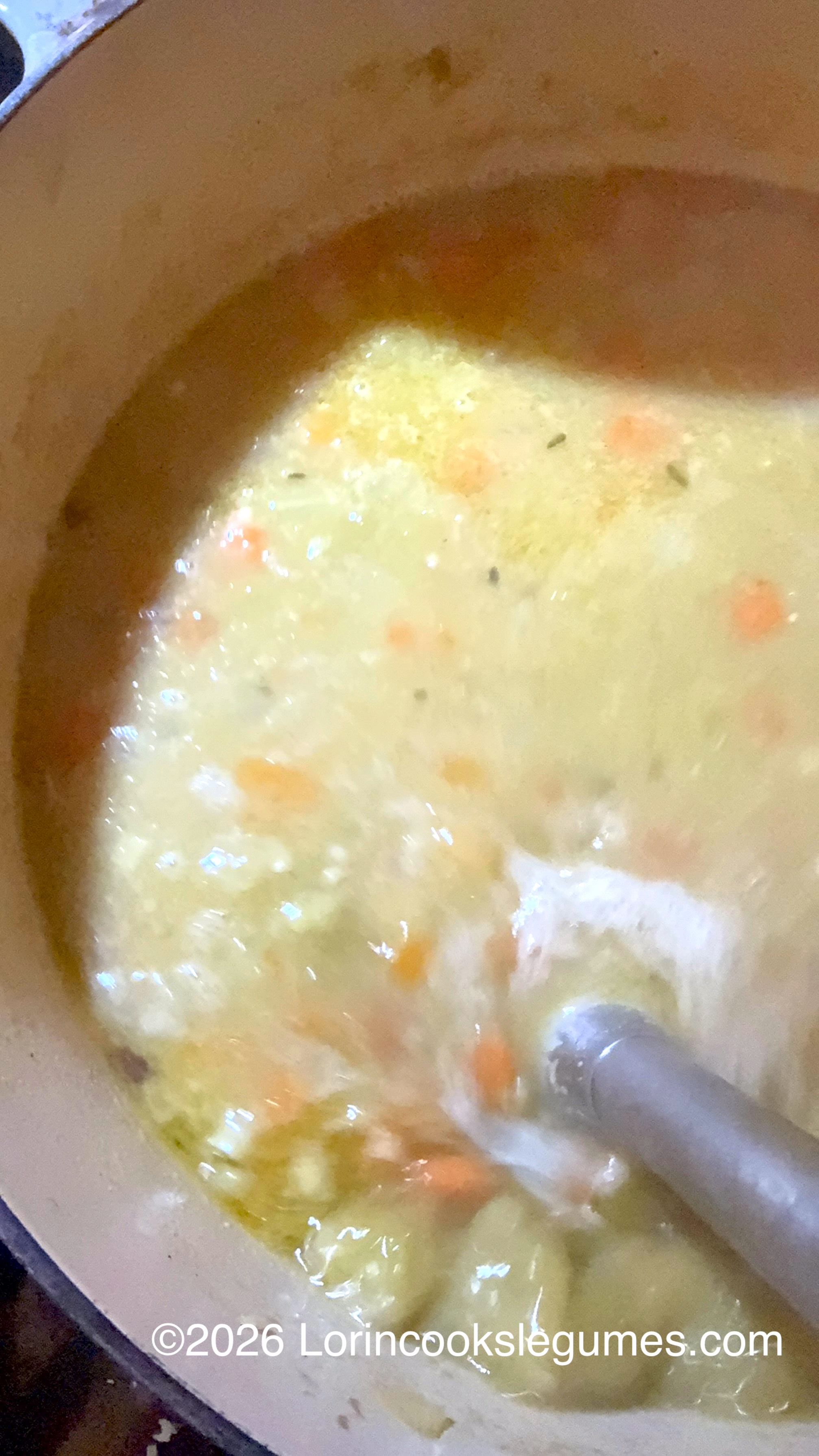
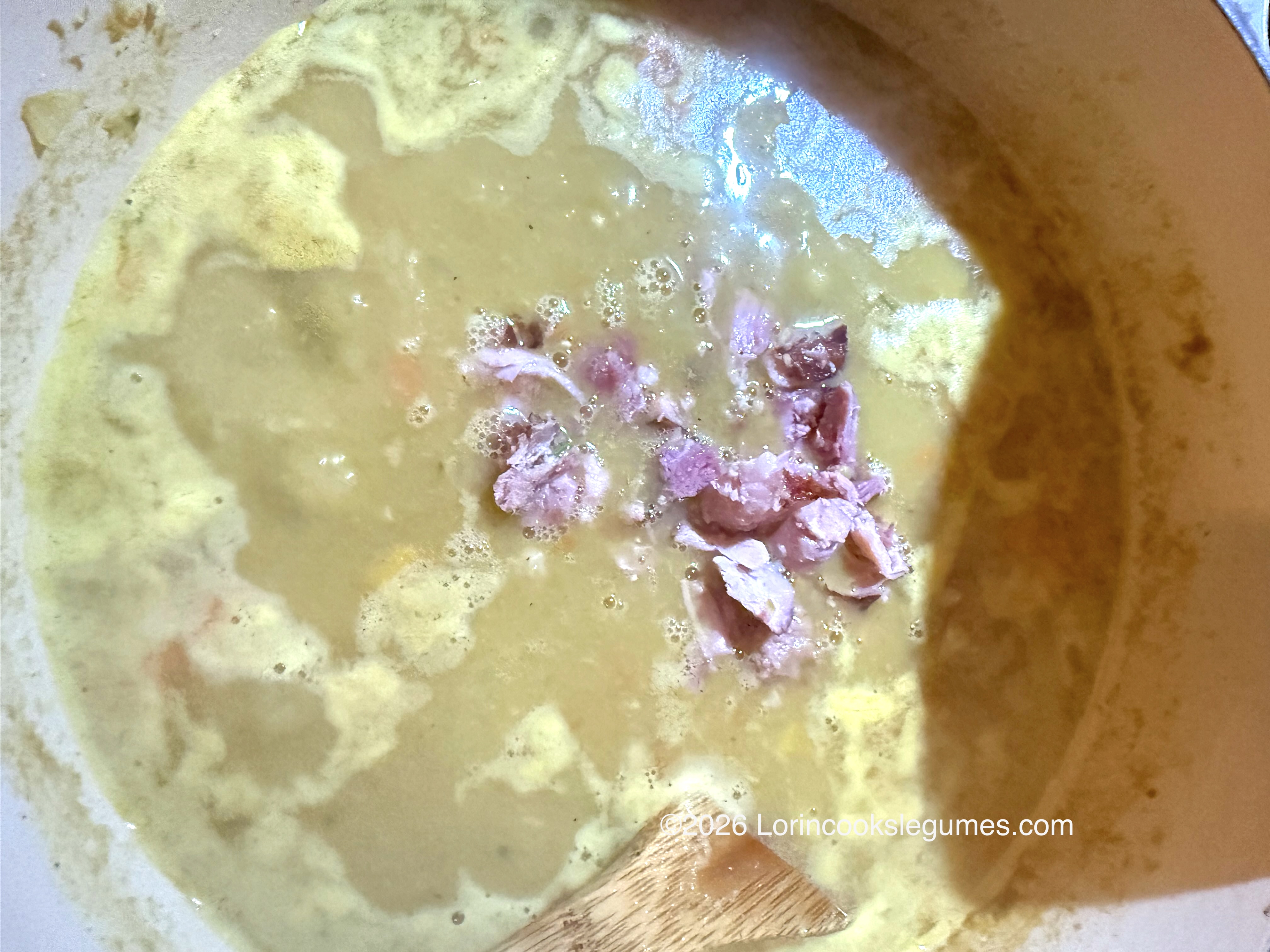
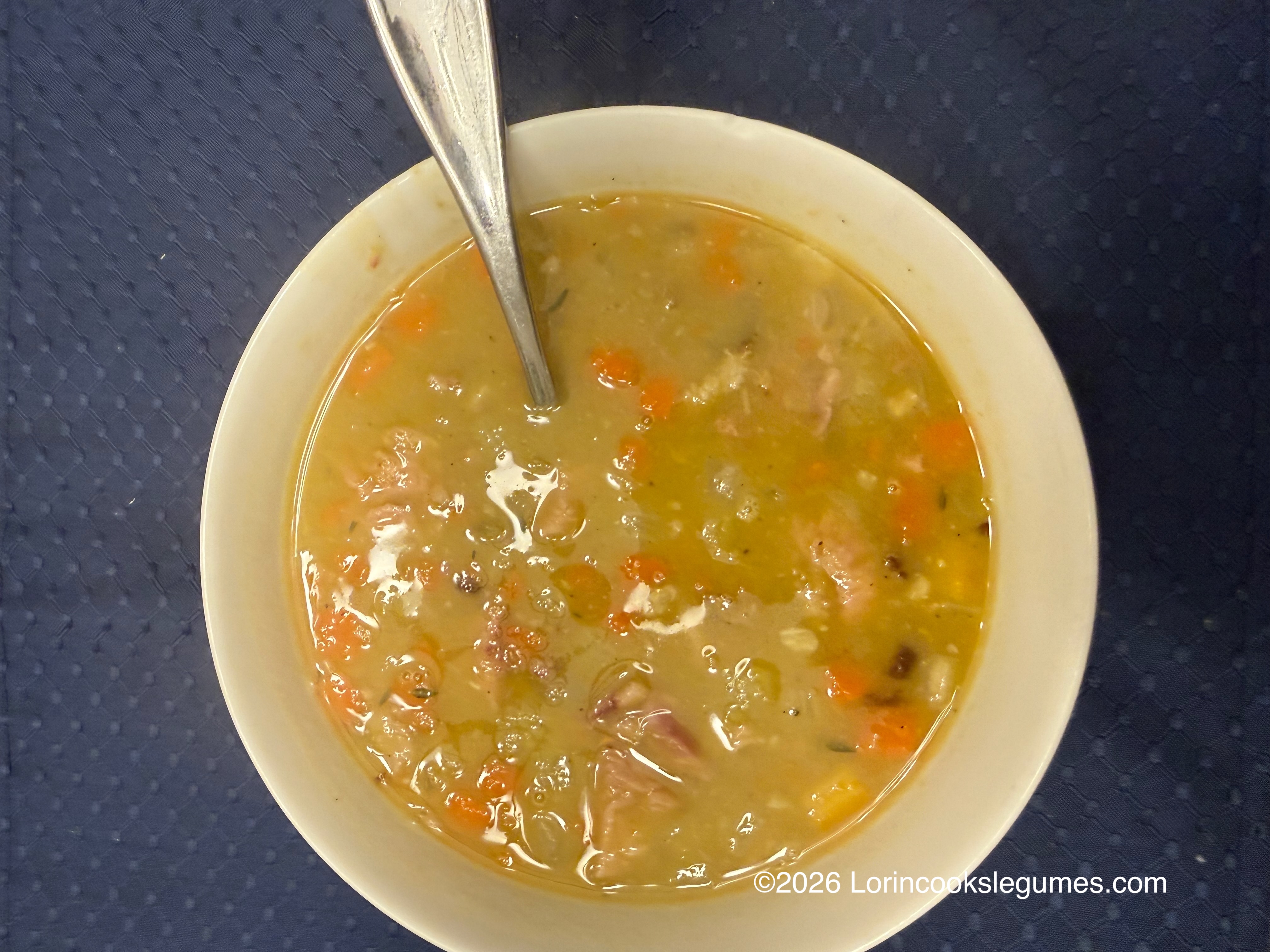
I partially blended this batch with my immersion blender, and actually overdid it a little bit trying to get a decent photo for this post. I generally prefer a thicker, rusticly textured split pea soup, so this was a little disappointing. Split peas naturally cook down to a fairly smooth texture on their own, so blending not only breaks down any peas that haven’t dissolved on their own, but pulverizes the vegetables as well, which is primarily why I was disappointed. Feel free to blend or not blend some or all of the soup depending on your preference.
In the future, I might either reduce the amount of water slightly, or allow the soup to simmer a little longer, as the soup was slightly thinner than I was imagining when I started. Split pea soup does thicken in the refrigerator, so I wouldn’t take this too far, but feel free to adjust to your desired consistency. You could also use all chicken stock, but a number of the recipes I looked at used both stock and water, saying that they didn’t want to overwhelm the flavor of the peas with chicken flavor.
Split Pea Soup
Serves: 4-6
Prep: ~20 minutes:
Cook:~1:10
Total:~1:30, depending on the age of your peas.
(As an Amazon Associate, I earn from qualifying purchases.)
1 ½ Tablespoons olive oil
1 ¼ cups onion, diced
1 cup celery, diced
1 ¼ cups carrot, diced
2-3 garlic cloves, minced
16 oz. green split peas, rinsed and drained.
⅔ teaspoon salt
⅓ teaspoon black pepper
5 ⅓ cups chicken broth
4 cups water
1-2 bay leaves
2 sprigs fresh thyme
OR
¾ teaspoon dry thyme
1 meaty ham bone (about 1 ½ lbs.)
OR
1 smoked ham hock
1 ⅔ cups ham, diced, from the ham bone or additional as needed.
Optional:
Minced parsley, to garnish
3 Tablespoons unsalted butter
Garlic croutons, to garnish
6 cups vegetable stock, in place of chicken
1 ½ cups potato, peeled and diced
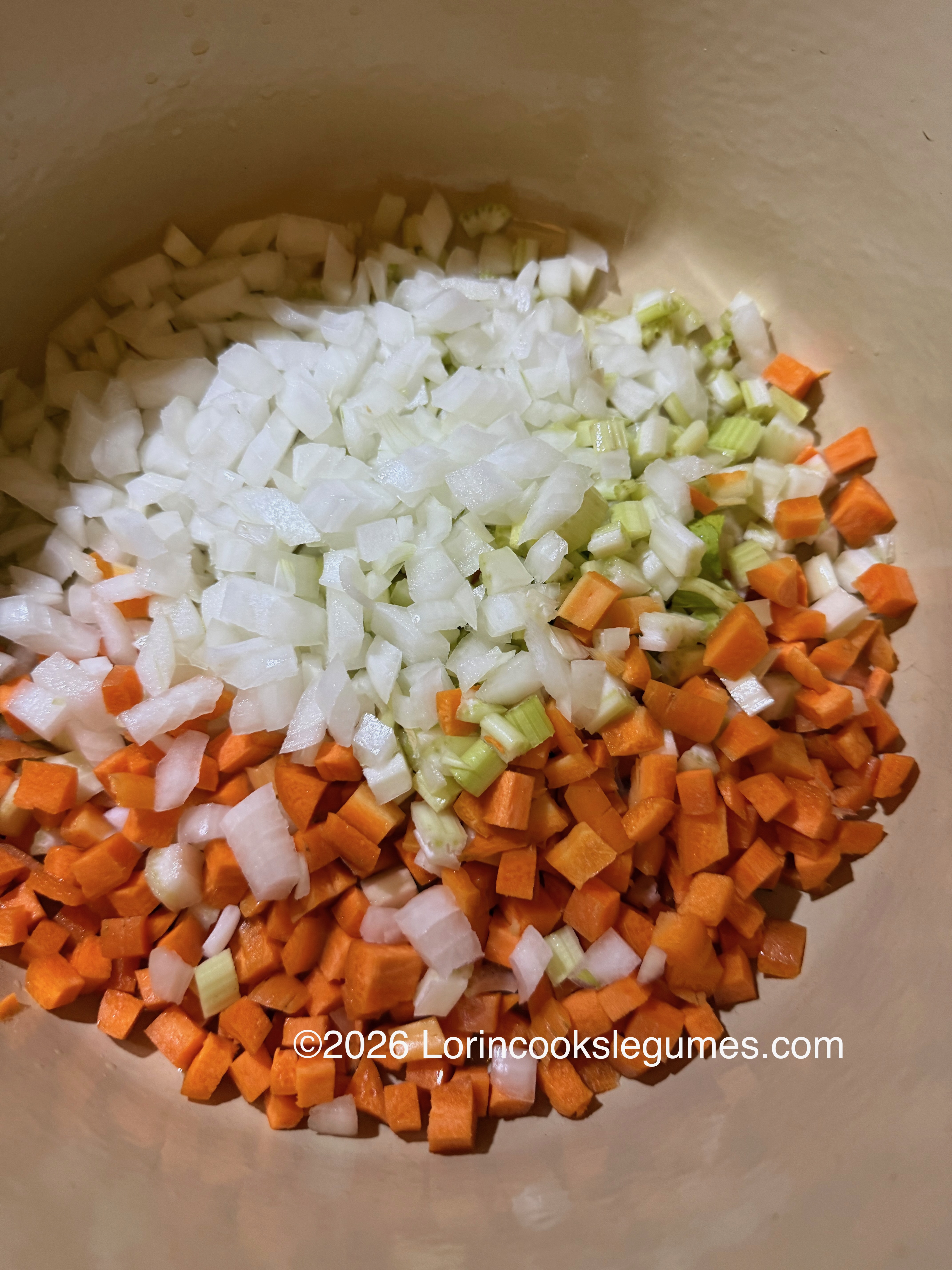
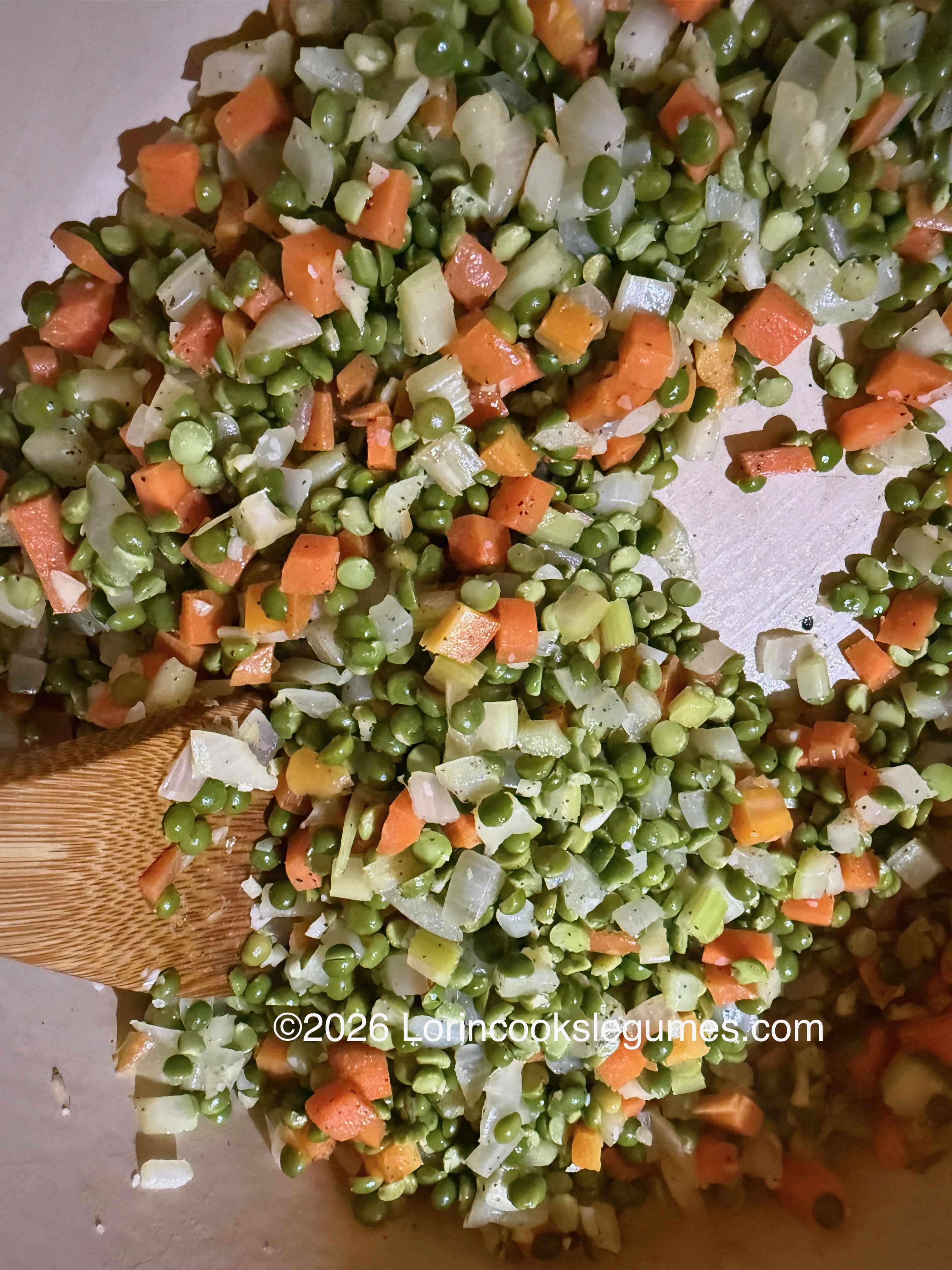
Heat olive oil in a large heavy pot until shimmering. Add onions, celery, and carrots and sauté until soft, 8-10 minutes.
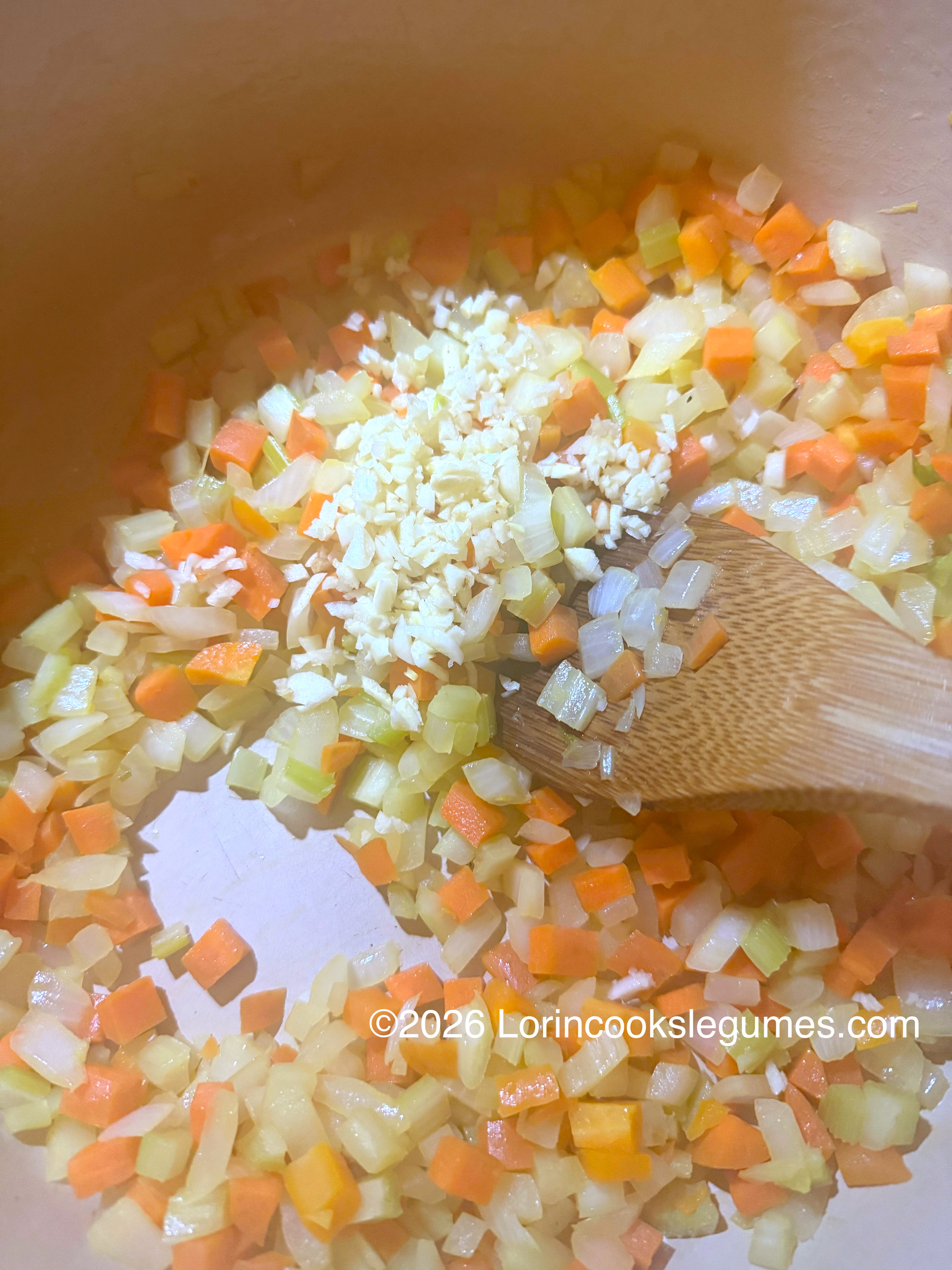
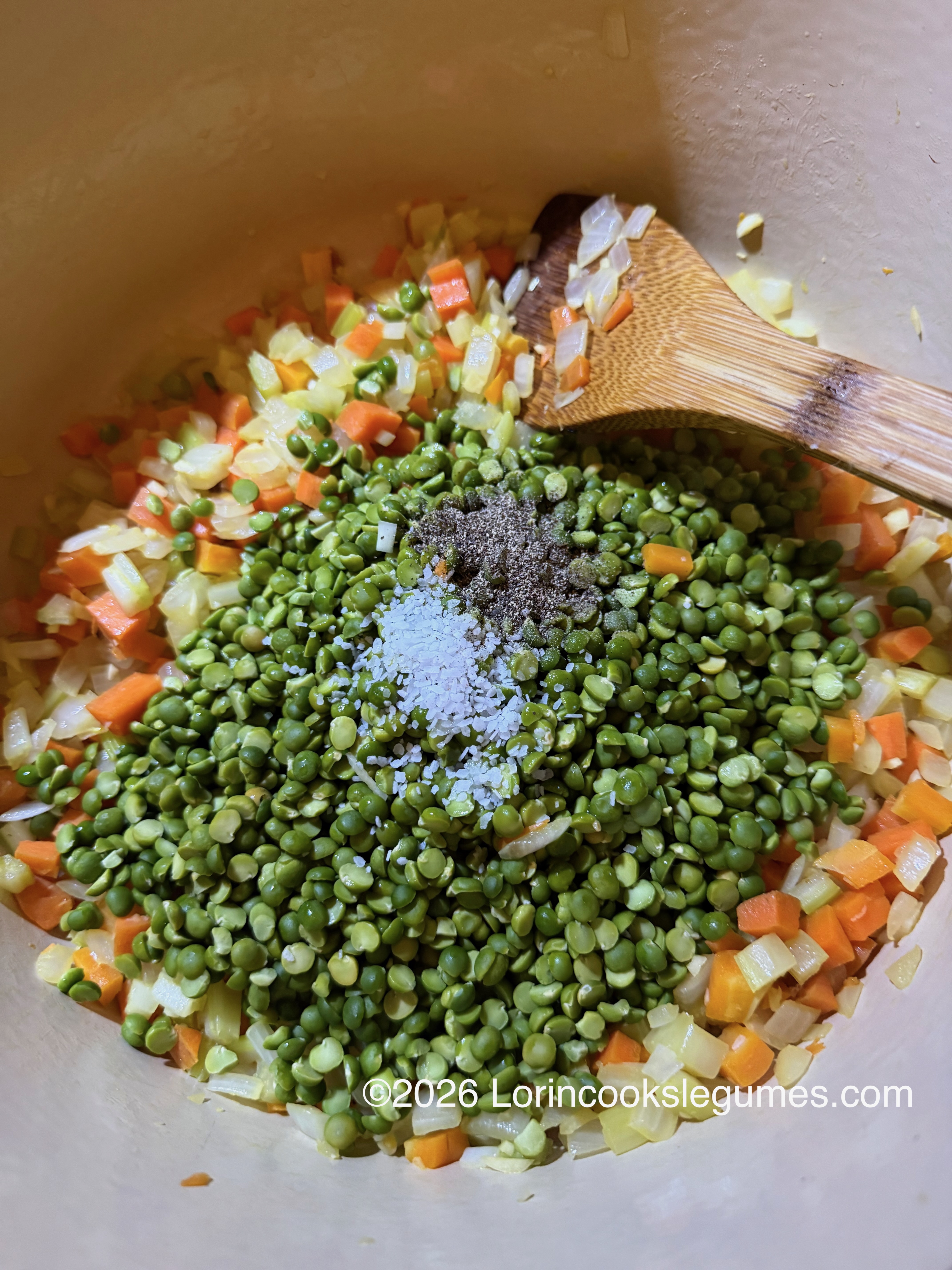
Add the garlic and cook for one minute, then add the split peas, salt and pepper. Mix well, until peas are coated with oil.
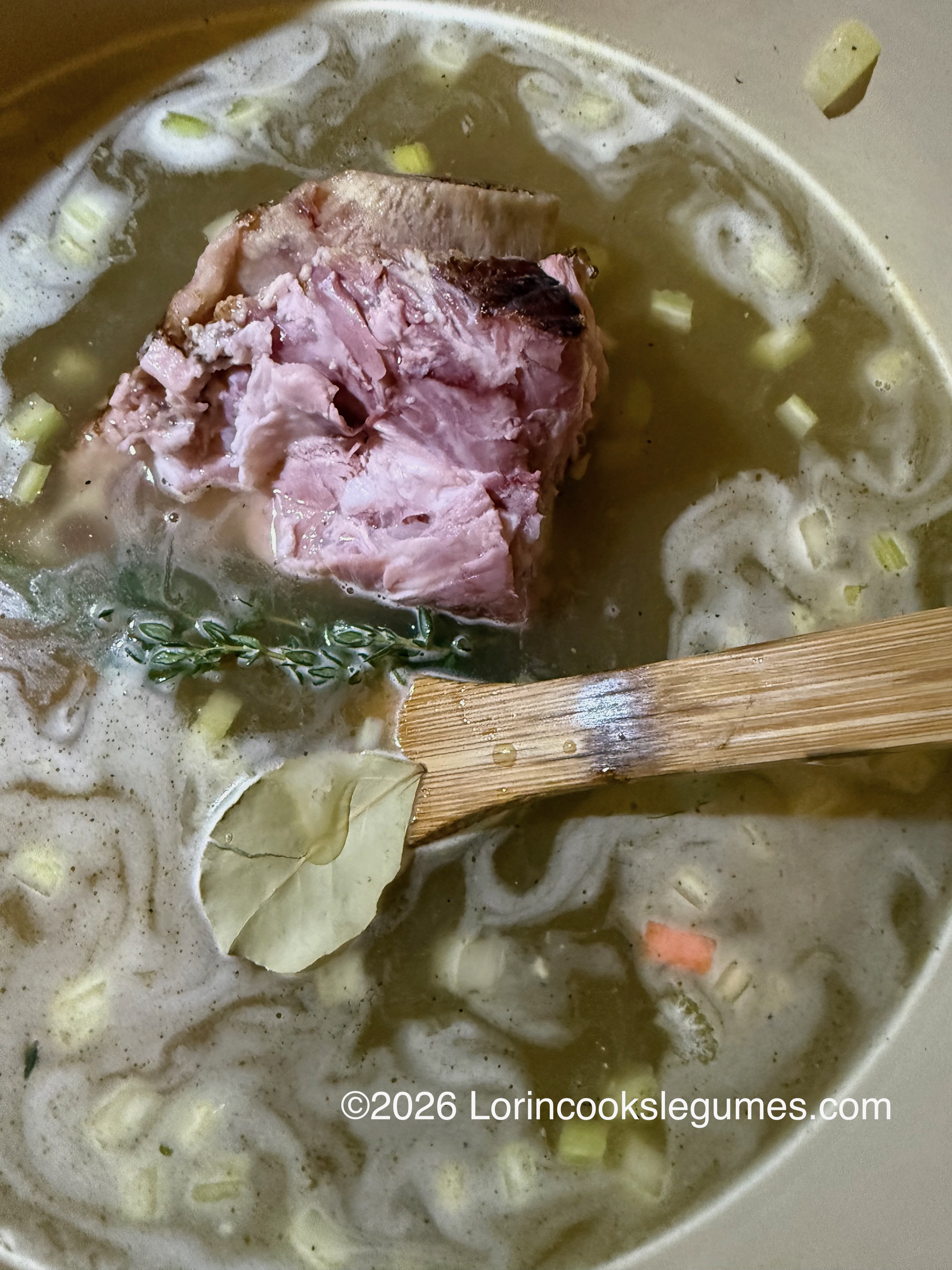
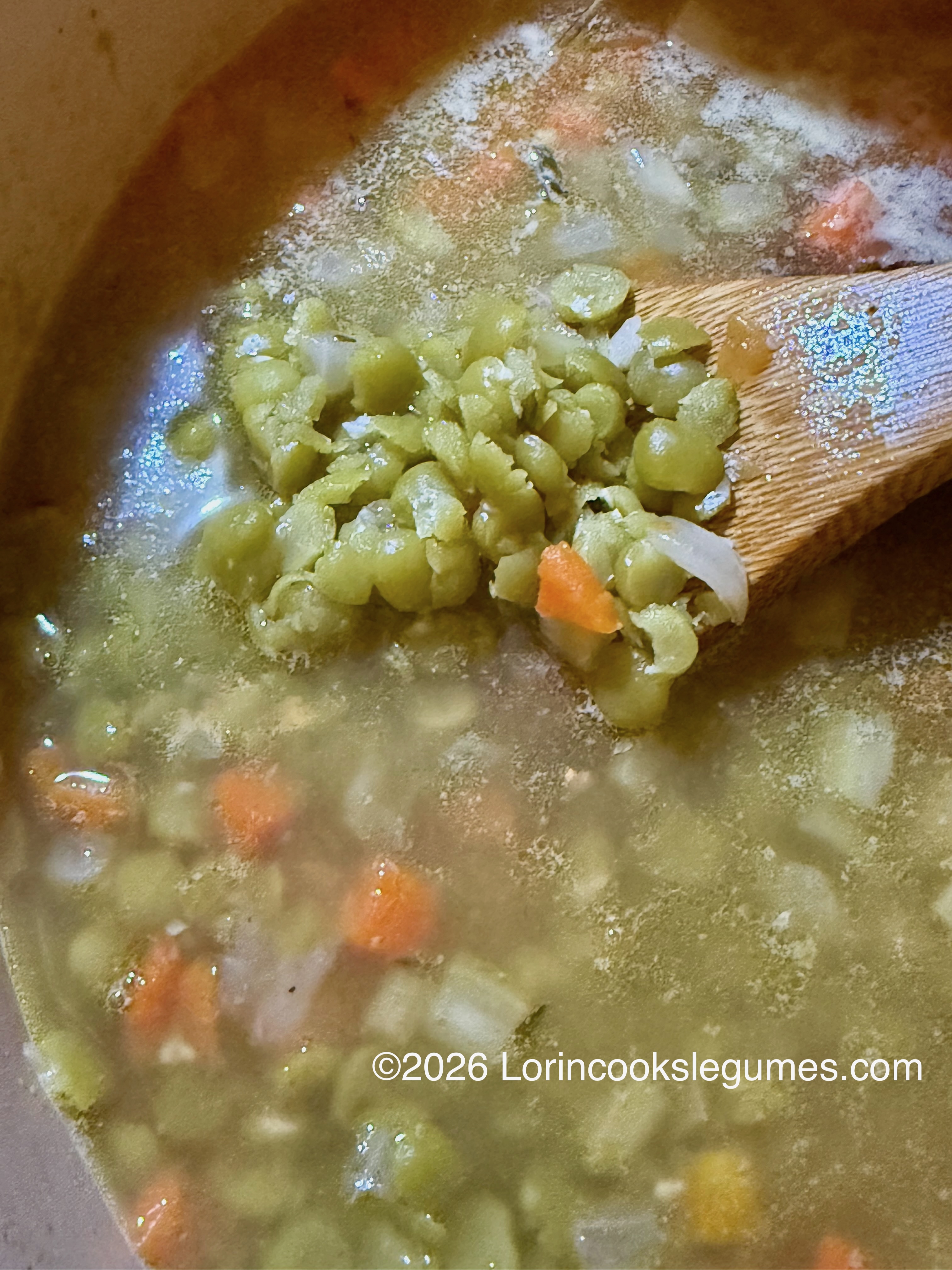
Add chicken broth, water, bay leaves, thyme, and ham bone or hock. Mix well and bring to a boil. Reduce the heat and simmer, partially covered, for about 1 hour, until peas are soft and beginning to break down.
Remove the bone or hock and allow to cool for a few minutes.
If you like, you can blend some (or all) of the soup at this point for a smoother texture.
Once the bone is cool enoughto handle, remove the meat from the bone, discarding bones and fat. Chop the meat into bite-sized pieces and return to the soup, along with additional diced ham if needed to get about 1 ⅔ cups.
Simmer for a few more minutes until ham is heated through. Taste for seasoning and adjust as needed.

