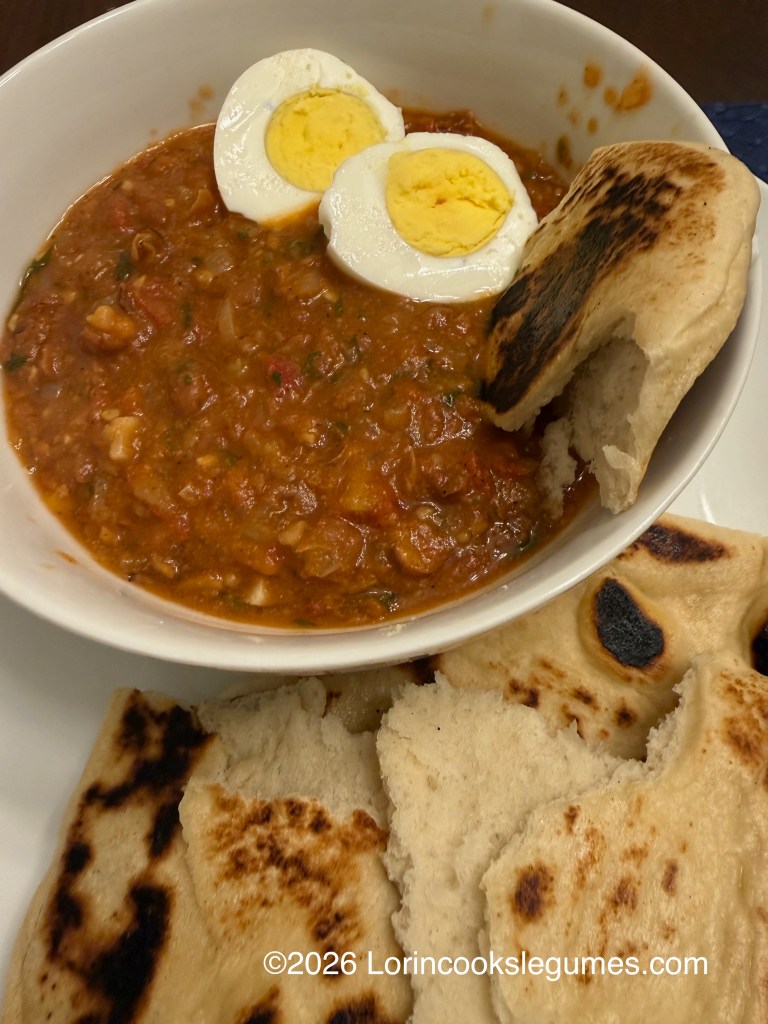
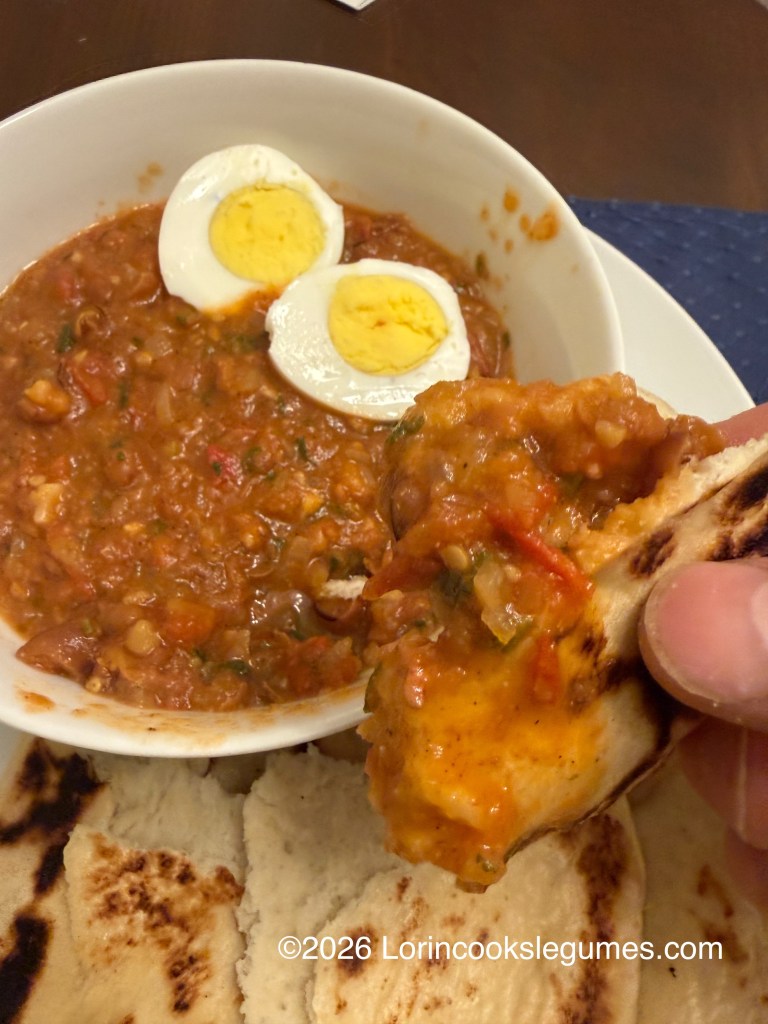
In Somalia, fuul is a staple in breakfast food. It is often served with eggs, khubz/ceeshbread or the traditional Somali flatbread called laxoox/canjeero. It is very similar to the Egyptian, Sudanese, and Saudi variants of the dish, but usually spicier due to Somalis’ use of the xawaash spice mixture (cumin, coriander, sage, peppercorn, fenugreek, turmeric, ginger, cardamom, cloves, nutmeg, and saffron).
https://en.wikipedia.org/wiki/Ful_medames
Originally, I was going to write about Israeli breakfast in this post, as Wikipedia had a paragraph about how ful medames is an integral part of said meal. I got as far as researching the base recipe/menu and had a few sub-recipes written for it, when that paragraph was deleted from the Wikipedia page. Given that my research didn’t turn up a single mention of ful in Israeli breakfast (which is by no means a standardized thing- just a sort of loose collection of salads, breads, dips, and dairy products often served as a buffet at kibbutzes and hotels), I chose to put that research aside and move on with something else.
We’re moving from the Levant back down into Africa with this post. We’ve already covered ful in Egypt, the country it is most commonly associated with, so today we’re going to Somalia. The Somali version is fairly similar to the Egyptian version, but lacks the fresh vegetable topping. Similar to other versions of ful I’ve written about, it’s often served for breakfast.
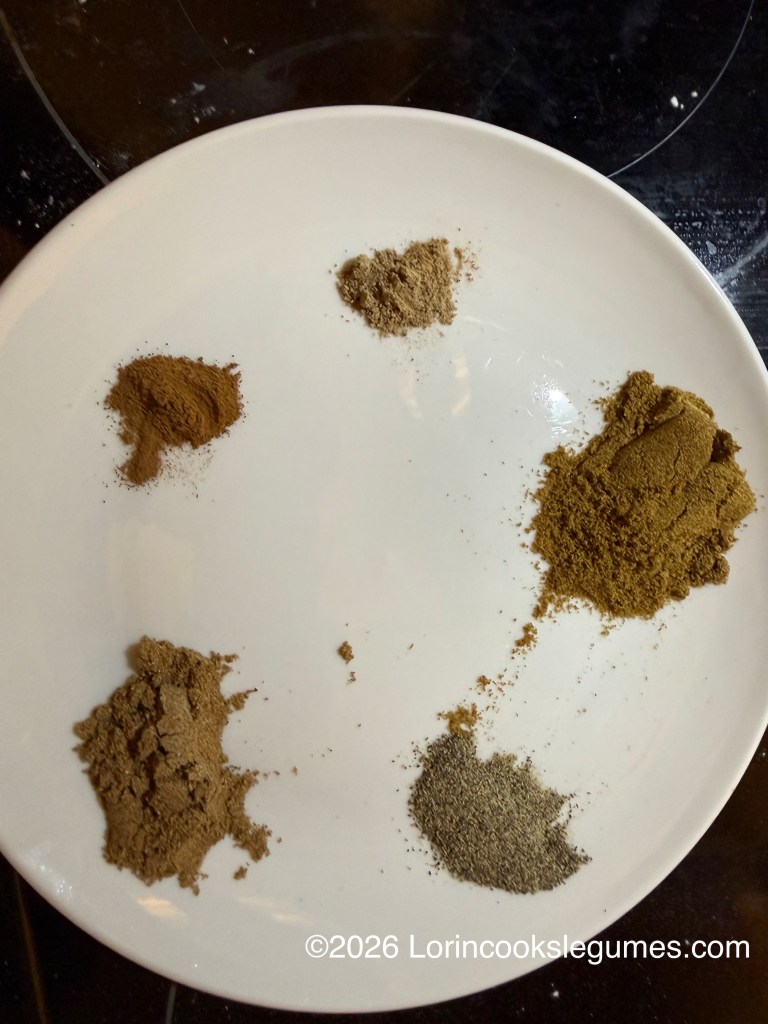
The primary difference lies in the use of a traditional Somali spice blend known as xawash. For this batch, I used a mixture of cumin, black pepper, coriander, cinnamon, and cardamom. Several of the recipes I looked at to form this one seemed to be based on one from The New York Times that used roughly the same blend. Wikipedia’s description of xawash, in its paragraph about Somali ful, lists several other spices as well, so the fact that I didn’t think this lived up to the description of being “spicier” than the Egyptian version may be due to that. I am actually planning on making this again in the near future, so I’ll see if I can get my hands on a commercial xawash blend, or research a better recipe for it, and report back.
Beyond those handful of NYT-inspired recipes, most of the source material I found was actually videos, often not in English, with no subtitles or descriptions. I do the best I can in those situations to eyeball quantities and ingredients. Usually, I can figure out the ingredients, although sometimes the powdered spices and dried herbs require some educated guesswork. Quantities get a little trickier, especially if they just show already chopped vegetables going into a pot. I do my best, but in this case, I do think some of my proportions are a little off.
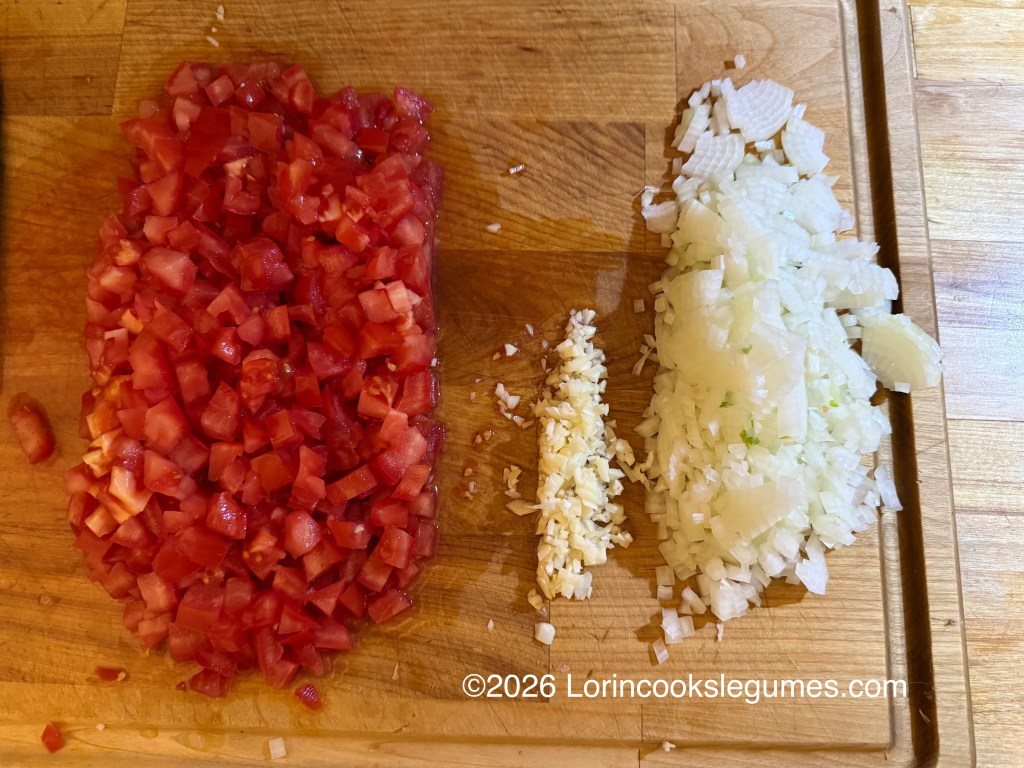
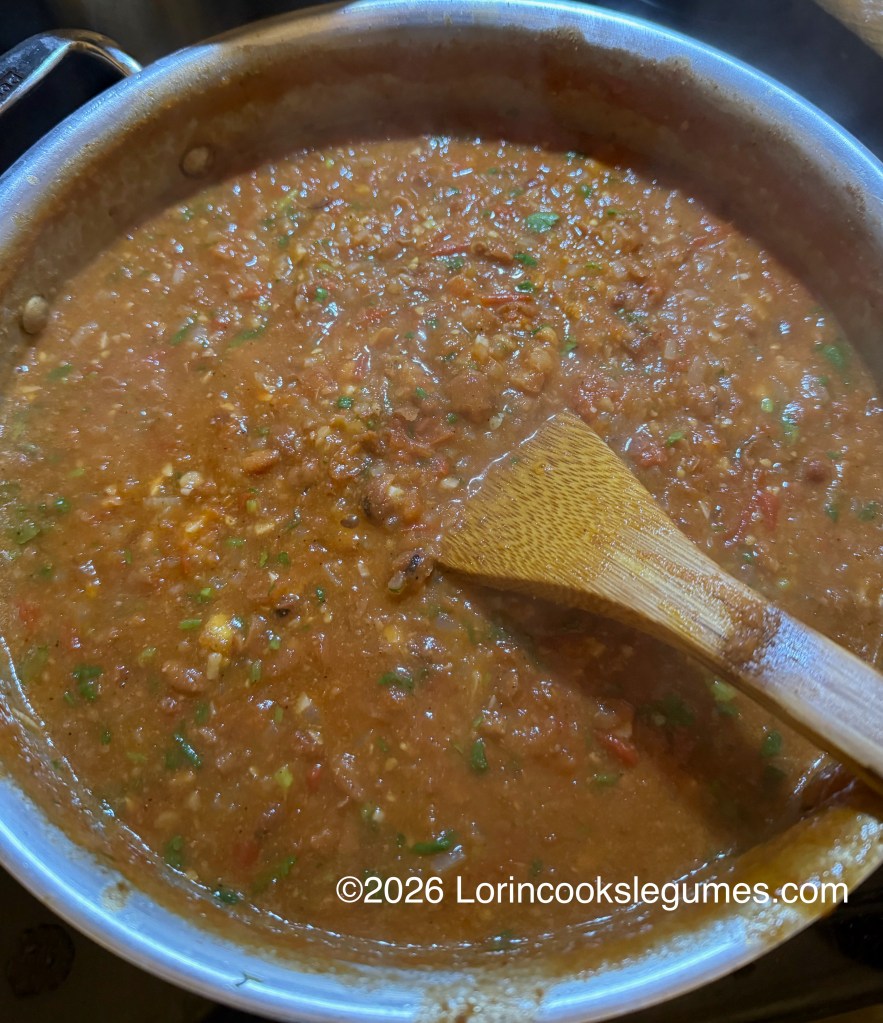
My recipe calls for three medium tomatoes, which seemed like way out of proportion to the quantity of beans (it felt more like a tomato dish with some mashed beans, than beans with tomatoes). I used what seemed to be the most “medium” regular tomatoes at the grocery store, which probably really qualified as large. In retrospect, I probably should have bought Roma tomatoes, given that a couple of recipes did specifically call for them. I am adjusting the recipe to reflect that.
Despite the large amount of tomato in the dish, I did feel that it probably could have used a touch more acid. The 1 1/2 lemons I list in the optional ingredients are likely excessive, but finishing with a squeeze of fresh lemon juice probably would help. Again, I’ll report back when I make it again.
Which brings me to WHY I’m making this again. As noted in the Wikipedia quote above, this dish is usually served with eggs and either khubz/ceesh or laxoox/canjeero. Khubz appears to just be the general Arabic term for bread, while ceesh is the Somali version of pita, which I made to go with this recipe. Laxoox and canjeero appear to be two different regional words for a type of flatbread or pancake, similar to Ethiopian injera, which I also want to try, so it gives me a chance to come back and try tweaking this recipe again.
Based on my first attempt, this probably wouldn’t be my go-to ful recipe, but I do want to give it another shot. I’ll report back soon!
Edit 3/1/2026: I did come back and try this again. 3 Roma tomatoes is a more appropriate amount, and the juice of 1 lemon did, in fact, help balance the flavors, especially for the leftovers on day two. I don’t know that the xawash spice blend I bought was that different from the blend of spices I used the first time around. Still not my go-to ful recipe, but getting the ratios in line did improve it quite a bit.




Somali Ful Medames
Serves: 2-4
Prep: 10 minutes
Cook: 30 minutes
Total: 40 minutes
(As an Amazon Associate I earn from qualifying purchases.)
4 teaspoons olive oil
1 small onion, minced
4 small cloves of garlic, minced
3 medium Roma tomatoes, diced
¾ teaspoon salt
1 Tablespoon ground cumin
⅜ teaspoon ground black pepper
1 teaspoon ground coriander
⅛ teaspoon ground cinnamon
⅛ teaspoon ground cardamom
OR
4 ½ teaspoons xawash, in place of the above spices
1 14 oz can fava beans, drained
¼ cup tomato sauce
1 cup water
¼ cup cilantro, minced
Canjeero or ceesh
Optional:
1 ½ lemons, juiced
Olive oil, to garnish
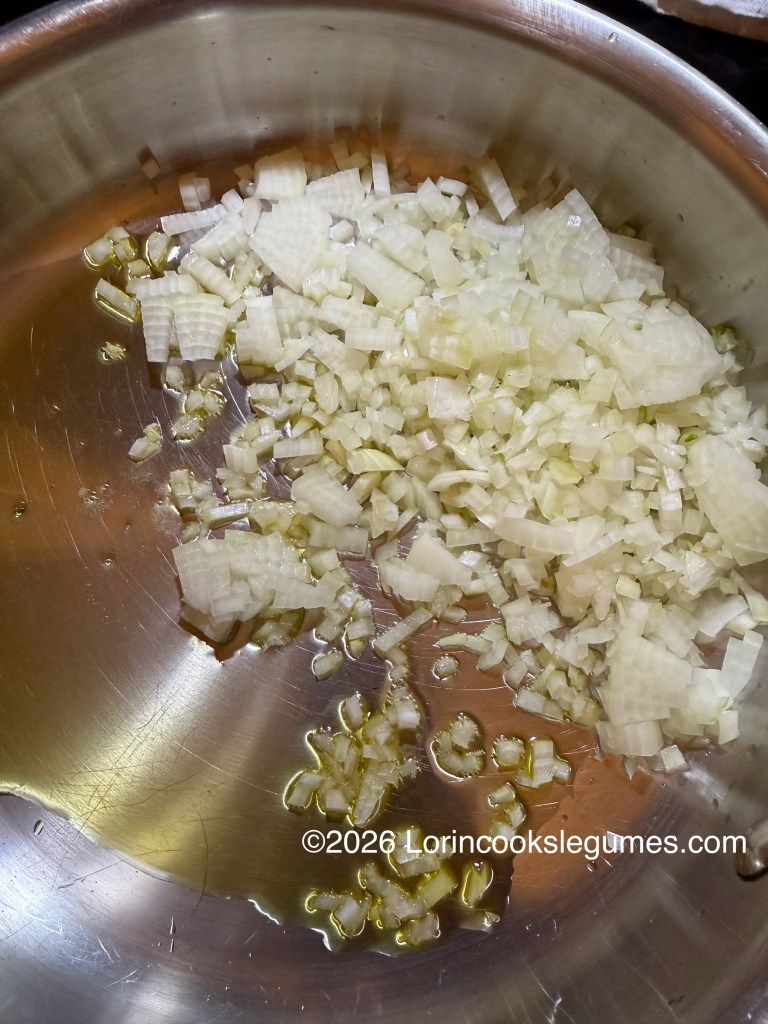
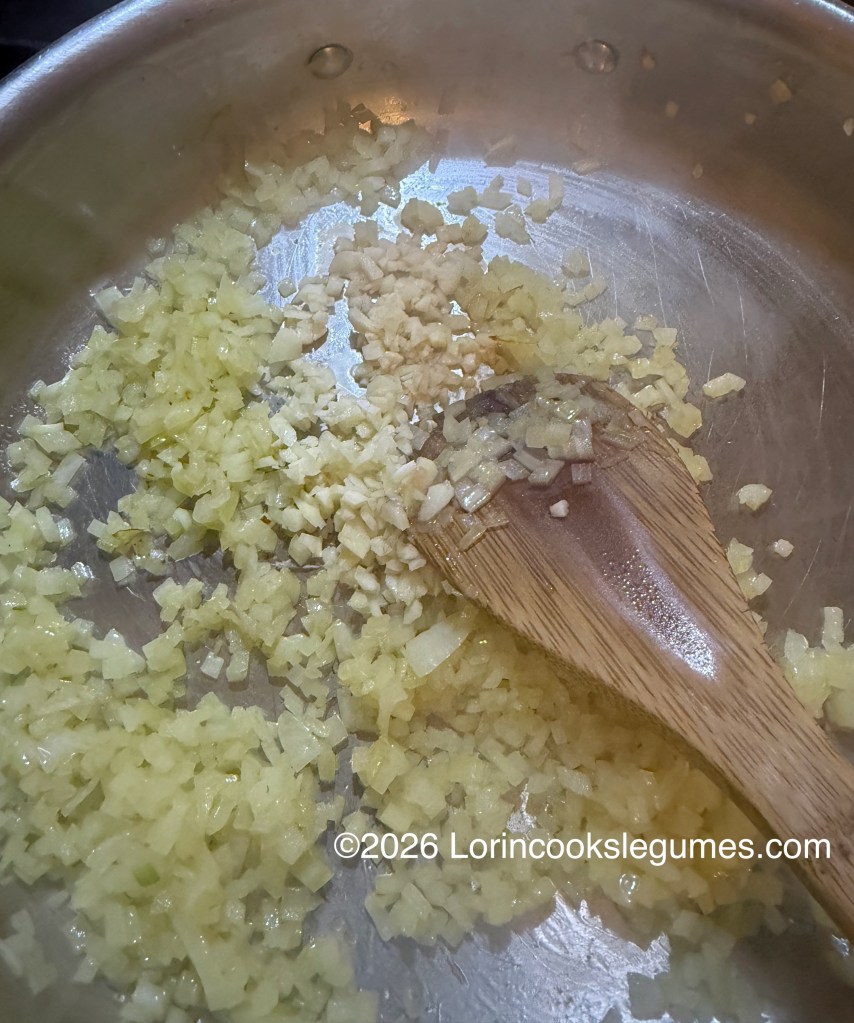
Heat the olive oil in a medium-sized pan, and add the onion. Sauté until the onion softens, about 5 minutes.
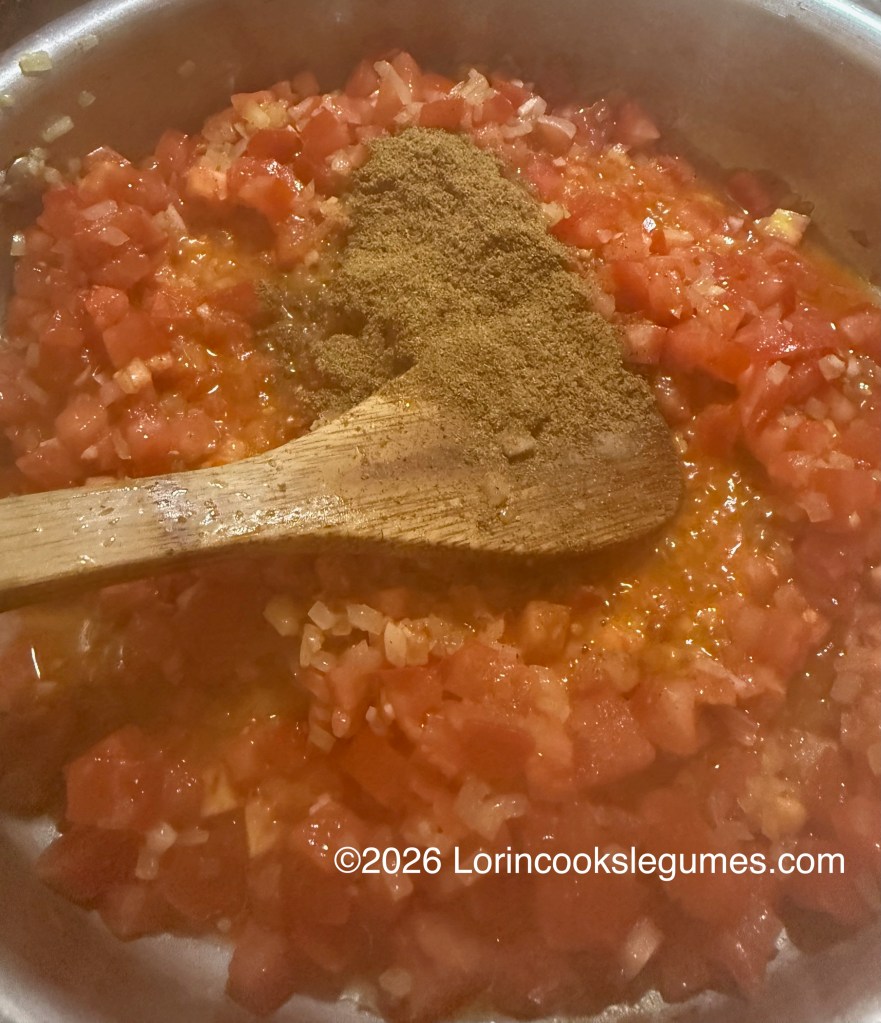
Add garlic and sauté 1-2 minutes, then add the diced tomato and salt, and cook, stirring occasionally, until the tomato starts to break down, about 5-8 minutes.
Meanwhile, put ground spices in a small pan over medium heat and toast until fragrant, about 1 minute, stirring constantly to avoid burning. Add toasted spices to the tomato mixture. (If using premade xawash, there is no need to toast it; just add it directly to the tomatoes.)
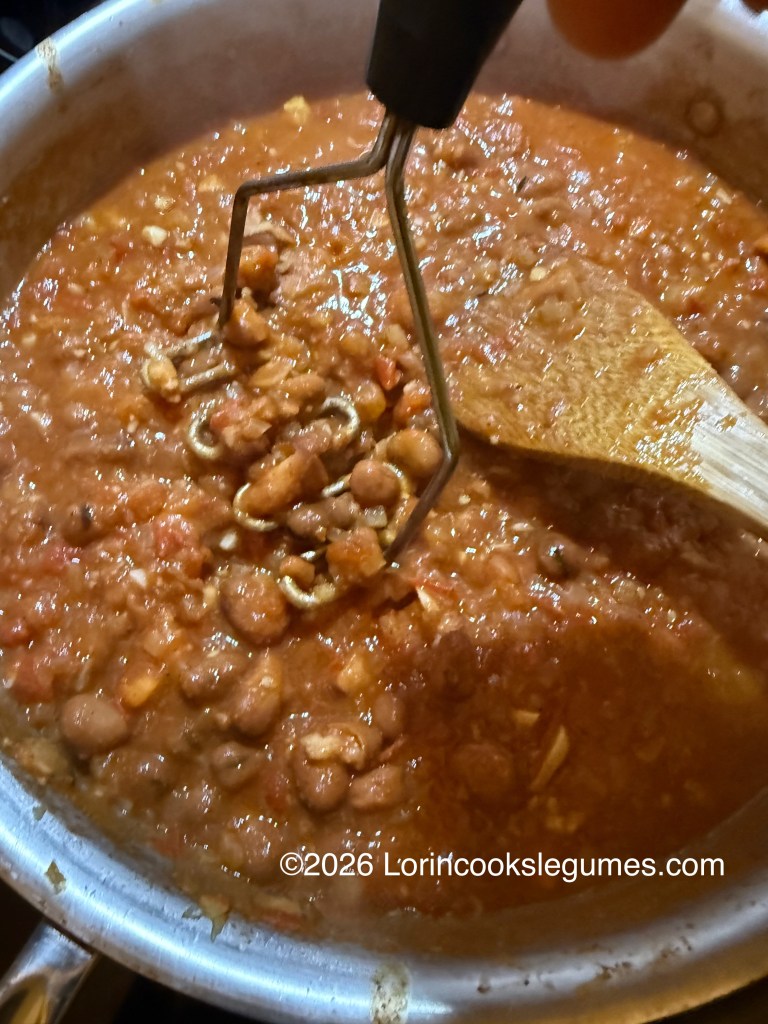
Add the beans and tomato sauce to the pot, and stir, mashing some of the beans. Once most of the beans are mashed, add 1 cup of water and mix well. Lower the heat and simmer for 10 minutes or so, stirring often.
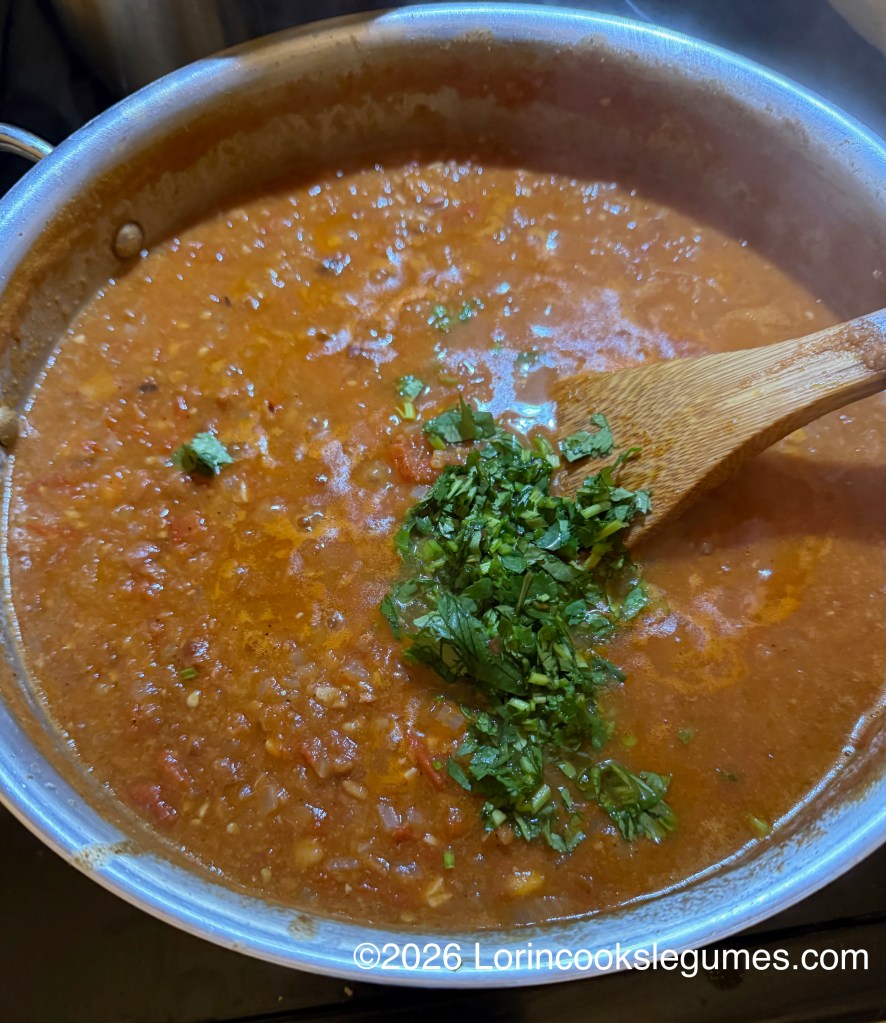
Stir in cilantro, and taste for seasoning. Continue to cook for about 5 more minutes, adding a little more water if necessary.
Serve with canjeero or other flatbread.
 Lorin cooks Legumes
2 Comments Add yours