
Rasam is a spicy South Indian soup-like dish. It is usually served as a side dish with rice. In a traditional South Indian meal, it is part of a course that includes sambar rice. Rasam has a distinct taste in comparison to sambar due to its own seasoning ingredients and is fluid in consistency. Chilled prepared versions are marketed commercially as well as rasam paste in bottles.
https://en.wikipedia.org/wiki/Rasam_(dish)
Rasam, or charu, is a broth or soup from South India, and is a staple dish in most households in the region, where most meals will include either rasam or sambar.
According to Ayurveda, (an alternative medicine system popular on the Indian subcontinent), our everyday food should contain 6 basic flavors to balance and promote health- sweet, sour, salty, bitter, pungent and astringent. The rasam recipe was developed to contain and balance all those flavors.
There are many different variations using different ingredients, but the most common versions seem to be basically broth with lots of spices. Most recipes use tamarind and jaggery to balance sour and sweet flavors, and tomato, either with or without the tamarind is another popular sour ingredient. Besides the sour elements, the broth is flavored with coriander, fenugreek, black pepper, cumin, chilies, garlic and mustard, and generally finished with a handful of fresh coriander leaves.
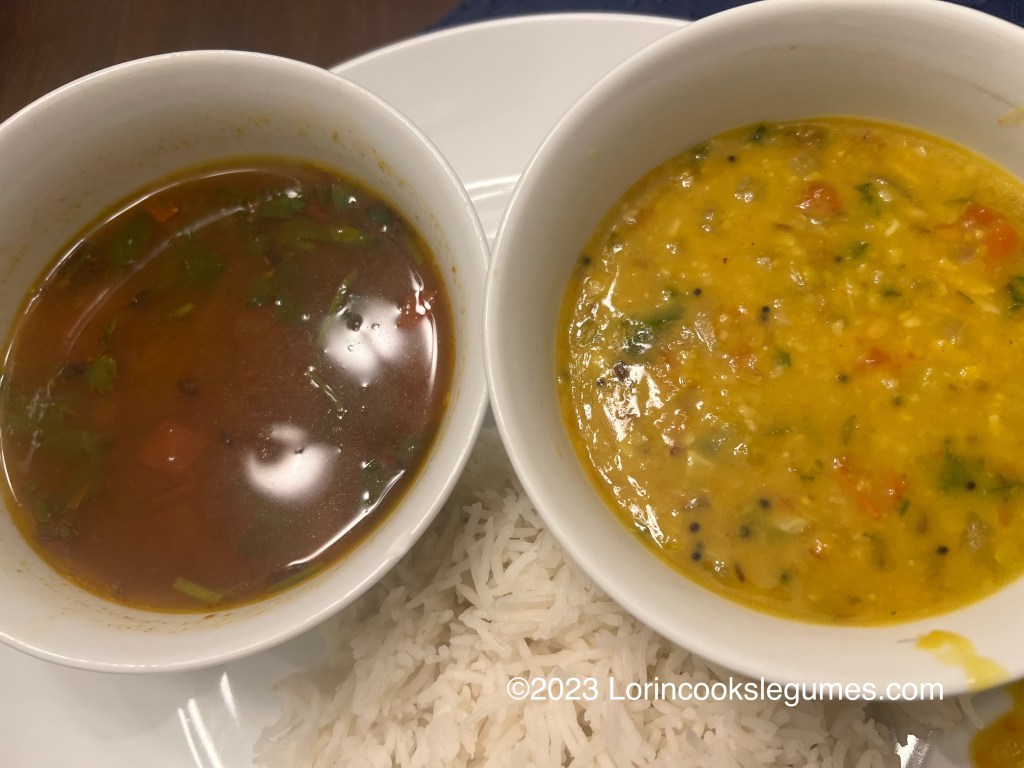
This particular recipe doesn’t have any legumes in it (although dal rasam is a thing, and I’ll be sharing that recipe in the near future), but rasam is often served as part of the same meal with rice and paruppu, the south indian version of dal. In Telugu rasam is known as charu, which lead to some confusion based on the Wikipedia article that got me here- if you click through to the paruppu recipe, you can read all about the sleuthing I had to do to figure out what recipe I was even researching here.
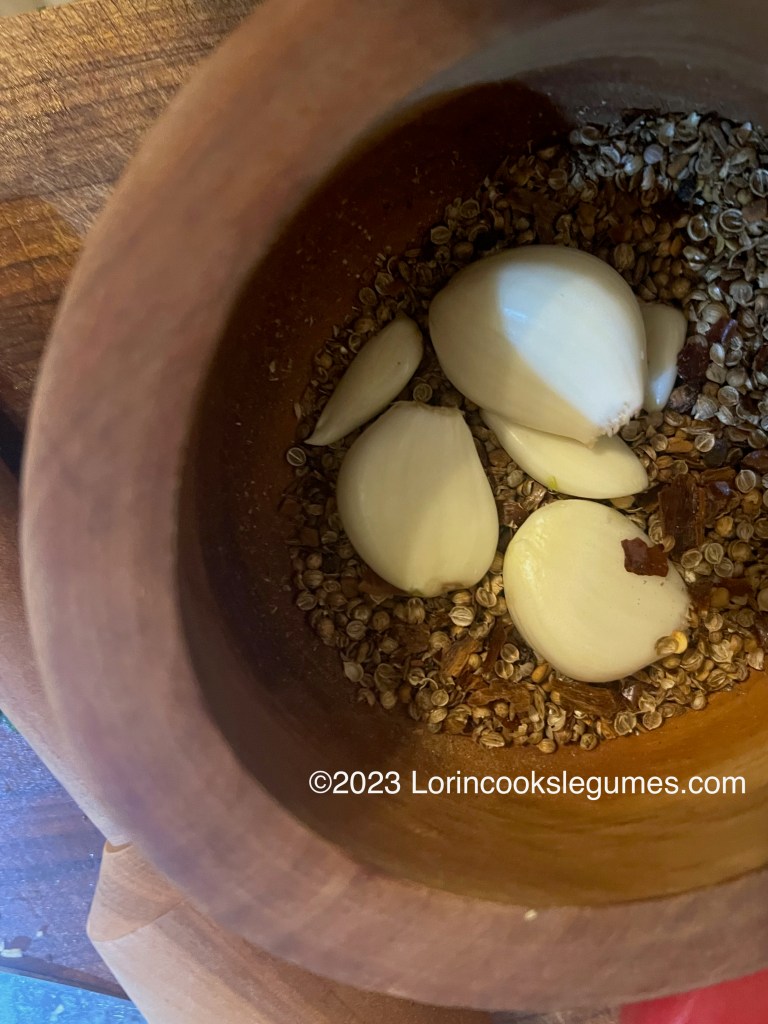
I own three mortar and pestles that almost never come out of the cupboard, but for this recipe I chose to pull one out to grind the spices. This resulted in a coarse powder rather than a fine one. My impression, after reading through a dozen or so different recipes, is that this dish is generally served as a clear broth, and it’s common to leave coarsely ground spices, as well as other solid ingredients behind in the bottom of the pan. Several of the recipes didn’t even call for soaking the tamarind separately, just having you throw the lump of tamarind straight into the soup, and leave the pulp and seeds to settle out.
Mixed with rice or paruppu, this is a delicious broth, with well balanced flavors. I will say, though, that on its own there was a serious hot pepper kick at the end. I used serrano peppers as my green chilies, which may be spicier than the usual green chilies used in India. There was also the matter of practically driving us out of the house when I added the chilies to the hot oil. Beware that fresh chilies + hot oil basically equals tear gas. In retrospect, I probably should have had the heat lower, as well as opened some windows and turned the fan on before I started. My wife, who was rehearsing for an audition, wasn’t happy with me filling the house with choking fumes.
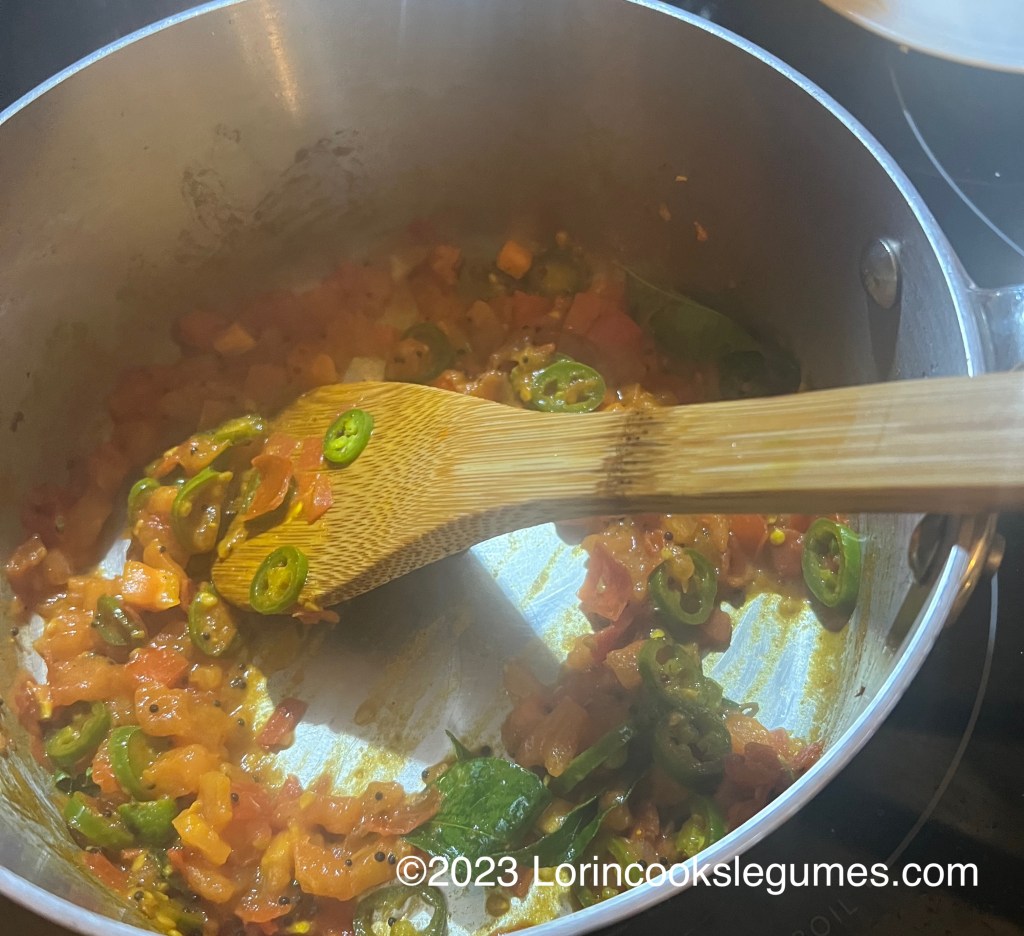
There are two distinct cooking methods when it comes to tomato rasams. The first method is the one that I followed here, dicing the tomato and cooking it until it breaks down. The second method calls for putting most of the ingredients, including whole tomatoes, in lukewarm water and mashing them with your hands to extract flavor, then just barely bringing it all to a simmer before serving. I may have to try that method some time, because it would likely give a very different flavor.






Tomato Rasam
Serves: 4
Prep: ~20 minutes
Cook: ~30 minutes
Total: ~50 minutes
(As an Amazon Associate I earn from qualifying purchases.)
1 ½ Tablespoons tamarind pulp
6 Tablespoons hot water
5 teaspoons coriander seeds
½ teaspoon fenugreek seeds
1 teaspoon black peppercorns
2 ¼ teaspoons cumin seeds
2-3 dry red chilies
6-7 garlic cloves, peeled
1 ½ teaspoons oil
¾ teaspoon mustard seed
2 green chilies, sliced
10-15 curry leaves (1 sprig)
¼ teaspoon asafoetida
2 large Roma tomatoes, diced
⅓ teaspoon turmeric
3 cups water
⅓ teaspoon salt
2 Tablespoons jaggery
1 Tablespoon oil
½ teaspoon urad dal
½ teaspoon cumin seeds
1 dry red chili
3 Tablespoons cilantro, chopped
Optional:
2 Tablespoons ghee
1 teaspoon sugar, in place of jaggery
2 Tablespoons coconut, toast and grind with the masala
4 teaspoons chana dal, toast and grind with the masala
¾ teaspoon red chili powder
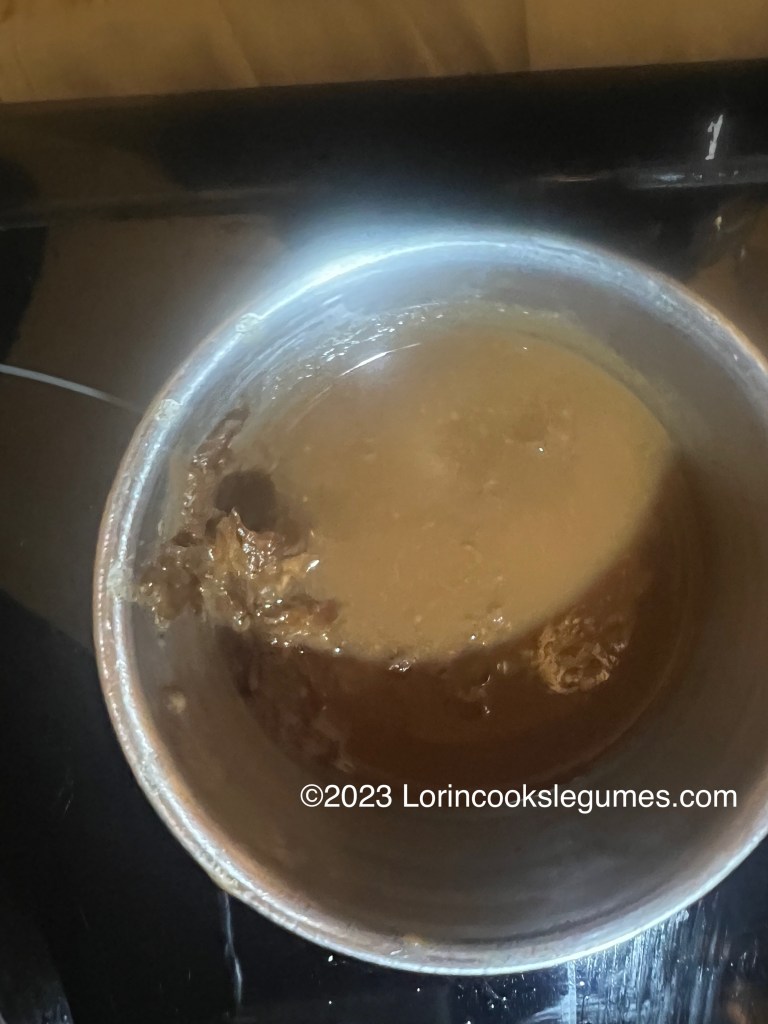
Pour hot water over tamarind pulp, and leave to soak until cool enough to touch. Squeeze the tamarind, separating seeds and skin from the pulp. Discard solids, saving the liquid.
Meanwhile, make the rasam masala powder. Heat a small pan over low to medium heat. Add the coriander seeds and toast until fragrant, 1-2 minutes. Pour onto a large plate to cool. Add the fenugreek to the pan and toast until it looses it’s raw smell. Add to the plate. Repeat this process with peppercorns, 2 ¼ teaspoons cumin, and 2-3 red chilies. Once the spices are cool, transfer them to a mortar and pestle or spice grinder and grind to a powder. If using a mortar, add the garlic and smash lightly. If using a spice grinder, smash the garlic with the side of a knife and add it to the ground spices.
Heat 1 ½ teaspoons oil in a small soup pot. Add the mustard seed and cook until they pop, about 30 seconds. Add the green chilis and sauté until the raw smell disipates. Add the curry leaves and asafoetida and cook until the leaves crisp.
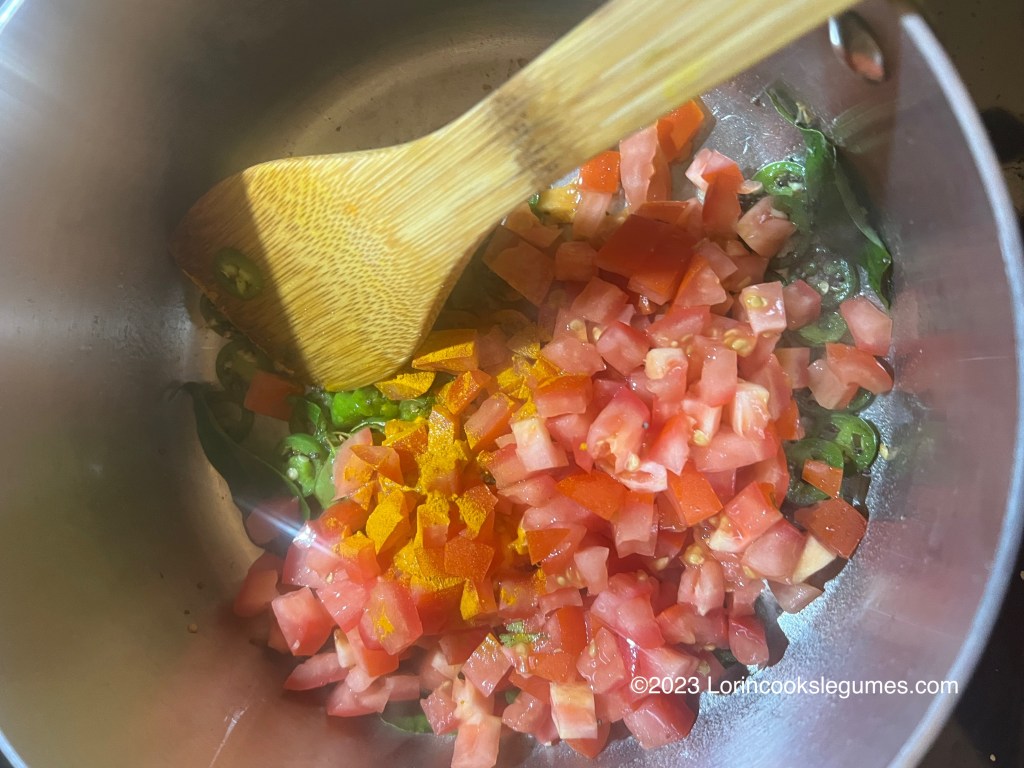
Add tomato and turmeric. Cook for about 5 minutes until the tomato breaks down.
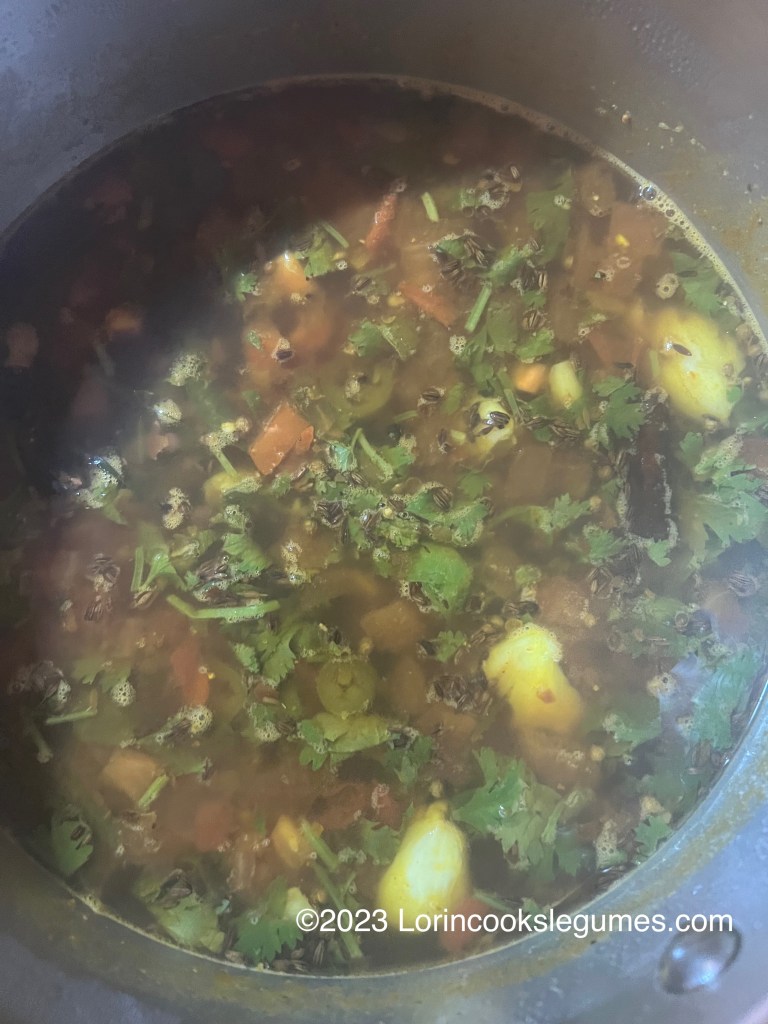
Add water, salt, and jaggery, along with the tamarind liquid and the ground spices. Bring to a boil, reduce heat and simmer for about 5 minutes. Remove from heat.
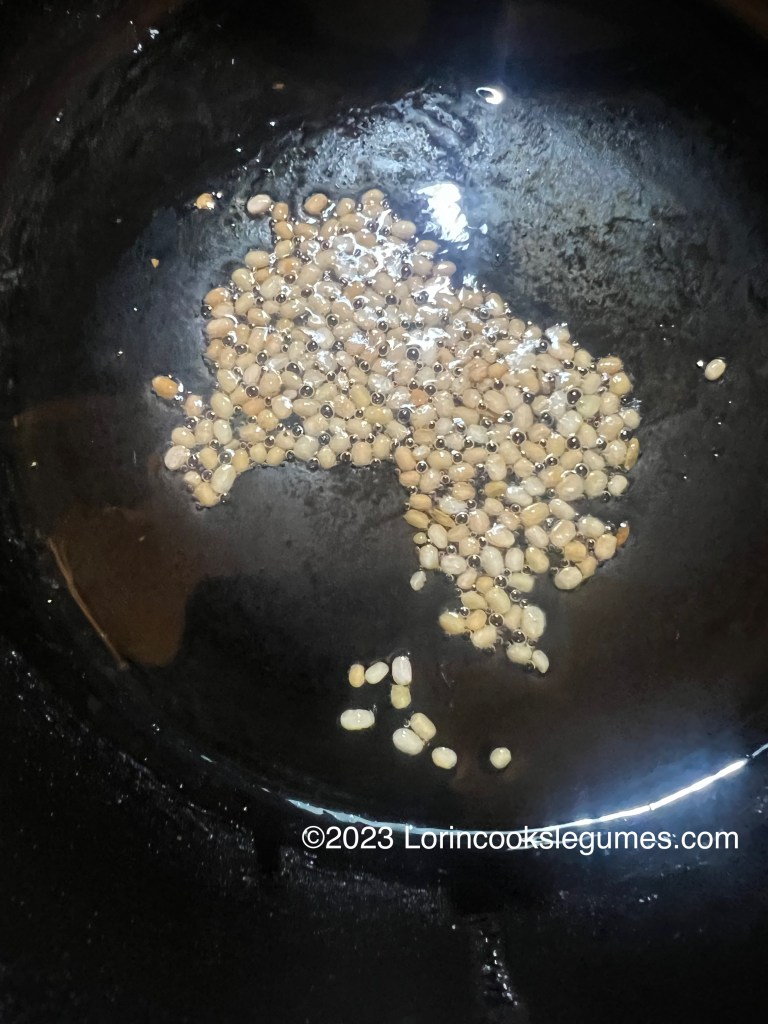
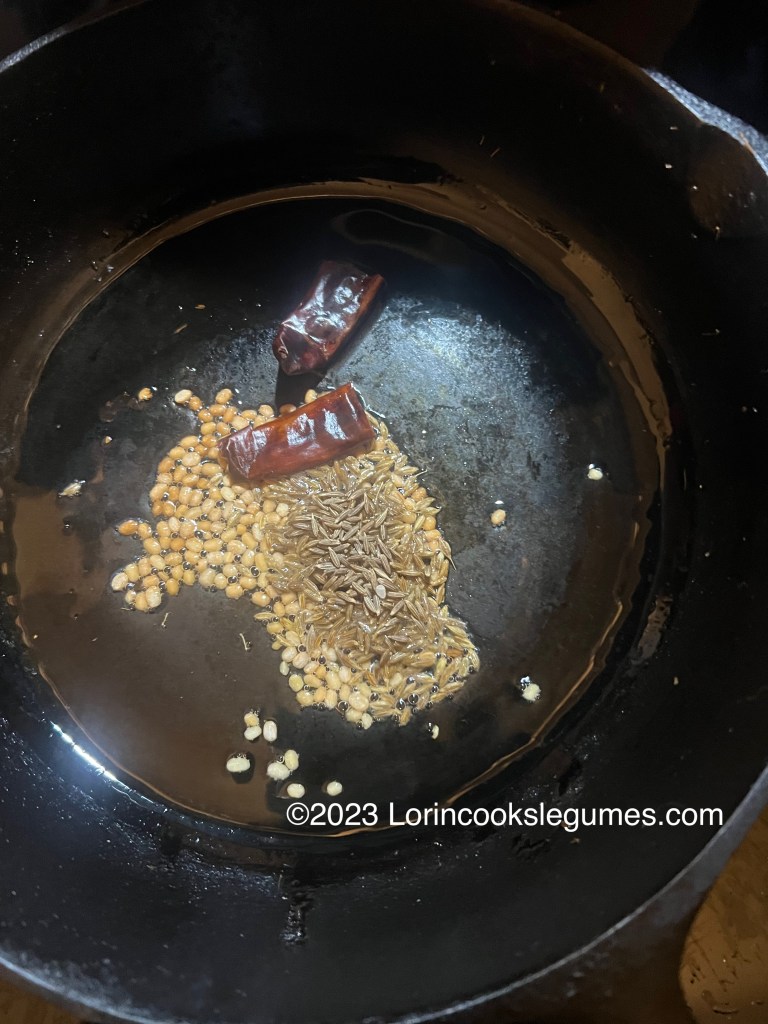
Heat 1 Tablespoon of oil in a small pan. Add urad dal and sauté until it is golden. Add ½ teaspoon cumin and 1 red chili. Cook until the cumin sputters and chili starts to brown slightly. Pour into rasam and add cilantro. Stir well and cover for 10 minutes.
Serve with rice and paruppu, dal, or your favorite vegetable dishes.
 Lorin cooks Legumes
2 Comments Add yours