
Depending on the availability of seasonal ingredients there are several variations:
https://en.wikipedia.org/wiki/Caldo_galego
- Caldo branco includes chickpeas and beans.
- Caldo chirlo or vigueiro
- Caldo de castañas uses chestnuts
Today we are delving, again, into the world of Portuguese/ Spanish soups in the caldo galego/ caldo verde family. Wikipedia’s caldo galego page lists several variation, depending on the seasonal availability of ingredients. One of them they list as caldo branco, literally white broth, which they say includes chickpeas and beans… Well, either my Google skills totally failed me, or whoever wrote the Wikipedia page is misinformed. I found two recipes for caldo branco, both of which were basic veal stock recipes and had nothing to do with beans. In the culinary world, veal stock made with raw (as opposed to roasted) bones is called often called white stock, so it makes sense that in other languages it would have the same name.
However there were many recipes for caldo (or sopa) de feijão branco, or white bean broth/soup. That sounds more like what we’re looking for. Given that the basic ingredients are pretty similar to caldo verde, with the addition of beans, I feel like I’m on the right track here. A number of the recipes I looked at did call for some sort of leafy greens, butI didn’t use any in this batch. There several choices in the optional ingredients section though. None of the recipes I looked at called for chickpeas though, so another strike against Wikipedia.
Being a Portuguese recipe, there were of course variations from all over the world. I think my base recipe stayed pretty close to the original, but there are some odd ingredients that snuck into the optional section. Most notably arracacha which is an Andean tuber popular in South America. I did not put any effort into trying to track that ingredient down. Maybe another time.
I chose to puree the soup, which seemed to be the general method I saw. However you could certainly skip that step if you like your soup chunkier. It might stay more of a “caldo” (broth) instead of a thick pureed soup if you did that.




Caldo de Feijão Branco
Serves: 8
Prep: 15 minutes
Cook: 1:00
Total: 1:15
2 cups dry white beans
OR
15 oz cooked white beans, drained
1 ½ Tablespoons olive oil
2-3 links Linguica Calabresa sausage, sliced
1 heaping cup bacon, diced
1 large onion, diced
2 cloves garlic, minced
2 carrots, diced
18 oz red potatoes, diced
1 ½ bay leaves
5 ½ cups water
¾ teaspoon salt
⅛ teaspoon black pepper
½ cup green onion
Optional:
2-3 Italian sausages, casings removed
Bacon crumbles, to garnish
7 oz kale, shredded
4 ½ oz Spanish chorizo, sliced
1 ⅓ cups leeks, sliced
2 tomatoes, diced
1 Tablespoon parsley, to garnish
2 Tablespoons butter
1-2 Vegetable stock cubes
1 ¼ cup cabbage, shredded
4 cups chicken broth, in place of 4 c water
½ teaspoon turmeric
2 arracacha tubers, diced
5 collard leaves, shredded
1 teaspoon smoked paprika
Nutmeg, to taste
8 oz turnip greens, sliced
3 stalks celery, diced
If using dry beans, pick over your beans, removing any bad beans or foreign objects. Rinse, drain, cover with cool water and leave to soak overnight.
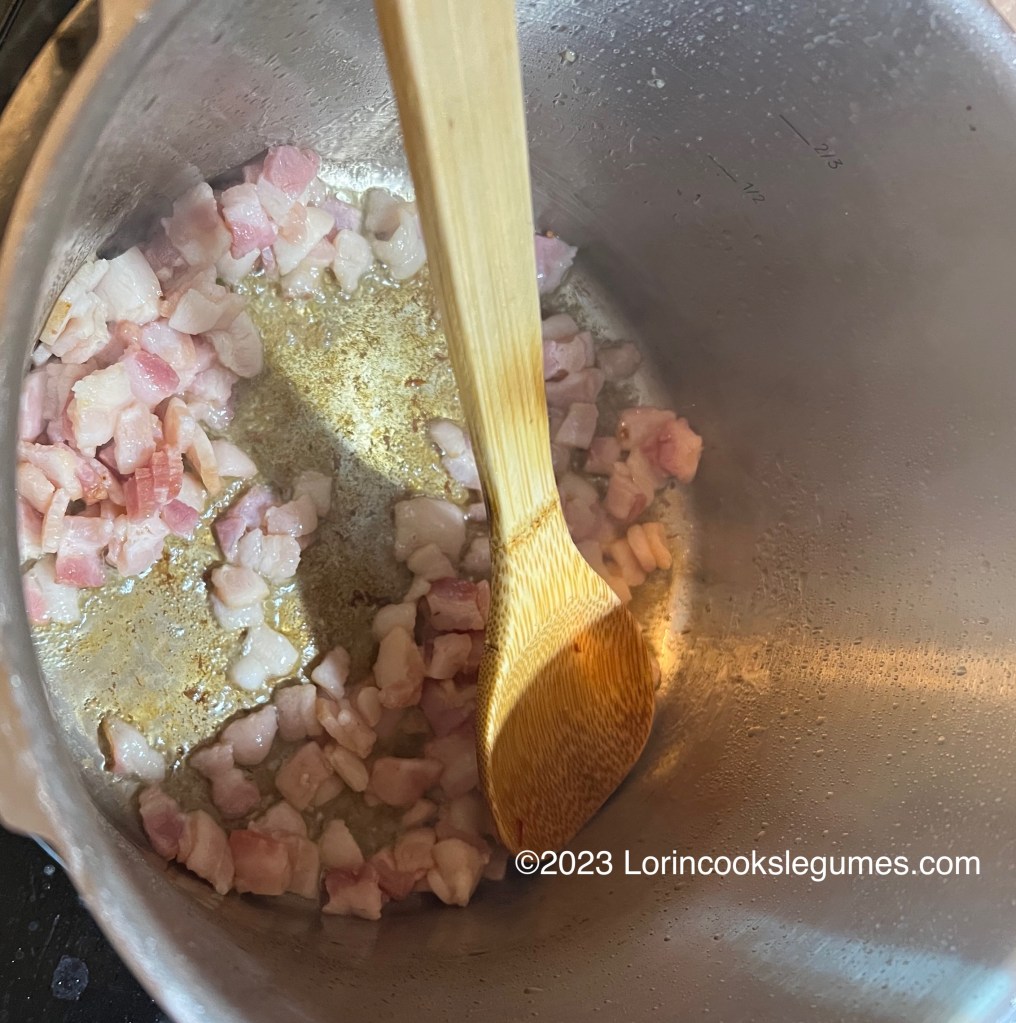
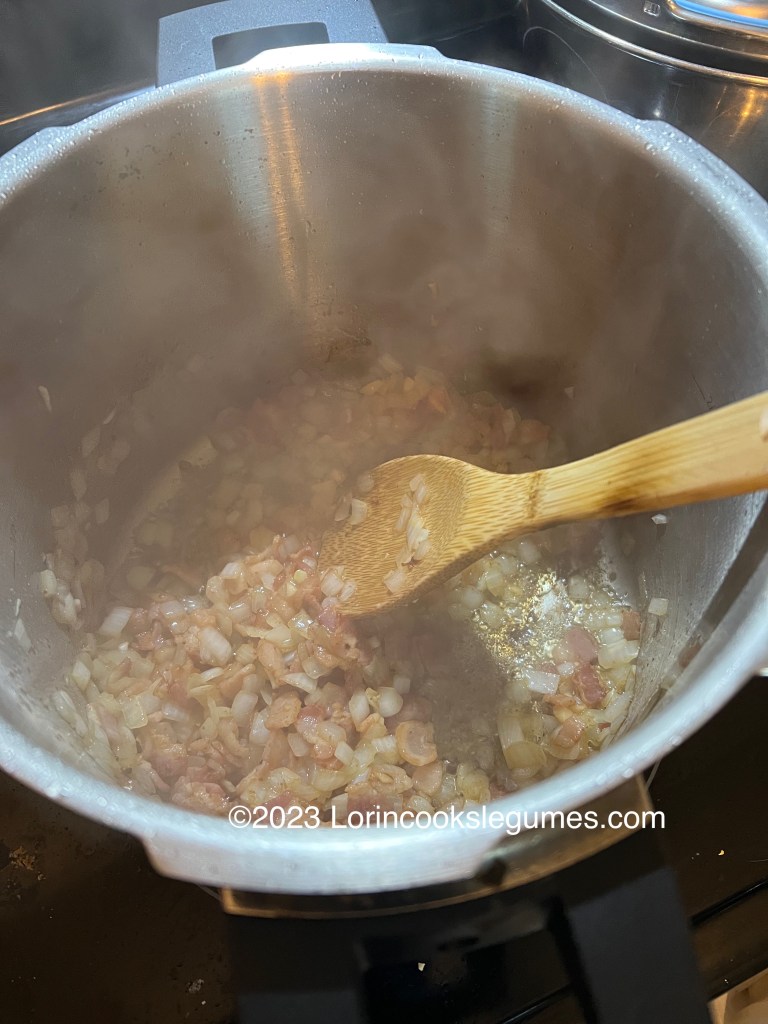
Heat olive oil in a pressure cooker over medium heat. Add the sausage and cook until it begins to brown, 5 minutes or so. Remove sausage to a plate and set aside. Add the bacon to the pan, and cook until the fat begins to render. Add the onion and garlic and sauté until it begins to brown, 5-10 minutes.
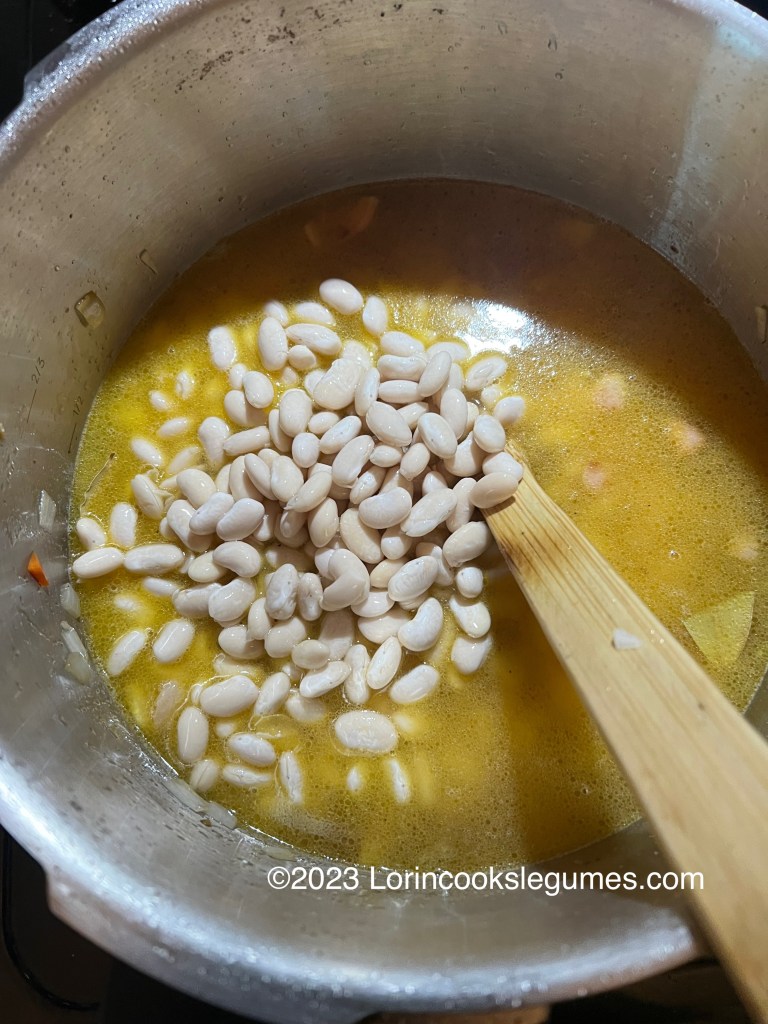
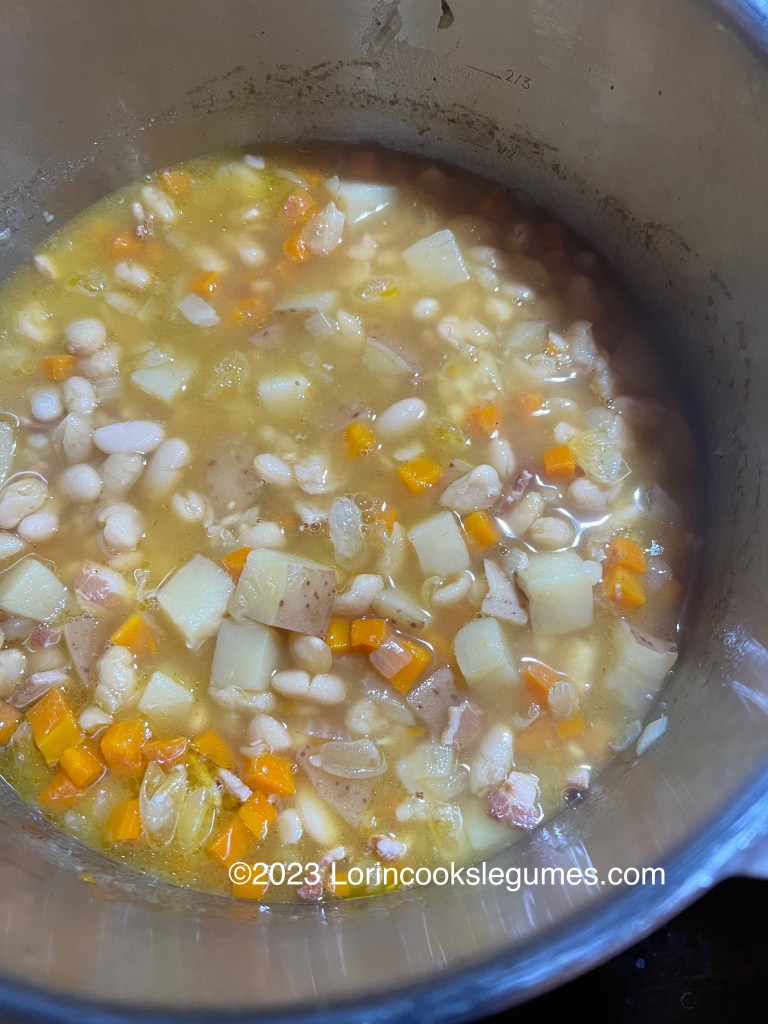
Add the carrots, potatoes, bay leaves, water, salt and pepper. Drain the beans and add them to the pot. Seal the pressure cooker, bring it up to pressure, and cook for about 30 minutes (or just 15 if using precooked beans). Remove from heat and allow the pressure to release naturally.
When it is safe, remove the lid, and allow to cool for another 10-15 minutes. Use an immersion blender to puree the soup (or work in batches to puree in a regular blender). Return the sausage slices to the soup and bring back to a simmer.
Taste for seasoning and serve, garnished with green onion.
 Lorin cooks Legumes