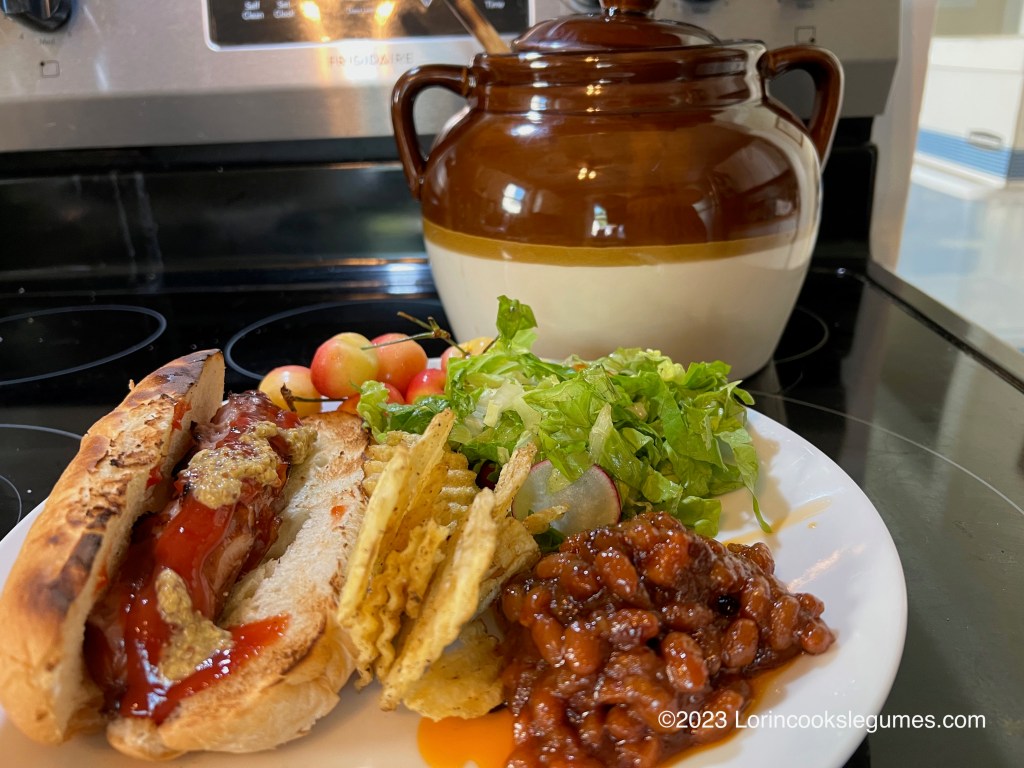
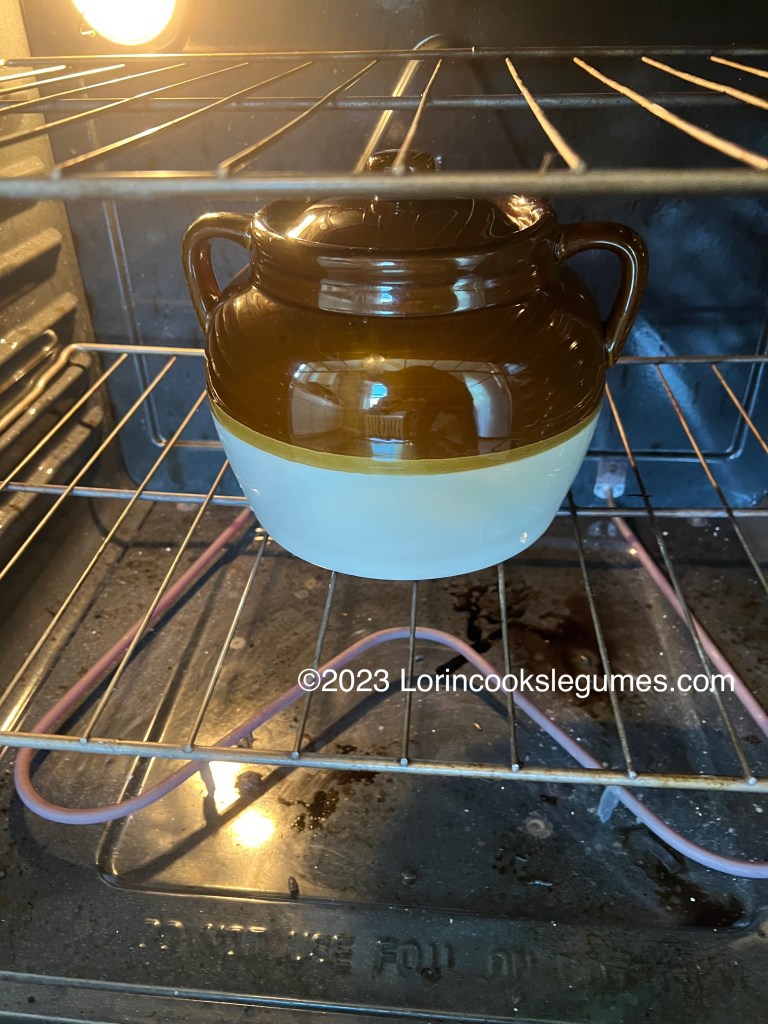
A beanpot is a deep, wide-bellied, short-necked vessel used to cook bean-based dishes. Beanpots are typically made of ceramic, though some are made of other materials, such as cast iron. The relatively narrow mouth of the beanpot minimizes evaporation and heat loss, while its deep, wide, thick-walled body facilitates long, slow cooking times.
https://en.wikipedia.org/wiki/Beanpot
This time I decided that I really am going to do something a little different. No travel necessary this time, just the purchase of my very own beanpot.
A beanpot is a type of cooking vessel used (surprise, surprise) to cook beans, specifically baked beans. They are usually ceramic, with a narrow mouth and a wider body to keep moisture trapped inside during long slow bakes. I’ve seen them described as the Crockpot of early American kitchens because, besides beans, they work for a number of other dishes that would be left to simmer in the oven all day as well.
Many early settlers generally followed the Puritan traditions forbidding all work on the sabbath, including cooking, so dishes that could be left in the oven all night to allow for a hot meal on the sabbath were developed, baked beans being one of the most popular.
Some sources say that the earliest models were made of cast iron, which I suppose works better than ceramic for cooking in an open fireplace. Either way they were a common kitchen implement in New England well into the 20th century. Boston, in particular, has become associated with baked beans, and the name “beanpot” is given to several sporting events that take place in the city, particularly a college hockey tournament.
The particular bean pot that I bought is the R&M International Traditional Style which I purchased from Amazon. (As an Amazon Associate I earn from qualifying purchases. I am not affiliated with R&M International and received no compensation for this review). It’s oven, microwave and dishwasher safe, but cannot be used on the stove top, which is probably the one downside I see, as anything that needs to be precooked before going in the oven will require an extra pan.
So far I’ve only used it once, but first impressions have me kicking myself for waiting until I’m pretty much done with the baked beans section of my trip through Wikipedia to buy it. More experiments will need to be performed to say for sure, but I think the the shape really does help hold heat and moisture in the pot better than my Dutch oven does.
I chose to revisit my New England Maple Baked Beans recipe to test out the beanpot. I did use canned beans rather than starting from scratch (running the oven for 10 hours in July didn’t seem like the best use of energy). Back when I first made that recipe I said it might become my go to baked bean recipe. This time around I thought it was too sweet. Looking at the recipe again, I suspect that I should have called for at least one, if not two, more cans of beans to match the quantity of cooked beans you would get using the ammount of dry beans I call for. I also added the optional oil, which was a huge mistake given that most of the salt pork I used was a block that was about 99% pure fat. The beans were still tasty, if a little on the candied side, but needed a ton of fat drained off before serving. However, neither of those problems were caused by the cooking vessel, and I was happy with it’s performance, and as a bonus it was pretty easy to clean (although maybe thats because there was too much fat for anything to stick to it).



 Lorin cooks Legumes