
Usal or Oosal (Marathi: ऊसळ) is a dish from the Indian state of Maharashtra. It is made of legumes such as peas, lentils, black-eyed beans, matki (moth bean), moong (green gram) or Hyacinth beans. Generally, the beans are soaked in water and allowed to sprout for a day or two. The sprouted beans are stir-fried along with onions, spices and curry leaves in oil. A little water is added to cook the sprouts. It usually has a thick gravy-like consistency. The use of spices varies according to the sprouts used, and according to taste.
https://en.wikipedia.org/wiki/Usal
Happy Holidays!
I spent my Christmas home alone with Covid, so it hasn’t been particularly a particularly festive one for me, but I did have enough energy to cook this dish for my Christmas dinner. I like to think the ginger, chilies, and spices in it will help my body kick this virus.
Usal is a closely related dish to misal, which I wrote about last time. Both are Maharashtrian dishes, made with sprouted beans, with similar flavor profiles. As best I can discern from the various recipes I looked at, misal is generally made with moth bean sprouts, is usually made with lots of spicy gravy, good for mopping up with pav rolls, and has a pretty specific list of garnishes that almost always are served with it. Usal, on the other hand, seems to just be a generic name for a dish made with sprouted legumes. I used moth beans again, but they barely beat out mung as the most common bean called for in the different recipes I looked at, with several other options like white peas making appearances as well. The consistency of the final dish also varied from soupy/saucy like misal, to a dry “sabzi” style curry. My recipe came out on the dry end, but you could always increase the water to reach your preferred consistency. In short, I would say that all misal is usal, but not all usal is misal.
Once again, you need to plan a few days ahead and sprout your beans. Even if you chose to use mung bean sprouts, you want sprouts with the bean still attached, which doesn’t seem to be how bean sprout are usually sold in the supermarkets I shop at, so you’ll need to sprout your own. I probably could have stood to let my sprouts grow for another day or two, as they were still pretty small, but given that it was Christmas day and I couldn’t get groceries to make something else (even if I wasn’t sick), I just went with it.
Sprouting beans helps us digest them better, freeing up more nutrients for our bodies to utilize.
I chose to cook the sprouts in a regular pot instead of the pressure cooker this time, in order to avoid over cooking them. I simmered them for about 20 minutes, and probably could have gone a little longer as the beans still had a bit of crunch to them, but they’re still soft enough to eat. A number of the recipes I looked at just sautéed the sprouts with the spices and then added water and simmered everything together until the sprouts were cooked, so pre-cooking them isn’t strictly necessary, but I stuck with that method.
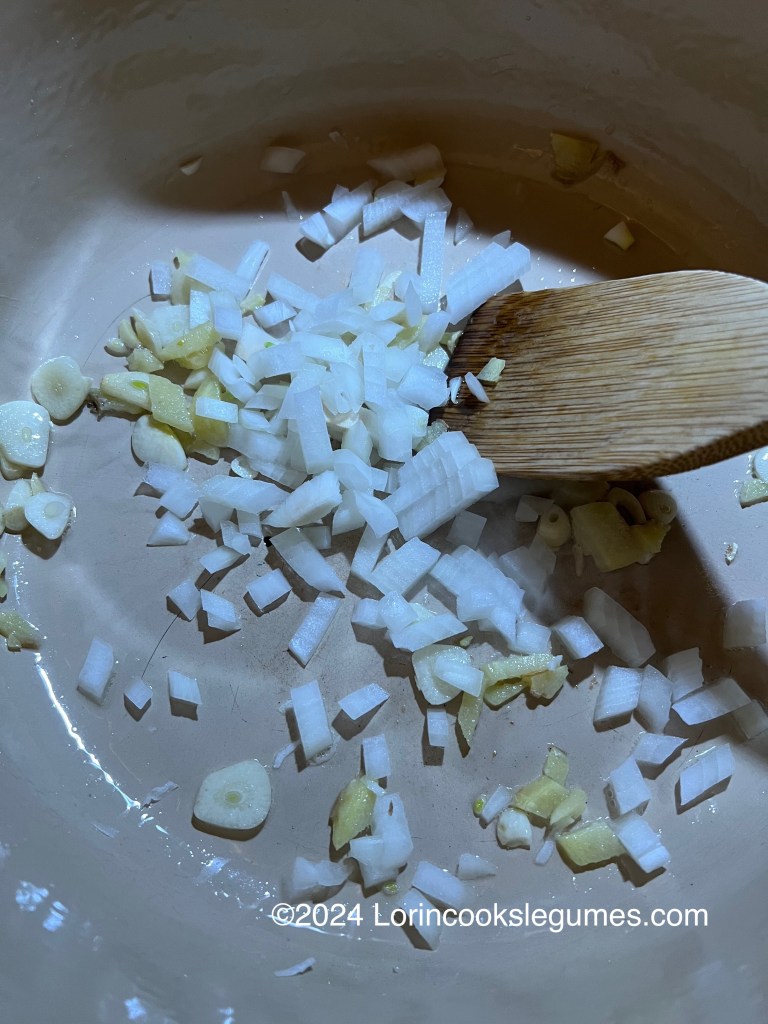
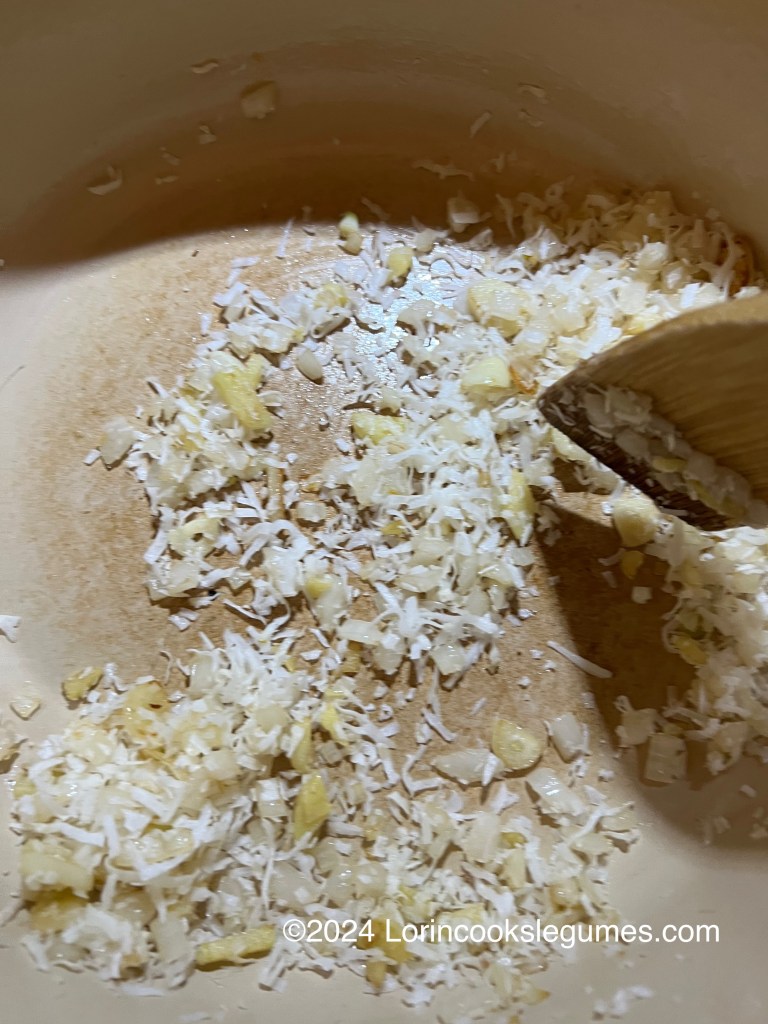
While the sprouts are cooking, the next step is to make a roasted coconut paste. We start by frying garlic, ginger and onion in a little oil, then adding dry coconut and stirring until golden brown. Once the mixture is cool we blend it with a little water until it’s smooth. If you have a mini food-processor or something along those lines that would be the ideal tool for this job; there was barely enough material in my blender to contact the blades and I had to scrape the sides down several times before it got really smooth.
My recipe says to cook the usal in the same pot you fried the coconut in. I did wipe it out first with a paper towel, because I used fairly finely grated coconut and I didn’t want any bits left to burn when I was frying the spices and onion in the next step. If you use larger coconut flakes that might be unnecessary if you make sure all the bits of coconut are out of the pan.
I was a little surprised when garam masala turned up as the most common spice blend when i calculated my averages, because most of the recipes I looked at listed it as an inferior option to use if you can’t get hold of the type of masala they recommended. However there were enough different opinions on what the “authentic” blend to use was that the handful of recipes that just straight up called for garam masala won out. Goda masala was the second most common, and probably would be the more authentic choice, but I had garam masala in the pantry so I stuck with the one that came first on my list.
Given the way I create my recipes, I think that I tend to call for less oil and salt than is typical. I use a spreadsheet to put in quantities for each ingredient from a bunch of different recipes, which I then average out and round to a reasonable quantity for cooking. (I’m trying to get better about getting rid of weird fractions that don’t generally have marked measuring utensils, like ⅓ teaspoon or ⅞ of just about anything). If a recipe says “to taste” or simply lists an ingredient without a quantity, I enter a zero. If there’s enough of them that the final average is obviously low I’ll say to taste in my recipe, but if there’s only a couple of them it’s still going to skew the average down. All that to say, I suspect you could get away with using more oil if you so desire. A number of the recipes I looked at mentioned oil separating from the mixture as a sign that it was ready to serve, but I don’t think that I used enough oil for that to happen (although I guess the coconut probably should release some oil as well.)
**To sprout moth beans* (or any other beans, for that matter):
Pick over your beans and remove any foreign objects and bad or broken beans. Rinse well in cool water, then cover with cool water and leave to soak for 8-12 hours. Drain the water and cover your bowl with a clean cloth, leaving the beans in the dark but allowing them to breathe. (Many recipes call for putting them in a muslin bag at this point, but leaving them in the bowl worked fine for me). Depending on the age of your beans and the temperature in your kitchen they should begin to sprout in anywhere from 12 hours to 2-3 days. Give the beans a rinse every 12 hours or so to keep them moist, until sprouts reach your desired length. Once the sprouts have grown to your desired size, store them in the refrigerator and use them within a couple of days.
1 cup of dry moth beans yielded me about 2 ½ cups of sprouts. If my moth beans weren’t several years old, with a fairly low germination rate, and/or I had let them grow for a couple more days it probably would have been greater.










Usal
Serves: 4
Prep: 15 minutes
Cook: Cook: ~1 hour
Total: ~1:15, plus a few days to sprout your beans.
(As an Amazon Associate I earn from qualifying purchases.)
2 ¾ cups sprouted moth beans**
1 ¾ cups water
¾ Tablespoon oil
4 cloves garlic, rough chopped
1 inch ginger root, rough chopped
½ cup onion, diced
½ cup unsweetened dry coconut
⅓ cup water
1 ½ Tablespoons oil
¾ teaspoon mustard seed
¾ teaspoon cumin seed
½ sprig curry leaves
¼ teaspoon asafoetida
2 green chilies, minced
1 large onion, diced small
½ teaspoon turmeric
1 ⅛ teaspoon red chili powder
1 ¾ teaspoons ground coriander
1 cup tomato, diced small
1 ¼ teaspoon garam masala
OR
2 teaspoons goda masala
¼ teaspoon salt, or to taste
1 ½ cups water
1 ⅔ teaspoons jaggery
¾ Tablespoon lemon juice, or to taste
2 Tablespoons cilantro, minced
Optional:
Mixed sprouts, in place of moth sprouts (try 1 part mung beans and 2 parts moth beans if growing your own)
1 Tablespoon coriander seed, in masala
½ Tablespoon fennel seed, in masala
1 ½ teaspoons ginger paste, in place of fresh
1 teaspoon garlic paste, in place of fresh
½ teaspoon sugar, in place of jaggery
⅛ teaspoon turmeric, in sprout cooking water
1 small bay leaf, cooked with sprouts
½ teaspoon cayenne, in place of red chili powder
1 teaspoon Kashmiri red chili powder
2 ¾ teaspoons ground cumin
1 Tablespoon coconut, for garnish
Pav rolls, on the side
1 ½ cups white peas, soaked overnight, in place of sprouts.
Red onion, finely diced, for garnish
1 Tablespoon kanda lasun masala, in place of garam masala.
Thoroughly rinse your sprouts and place in a pan with 1 ¾ cups water. Bring to a boil, and simmer until beans are soft, but not falling apart, 20-30 minutes. Drian and set aside.
Meanwhile, heat ¾ Tablespoon neutral oil in a large pan. Add garlic and ginger and cook until the raw smell goes away. Add ½ cup onion and sauté until golden. Add coconut and continue to sauté over low heat, stirring constantly, until coconut is golden brown. Transfer mixture to a plate and allow to cool completely.
Transfer the onion-coconut mixture to a blender. Add about ⅓ cup water and blend to a smooth paste. Set aside.
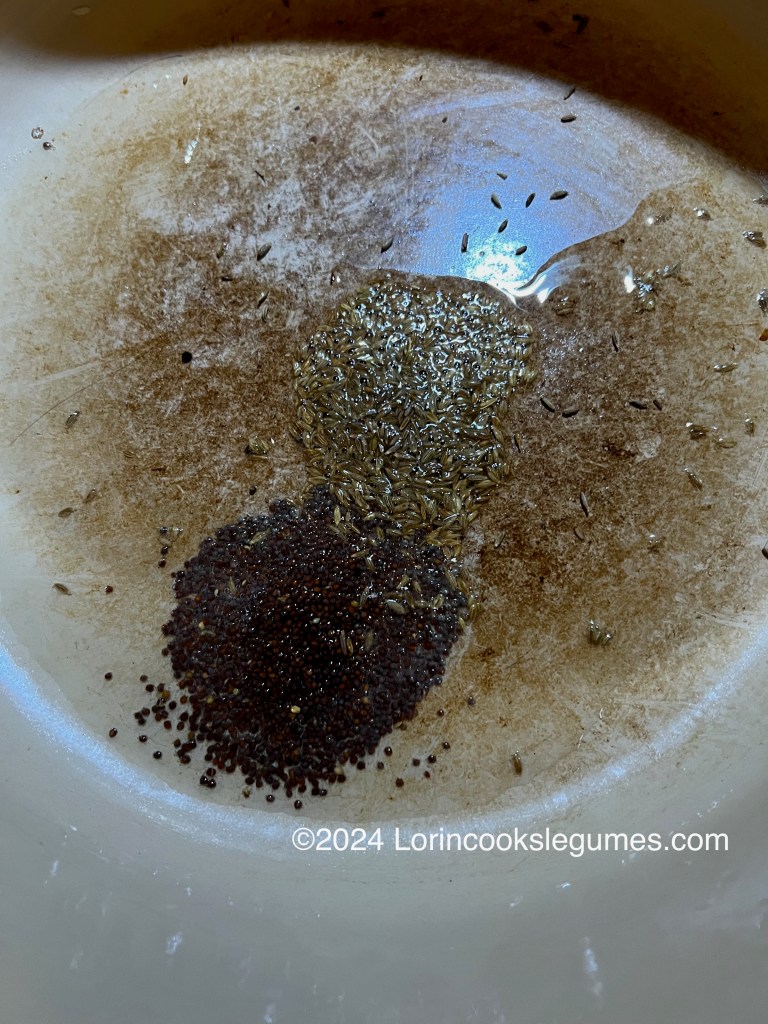
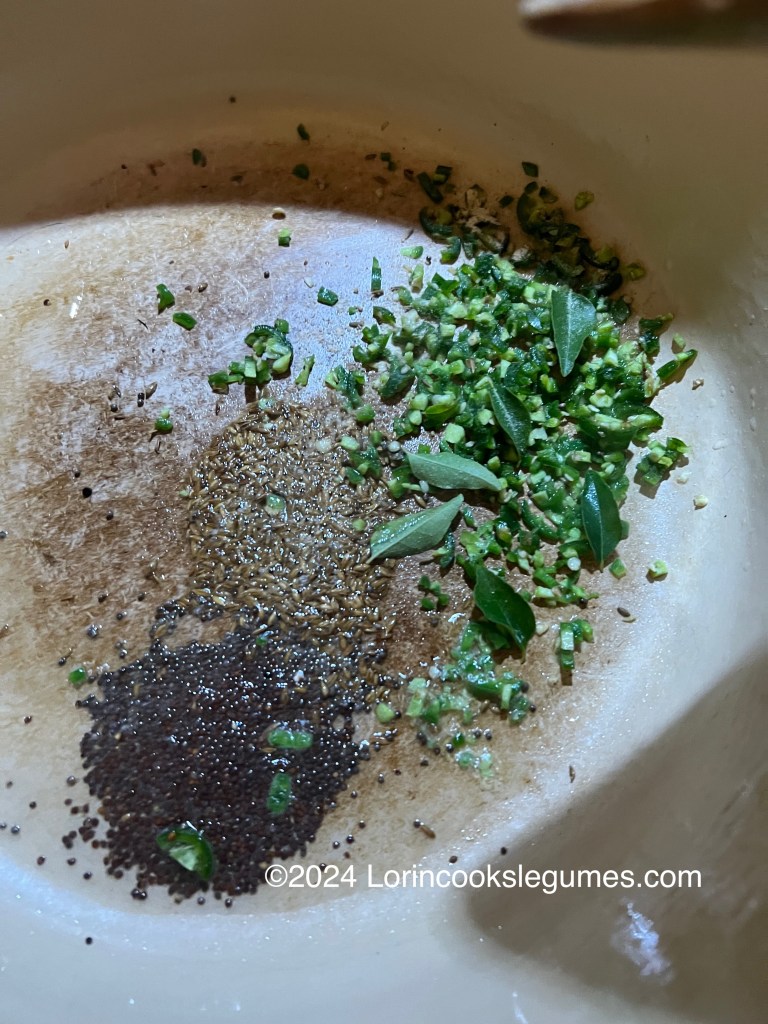
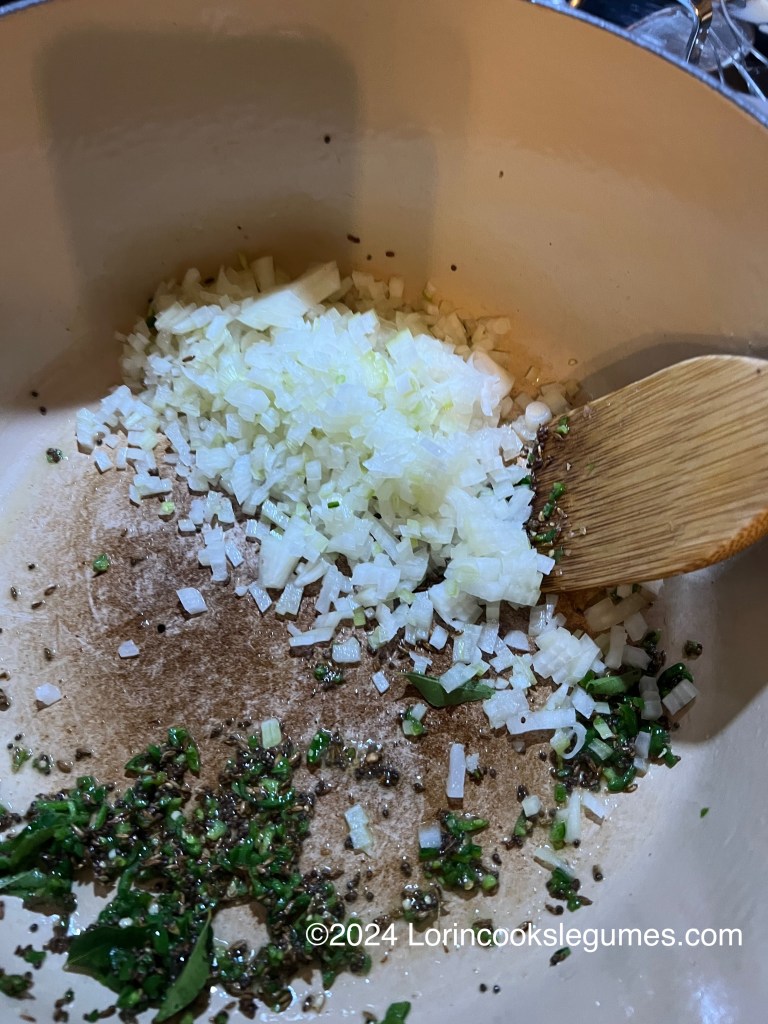
In the same pan you cooked the coconut in, heat 1 ½ Tablespoons oil. Add mustard seed and cumin seed and cook until they sputter. Add curry leaves, asafoetida, and green chilies, and cook for a few seconds, until leaves are crisp. Add 1 large onion and sauté until golden.
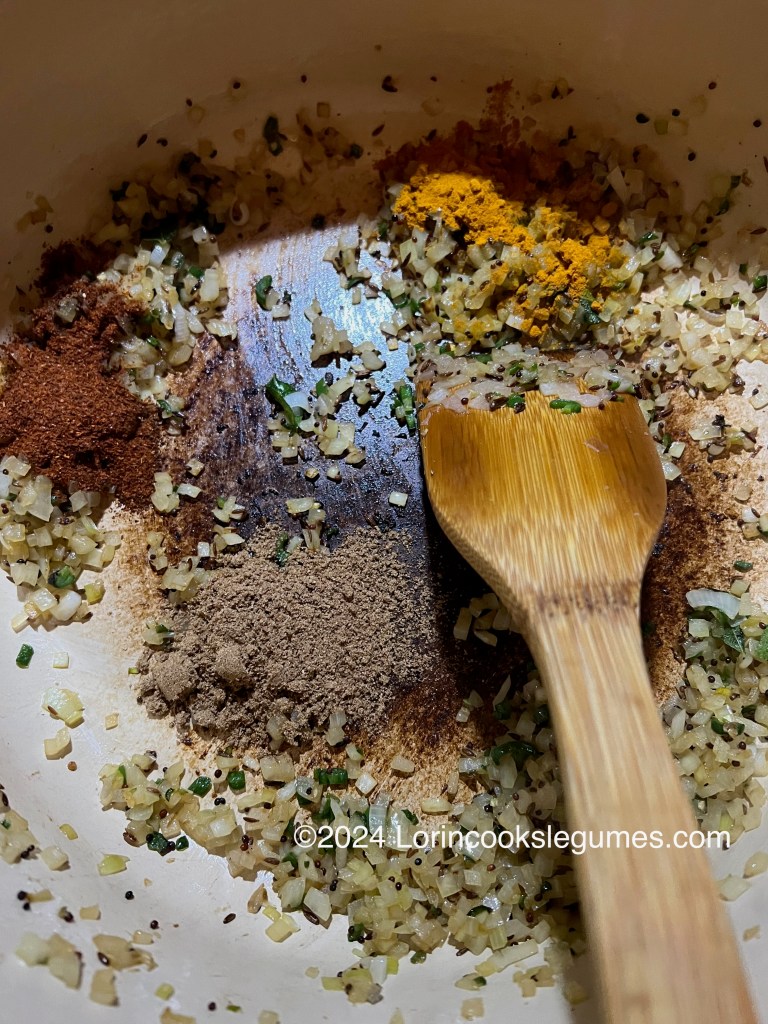
Add turmeric, red chili powder, and coriander powder. Mix well and cook for 1 minute or so. Add the tomato and cook for about 5 minutes, until tomato softens. Add the coconut puree and cook, stirring, for a couple of minutes, until oil separates.
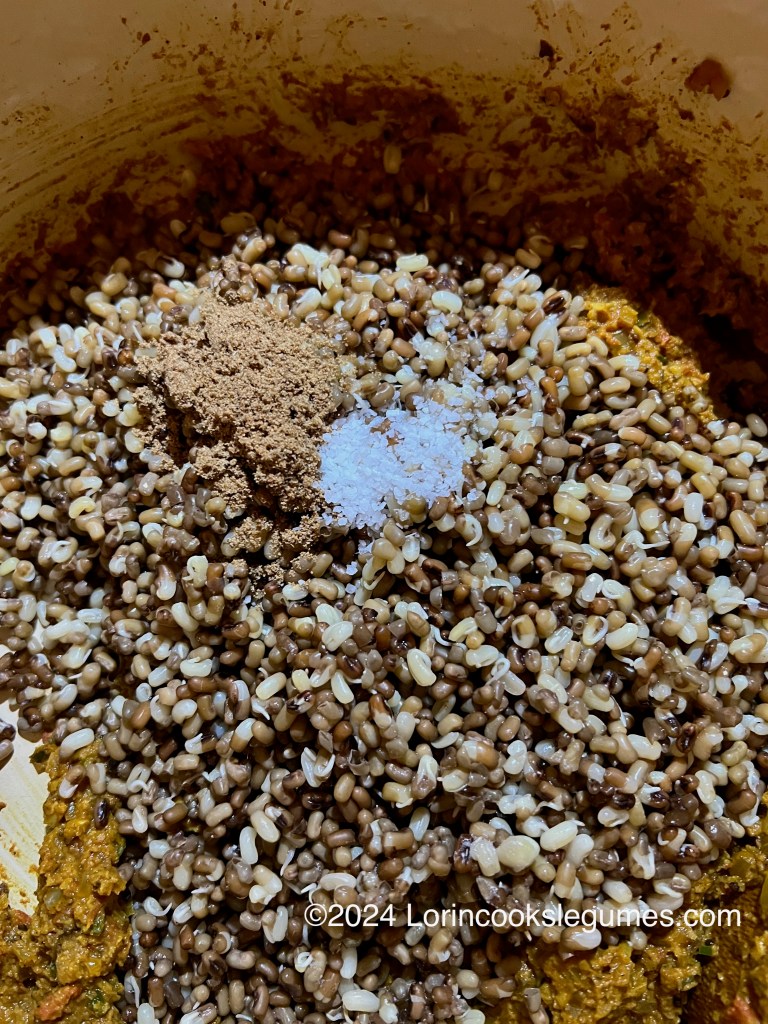
Add the cooked sprouts, masala powder, and salt. Cook, stirring, for a minute or two, until sprouts are well coated.
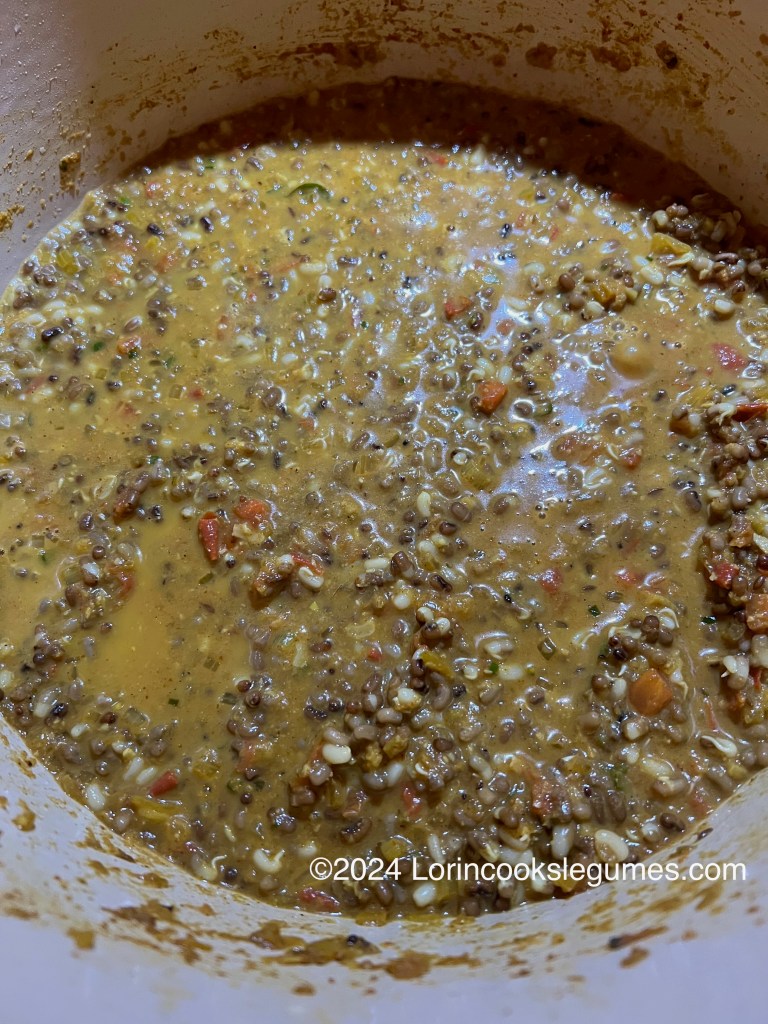
Add 1 ½ cups water and bring to a simmer. Cook for 5-10 minutes, until flavors meld.
Stir in jaggery and lemon juice, and adjust seasoning to taste.
Garnish with cilantro and serve with rice or roti.
*As an Amazon Associate I earn from qualifying Amazon purchases.
I receive no compensation for mentioning any other websites or product.
 Lorin cooks Legumes