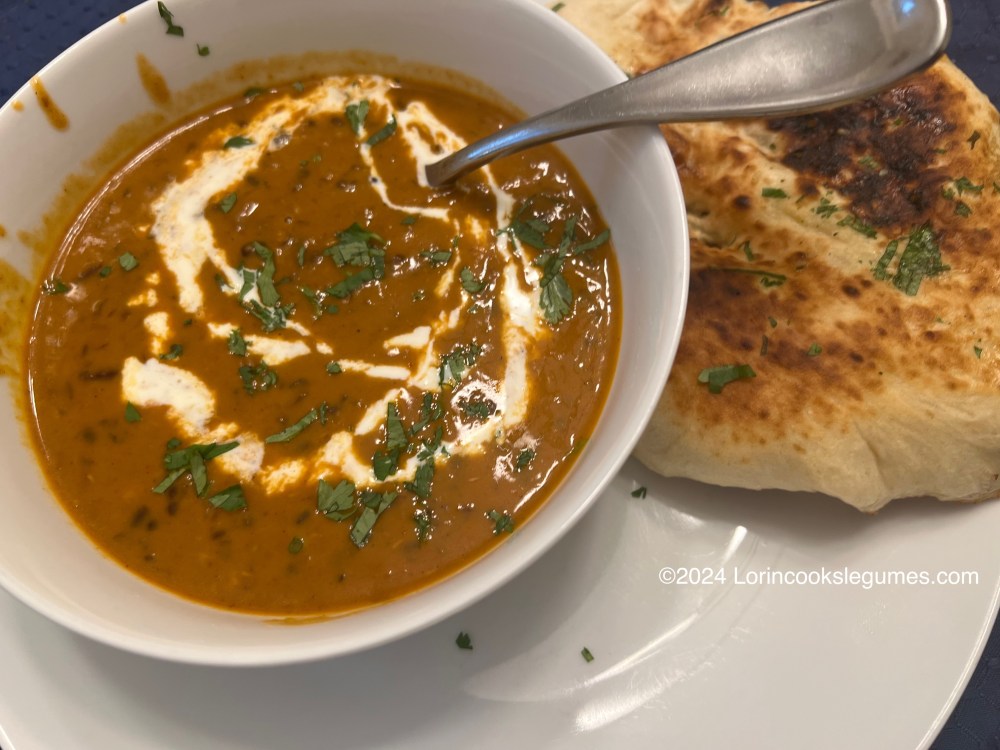
Dal makhani (pronounced [daːl ˈmək.kʰə.ni]) is a dish originating in Punjab region. A relatively modern variation of traditional lentil dishes, it is made with urad dal(black lentils) and other pulses, and includes butter and cream (makhani is a Punjabi word for butter).
https://en.wikipedia.org/wiki/Dal_makhani
The story goes that Kundan Lal Jaggi and Kundan Lal Gujral were Punjabi Hindi migrants from Peshawar who were running a restaurant in Delhi called Moti Mahal, where they had invented another dish that is a staple of Indian restaurants worldwide today, butter chicken. When they were looking for a way to make a similarly rich and decadent dish that was vegetarian-friendly, one of their regular customers suggested using urad dal, and thus dal makhani was born.
Dal makhani is mostly served in Indian restaurants and for special occasions, where it is very popular. However, the long, slow simmering required to achieve its signature creamy textures means it isn’t a popular choice for everyday use in busy homes.
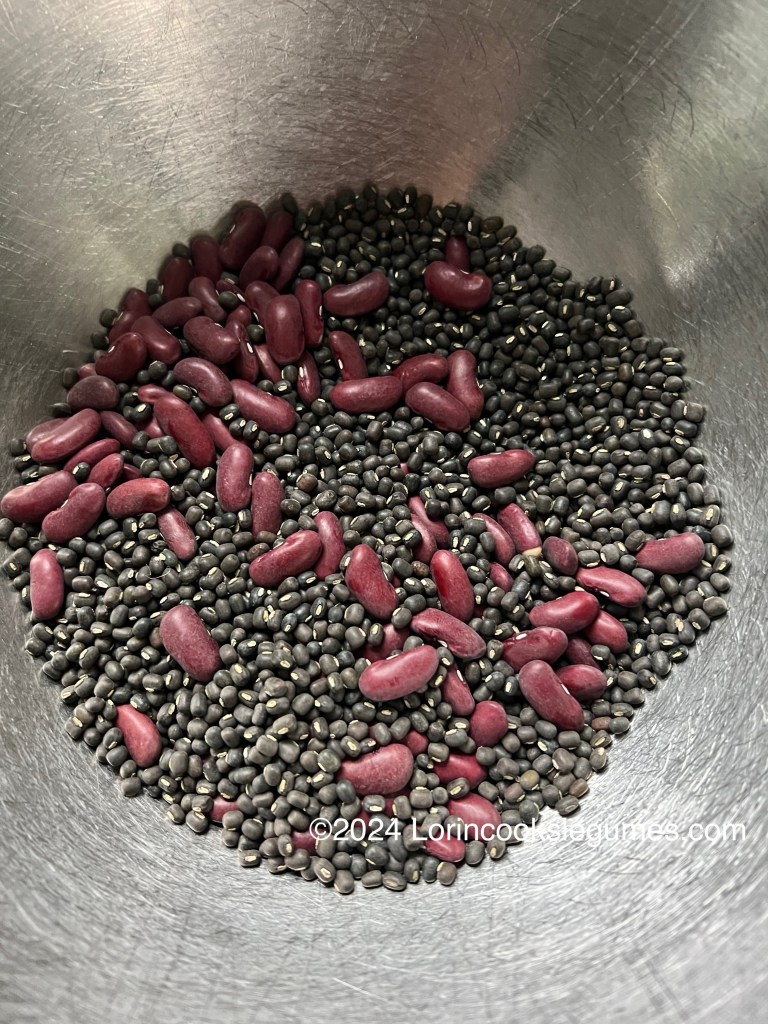
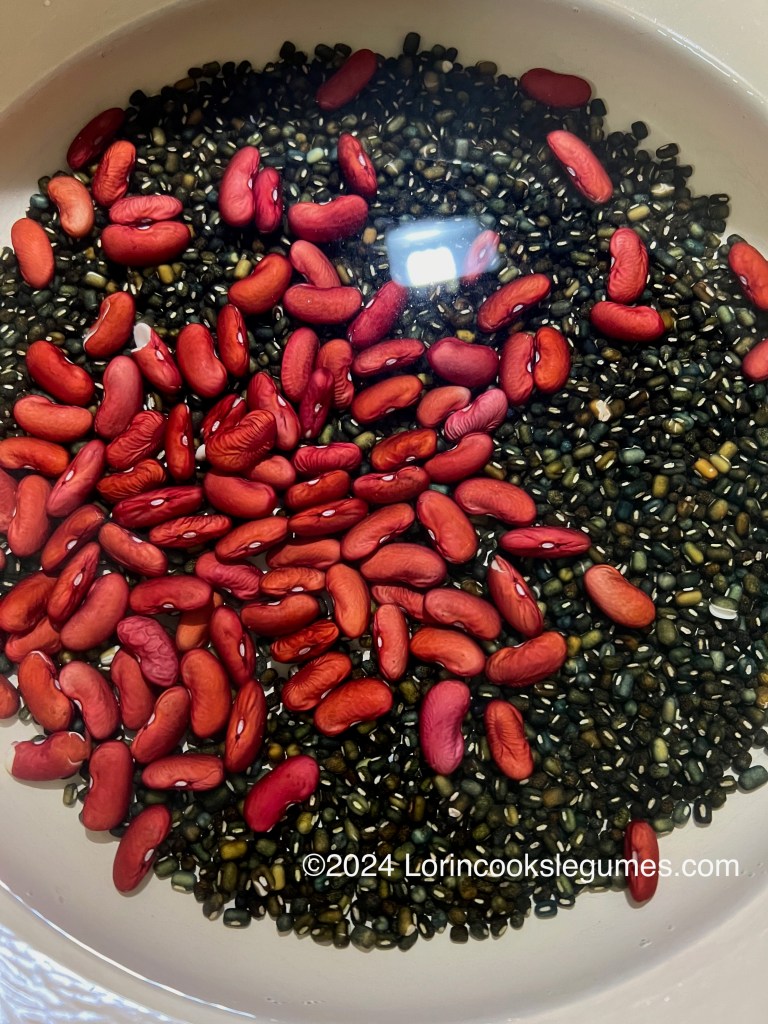
The recipe starts with whole, skin on, urad dal (aka black gram), and red kidney beans (rajma in Hindi). There’s some debate online as to whether or not kidney beans belong in this dish. Some people say that true dal makhani is made with only urad dal, and adding rajma makes it a different dish, but most of the recipes I saw use both of them.
While there is quite a bit of butter and cream in this dish (makhani is Hindi for butter), the secret to its creamy texture is actually the slow cooking process. Many recipes call for a pressure cooker to speed up the initial cooking time, but other chefs say that messes with the texture. I chose to simmer the beans in an open pot, adding boiling water as needed to keep the beans submerged, which took about 90 minutes. Kidney beans do need a period of vigorous boiling to neutralize the lectins they contain, which can be toxic in high concentrations, so make sure that they come to a full boil and keep them bubbling vigorously for the first 15-20 minutes. For some reason, based on the recipes I read, I was expecting the urad dal to take roughly the same amount of time as the kidney beans to soften, but I guess I shouldn’t have been surprised that a much smaller bean would be starting to actually break down by the time the kidney beans were soft. It is that process of beans breaking down and releasing their starch into the water that naturally thickens the dal and gives it its signature texture.
Compared to some other Indian dishes, there are relatively few spices in this dish, which allows the flavor and texture of the beans to shine through. The spices it does use are common Northern Indian spices, tending towards the “warm” spices, like cardamom and coriander, rather than the “hot” spices common in a lot of the Southern Indian dishes that I’ve been cooking recently, so that was a nice change of pace
There are a couple of less common spices in this recipe: Black cardamom* is a different species than green cardamom, with much larger pods, and is traditionally dried over wood fires, giving it a distinct smoky flavor. Kasuri methi* is dried fenugreek leaves, which are often added to dal dishes in Northern India.
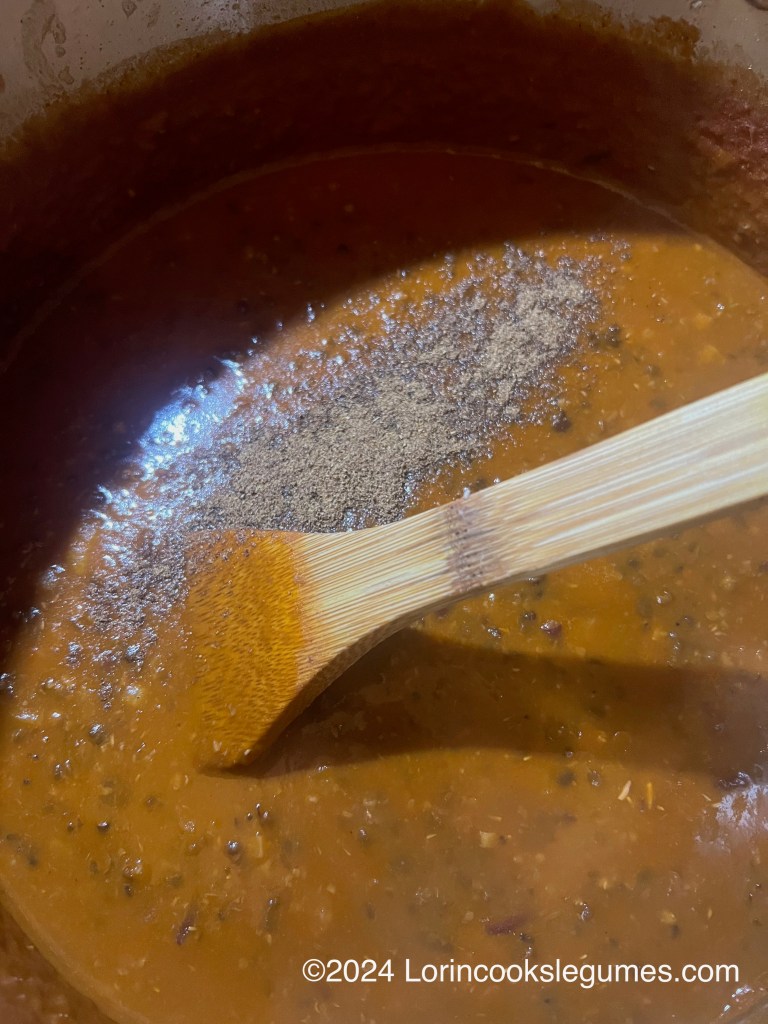
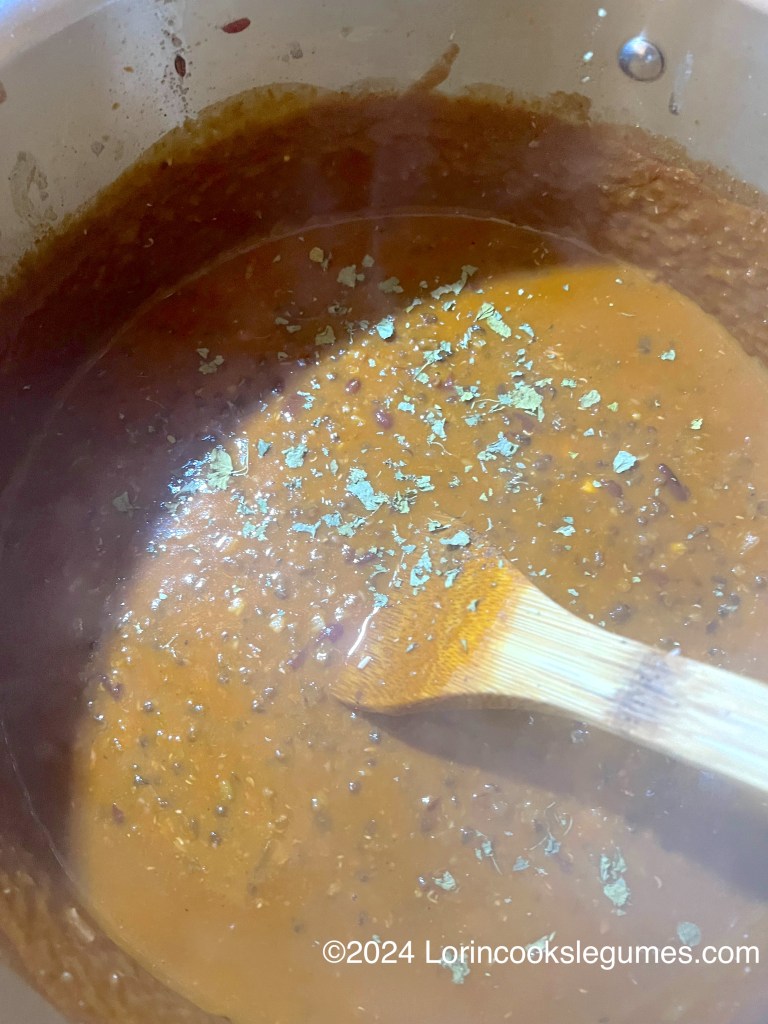
Once the beans are soft, sauté some onions, tomato, and spices, add them to the beans and continue to simmer. Some recipes only cook for 10-20 minutes at this point, but most agreed that you want to continue simmering for quite a bit longer- some suggested as long as 90 minutes, and some restaurants will even leave it to simmer overnight. The average of all the recipes I looked at came out to 35 minutes, so that’s what I did, but if you have time to keep it simmering longer, by all means, do so! Just stir frequently and add boiling water every once in a while if it seems to be getting too thick.
A lot of the recipes called for fresh tomato, usually blending it into a puree, but slightly more of them called for canned tomato puree, or even tomato paste, saying it gives better color. I used canned puree this time, but put both options in my recipe.
In researching Indian recipes, I see a lot of recipes calling for ginger-garlic paste (as well as plain ginger paste and, less frequently, plain garlic paste). Somehow, this is the first time I’ve actually used it in my recipe. Many Indian homes use enough garlic and ginger in their cooking that it makes sense to just prepare enough for several days in advance and keep it in the refrigerator. Of course, in the 21st century, you can also buy ready-made ginger-garlic paste*, but it’s easy enough to make your own and it will taste better! Take equal parts (by weight) of peeled ginger root and peeled garlic, roughly chop the ginger, and throw everything in a blender or mortar and pestle and grind it to a paste! Store in an airtight container in the refrigerator. You can add some salt, oil, or turmeric for extra preservative properties if you want, but it should keep well in the refrigerator for a week even without. (Sometimes the paste will take on a slight greenish color; this is the result of garlic reacting with your container, or something in the air, and is still safe to use).
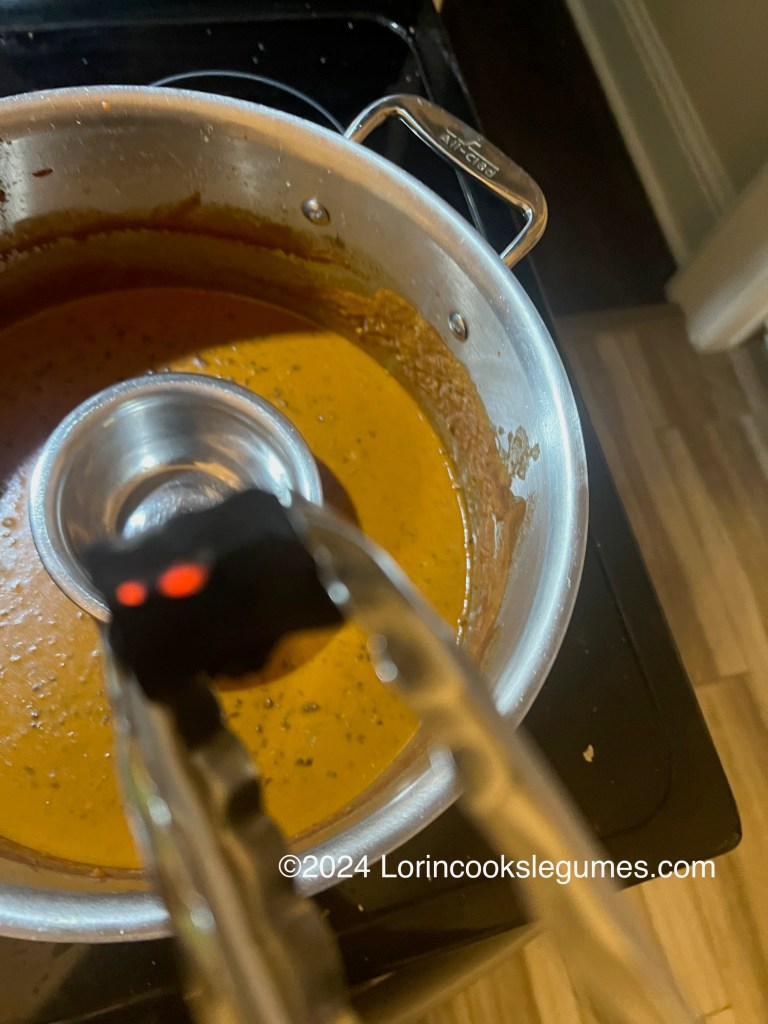
Traditionally dal Makhani was made by putting a pot of beans on top of the tandoor oven to simmer overnight as the fire burned down, so the dal would wind up with a smoky flavor from cooking over an open fire. To replicate this flavor in a modern kitchen, a lot of recipes call for finishing with something called a “dhungar” process. A small lump of natural charcoal (make sure it’s not treated with lighter fluid or other chemicals) is heated until it is red hot, then dropped in a small metal bowl set into the pot of dal. A teaspoon of oil is poured over it, and the lid is immediately put on the pot, allowing the smoky flavors to infuse the dal. 2-3 minutes is enough- any more than 5 and you risk making your dal inedible due to too much smoke.
This dhungar process proved to be trickier than I anticipated. Specifically, getting the charcoal hot. You really need a good solid source of flame for several minutes to get anywhere. I was trying to use a stick lighter, which really didn’t have enough heat to make much headway. I finally got a couple tiny spots glowing after a couple minutes, but pouring the oil on just extinguished them. I tried again, and of course, the oil caught fire. I wound up just letting it burn for a while, then blew it out, dropped it back into the bowl, and let that smoke do its work. Obviously, I need a better source of flame to really make this process work properly. Most recipes showed using a gas stove burner, but I have an electric stove. I suppose I might be able to use the charcoal chimney I use to light my grill? I’m not sure how well that would work with only one piece of charcoal. Maybe I need to buy a blow torch?






Dal Makhani
Yield: 4 servings
Prep: 15 minutes
Cook: 2:30
Total: 2:45, plus overnight soaking.
(As an Amazon Associate I earn from qualifying purchases.)
¾ cup whole urad dal
¼ cup red kidney beans
5 cups water
½ teaspoon salt
Boiling water, as needed
3 ½ Tablespoon butter
2 Tablespoons ghee
OR
1 Tablespoon oil
1 bay leaf
1 teaspoon cumin seed
2 green cardamom pods
1 black cardamom pod
1 small onion, finely diced
1 Tablespoon ginger garlic paste
OR
1 inch ginger root, grated
AND
4 cloves garlic, finely minced
1 small green chili, finely chopped
2 teaspoons Kashmiri red chili powder
1 teaspoon ground coriander
½ teaspoon salt
1 cup tomato puree
OR
2 large tomatoes, pureed or diced small
1 ⅓ cup boiling water, or as needed
⅔ teaspoon garam masala
¾ teaspoon kasuri methi
1 ½ Tablespoons butter
⅓ cup cream
1 small lump of natural charcoal (not treated with lighter fluid or other chemicals)
1 teaspoon neutral oil
2 teaspoons cream
1 Tablespoon cilantro, minced
Optional:
⅔ teaspoon sugar
2-3 whole cloves
1 inch cinnamon stick
⅛ teaspoon ground nutmeg
1 inch fresh ginger root, julienned, as garnish
½ teaspoon ground cumin
Pick over urad dal and kidney beans, removing bad beans or foreign objects. Wash well in several changes of water, scrubbing beans between your hands, until the water runs clear. Cover with cool water and leave to soak overnight or for at least 6 hours.
Drain beans and place in a large pot, along with 5 cups of water. Bring to a boil, reduce heat, and simmer for 30 minutes, skimming off any scum that rises to the surface. After 30 minutes, add ½ teaspoon salt, and continue to simmer for another hour or so, until both kinds of beans are very soft and mash easily between your fingers. Add additional boiling water, as necessary to keep beans submerged. Once the beans are soft, lightly mash some of the beans, and keep the pot simmering over low heat while you make the masala.
Heat 3 ½ Tablespoons of butter, along with ghee or cooking oil, in a large pan. Once it is very hot add the bay leaf, cumin seeds, and cardamom pods. Cook for about 30 seconds, until the cumin sputters. Add the onion and sauté until golden, 5 minutes or so.
Add ginger-garlic paste (or minced ginger and garlic) and green chili and cook for about 1 minute until the raw smell dissipates.
Working quickly to prevent the spices from burning, add the red chili powder, coriander powder, and salt. Mix well, then add the tomato puree. Cook, stirring frequently, until the tomato begins to dry and oil separates from the mixture.
Add the beans and all their water and mix well. Add an additional 1⅓ cup water and continue to simmer, stirring frequently to prevent sticking, for about 30-40 minutes, until the flavors have melded and the mixture has a nice, creamy consistency. Add additional boiling water as needed if the mixture is too thick.
After about 30 minutes, the mixture should be thickened, with a nice creamy texture. Mix in the garam masala. Crush the kasuri methi between your palms and add it, along with 1 ½ Tablespoons of butter, stirring until melted and well mixed. Add ⅓ cup of cream. Mix well. Taste for salt, and remove from heat.
Place a small metal bowl, or piece of aluminum foil shaped into a small cup, into the dal. Using a pair of metal tongs, hold a small lump of natural charcoal over an open flame (your gas burner, a candle, a grill…) until it is glowing hot. Drop it into the metal bowl and quickly pour 1 teaspoon of oil over it. You should hear sizzling and see smoke. Immediately put the lid on the pot, and allow the smoke to flavor your dal for 2-3 minutes. Don’t leave it for more than 5 minutes, as it will become unpleasantly smokey.
Serve, garnished with a drizzle of cream and some fresh cilantro, accompanied by garlic naan, roti, paratha, or rice.
*As an Amazon Associate I earn from qualifying Amazon purchases.
I receive no compensation for mentioning any other websites or product.
 Lorin cooks Legumes
One Comment Add yours