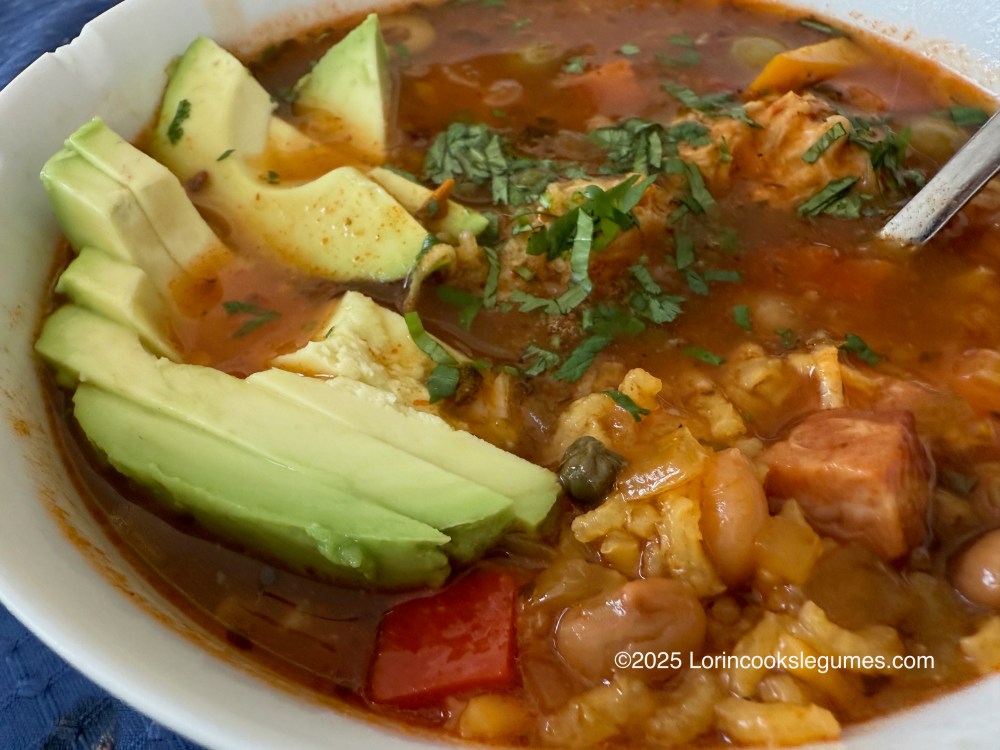
Asopao de gandules replaces rice with pigeon peas. Meat usually a mix of longaniza, oxtail, and smoked meats, when done roasted pork is placed on top of the soup. Squash and plantain-dumplings are often included in the soup.
https://en.wikipedia.org/wiki/Asopao
Finally, we’re back to legumes! Ok, I guess most of the asopao recipes I’ve shared had green peas in them, so they weren’t completely lacking from most of them, but they certainly weren’t the main focus.
Asopao de gandules is a thick rice soup/stew, like the other asopao recipes I’ve shared, but instead of meat or seafood being the main protein, it uses gandules, or pigeon peas. Pigeon peas are actually a bean, not a pea. (that seems to be a Caribbean thing- a number of different types of beans are known as peas in various Caribbean countries.) They aren’t a common bean in North America, but are popular in a number of African and Caribbean countries, as well as being the bean toor dal is made from, making them one of the primary protein sources in India.
My recipe isn’t vegetarian, as it does include some ham, but if you omit the ham it could easily be made vegan. Wikipedia says that asopao de gandules usually includes sausage, oxtail, and smoked meats and is topped with roasted pork. Not one of the recipes I looked at included oxtial or roast pork. Wikipedia also says the gandules replace rice, but again, my sources mostly don’t back up that claim. As usual, I feel like the Wikipedia editor who wrote this page doesn’t necessarily have personal experience with this dish, and didn’t look beyond one or two sources for information.
I used canned gandules this time, which I found in the grocery store with the best international secion here in Duluth. I’ve searched a little online for sources for frozen pigeon peas, but haven’t yet found a trustworthy looking source that ships. If you live in a community with more of a Puerto Rican or Caribbean population than me you should be able to find them in stores catering to those populations, or even the regular grocery stores if there’s a big enough population.
In my last post, I mentioned that I had used my frozen culantro, and didn’t think it really worked as intended in that application. I can report that in this recipe, where I added it early, allowed it to simmer with the soup, and then removed it before serving, using frozen worked ok. I’m not entirely sure that I can detect it’s flavor here, but I wouldn’t necessarily expect the fresh herbs to add a distinct flavor with that treatment either.
Aji dulce is a small sweet pepper related to habanero and scotch bonnet peppers but without the heat from the capsaicin. I also had frozen a bunch of these when I bought them last winter, and it works well to chop them up and throw them in straight from the freezer.
Sofrito is basically the flavor of the Caribbean, a mixture of onion, garlic, culantro or cilantro, and peppers. What mirepoix is to French cooking, sofrito is to the islands (and really, most of the Spanish-speaking world has some version of it). Unlike the French, however, its proportions and ingredients aren’t rigidly defined, and most cooks grind up batches of their own preferred blend and keep it in the fridge to season everything. I made a batch based on this recipe* last winter when I first started exploring asopao recipes, and froze it in ice cube trays. I just throw a couple cubes in the pot and away we go!
Sazon and adobo are popular seasoning blends across the Caribbean.
Sazon is, at least in most of the major brands, mostly MSG, with various spices added primarily for color (annato, saffron, turmeric…) Goya is the most common brand and makes several different flavors. Achiote e Culantro seems to be the flavor of choice for most of the Caribbean. I used azafran (saffron) because that was the only one available in my local grocery store. The Loisa brand is reportedly MSG free, and I really should have ordered it rather than just grabbing the box in the grocery store.
Similarly, adobo is basically fancy garlic salt, and the Goya brand lists any other spices below the anti-caking agent in the ingredients. I’ll definitely be trying a different brand of that if I ever get through the bottle I have and need more.
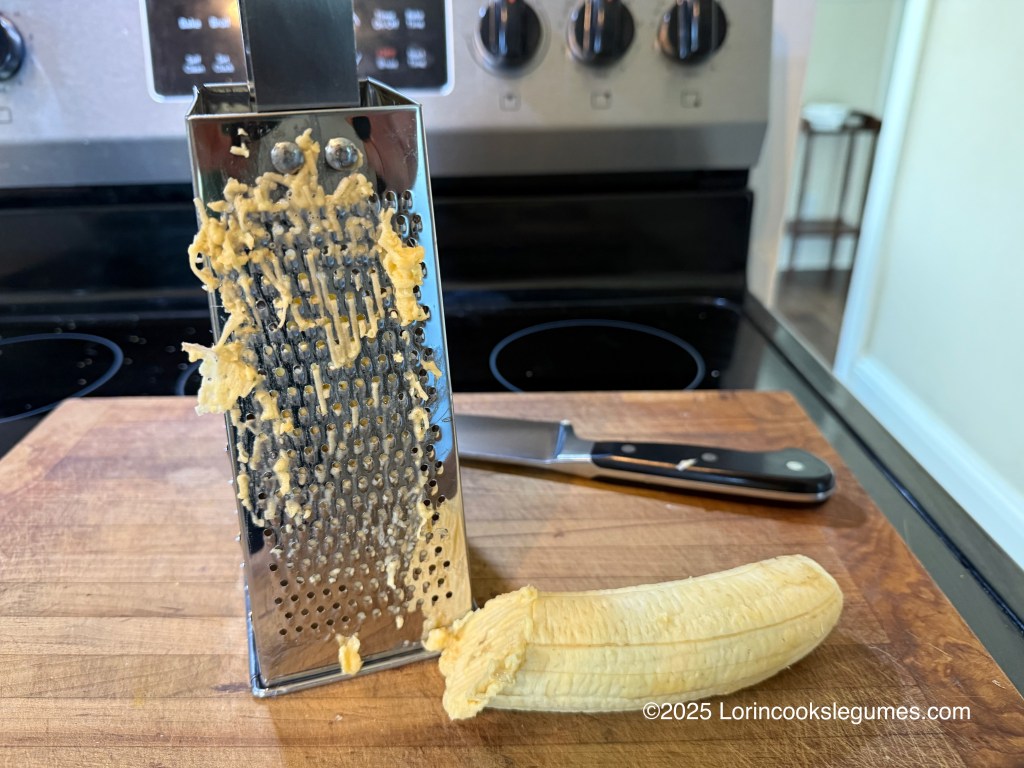
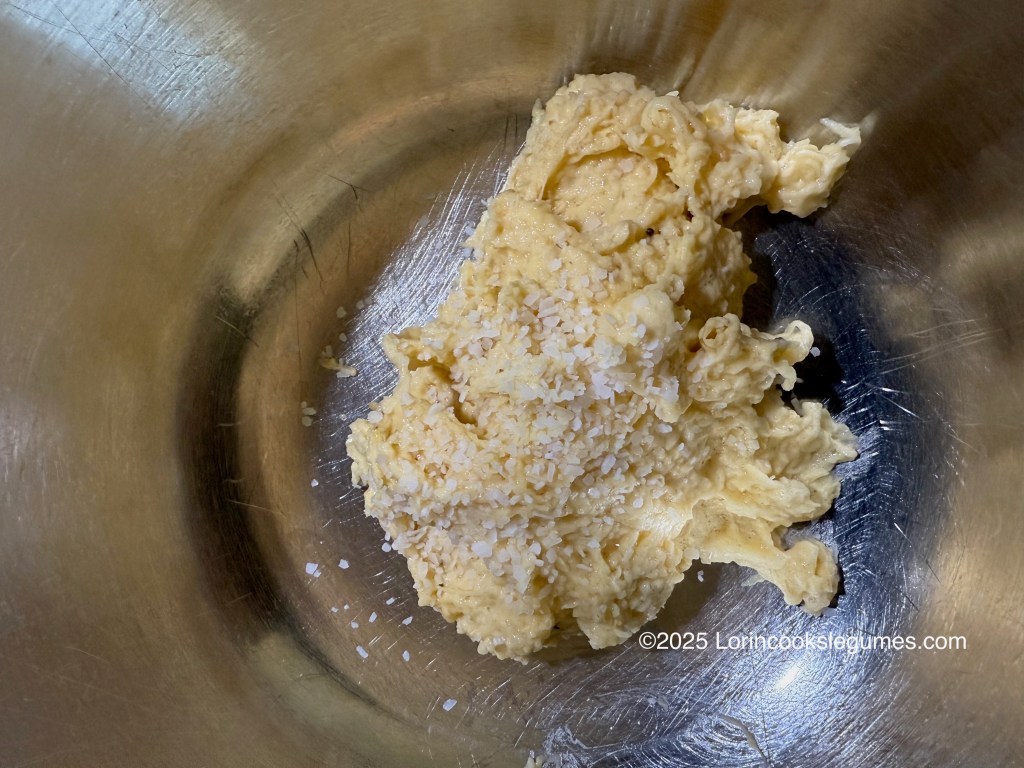
Asopao de gandules is often served with dumplings made from green plantain. (Again, Wikipedia lists a whole bunch of different things the “plantain dumplings” can have in them or be made from that don’t seem to add up to anything that resembles recipes I could find. I think it was trying to condense an article about all the different dumplings in Puerto Rican cuisine into a paragraph about dumplings for asopao.) I kept my recipe super simple- just the plantain and some salt. I wasn’t sure how well they would work out, but was pleasantly surprised that they set up just like flour-based dumplings would, and didn’t just blow up in my soup!






Aspao de Gandules
Yield; 6 servings
Prep: ~30 minutes
Cook: 40 minutes with canned beans, 1:10 with fresh or frozen.
Total: 1:10-1:40
(As an Amazon Associate I earn from qualifying purchases.)
⅔ cup rice
1 15 oz. can pigeon peas
OR
10 oz fresh or frozen pigeon peas
AND
6 ⅔ cup water
AND
Salt to taste
1 large green plantain
Salt, to taste
2 Tablespoons olive oil
OR
5 teaspoons annatto oil
4 oz ham, diced
1 small onion, diced
½ large red bell pepper, diced
¼ cup aji dulce*
, chopped
¼ cup sofrito
3 cloves garlic, minced
OR
½ Tablespoon granulated garlic
1 teaspoon salt
1 ½ teaspoons sazon seasoning
¼ teaspoon black pepper
¾ teaspoon oregano
1 teaspoon adobo seasoning
⅜ teaspoon cumin
8 oz tomato sauce
OR
1 ¼ Tablespoons tomato paste
3 ¾ cup water
3 cups vegetable broth
4 leaves culantro
¾ Tablespoon fresh oregano
¼ cup pimento-stuffed olives
1 teaspoon capers
½ cup auyama (kabocha squash), peeled and cubed
1 Tablespoon cilantro, minced
Avocado, sliced
Optional:
Lime wedges, to serve
Pique, to serve
½ large green bell pepper, diced
½ medium yellow bell pepper, diced
½ medium Roma tomato, diced
¾ lb. shrimp
¾ lb. dry pigeon peas, in place of fresh or canned (soak overnight, and pressure cook until tender)
Vegetable oil, in place of olive oil
5 cups pigeon pea cooking liquid, in place of stock/water
1 ½ carrots, chopped
4 cups chicken stock in place of vegetable stock
½ Tabelspoon chicken bouillon paste
1 onion, roughly chopped, with the peas
1 Tablespoon garlic paste
Bread and butter, on the side
Rinse your rice, drain it, and barely cover it with cool water. Leave to soak for about 30 minutes while you prepare the rest of the dish.
If using fresh or frozen pigeon peas, bring 6 ⅔ cups of water to a boil and add the peas, along with a pinch of salt. Lower heat and simmer for about 20-30 minutes until the peas are tender and smash easily between your fingers. Drain the peas, reserving the cooking liquid for later if desired. (If using canned peas, drain and rinse the peas.)
Cut the ends off the plantain, and cut through the skin lengthwise in 3-4 places to help remove the peel. Use the fine side of a grater or a blender to puree the plantain. Season with salt to taste. Set aside.
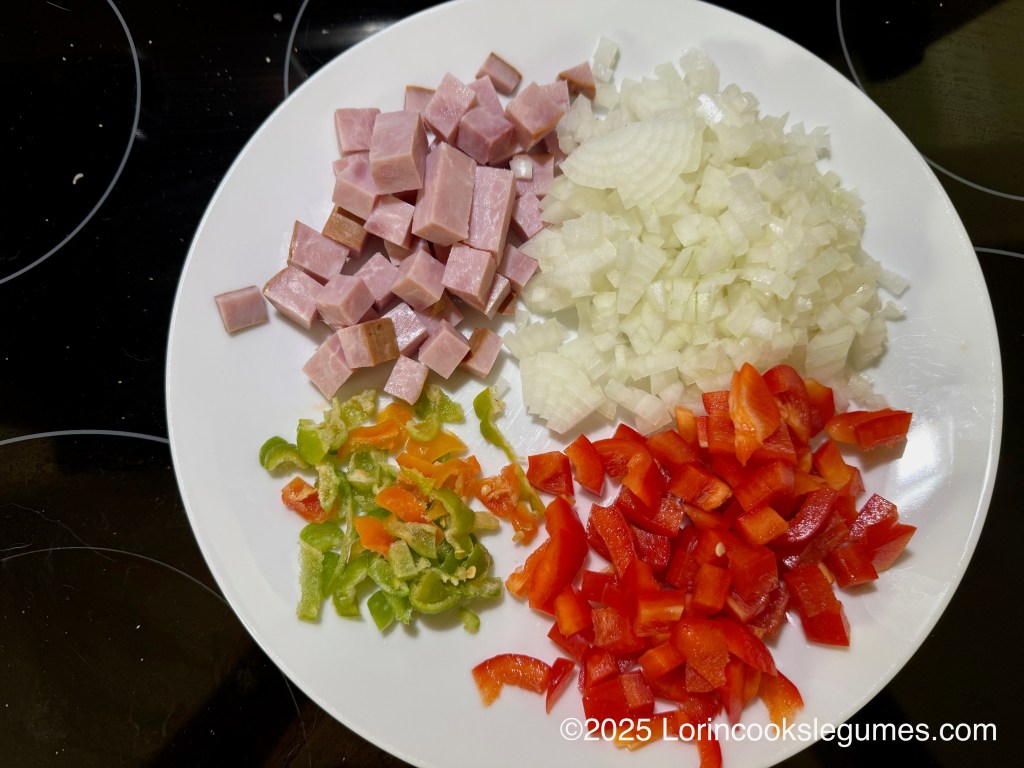
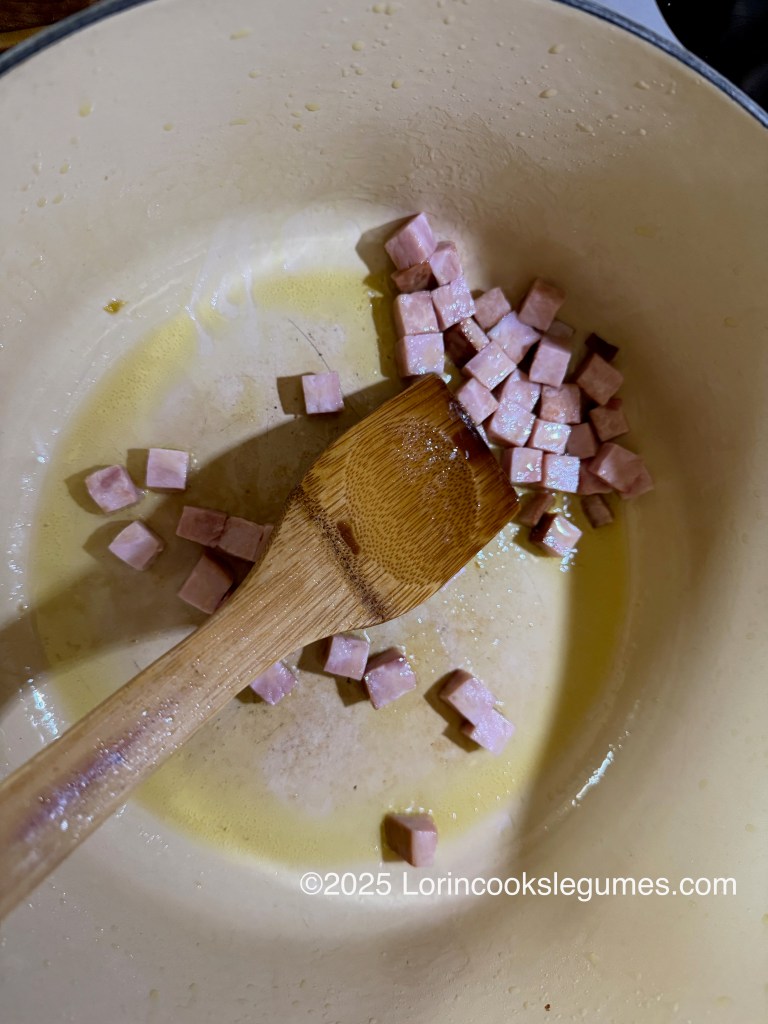
Heat olive or annatto oil in a large, heavy pot. Sauté the ham until golden, 2-3 minutes.
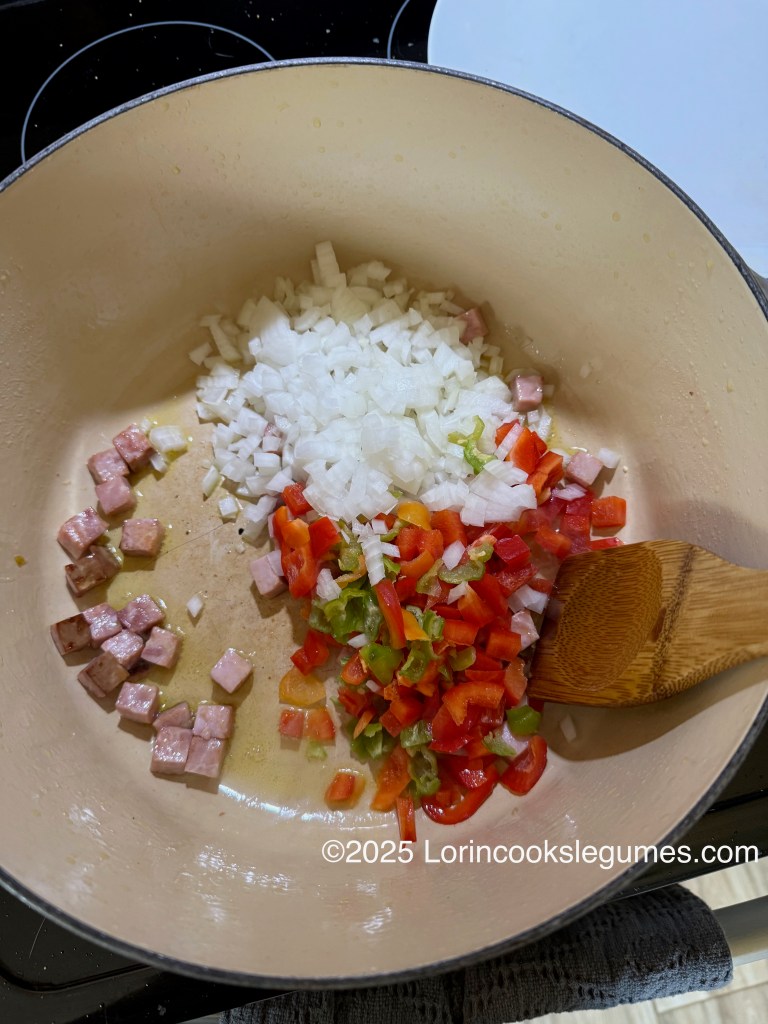
Add the onion and peppers and sauté for about 5 minutes, until the onion is translucent.
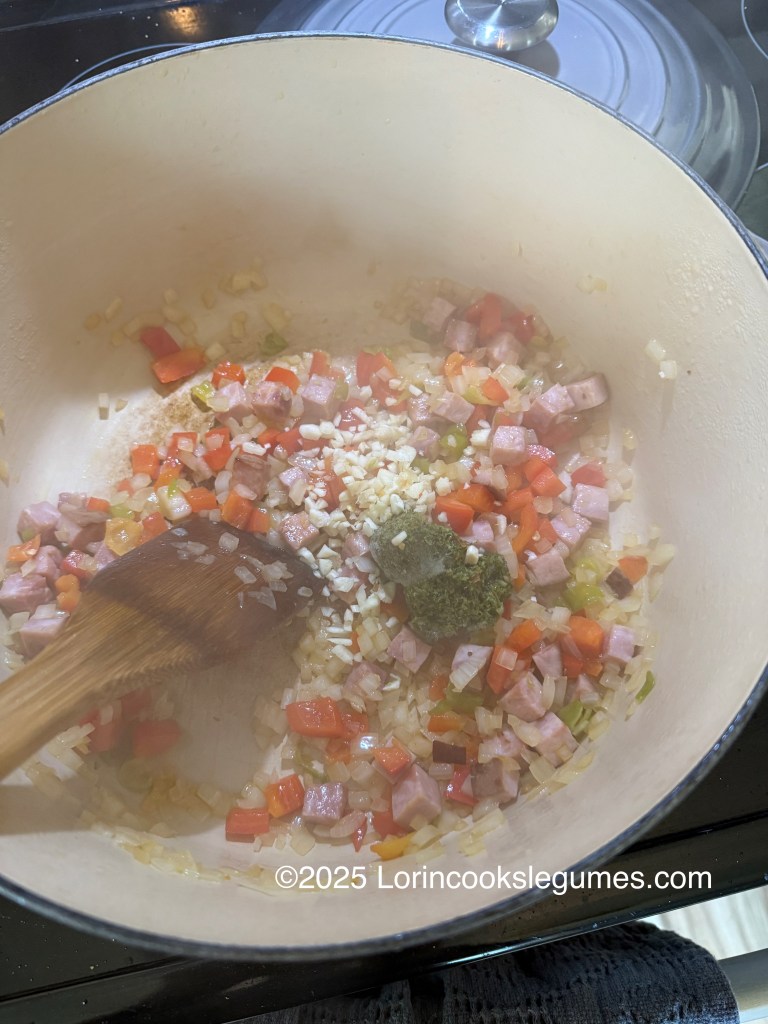
Add the sofrito and minced garlic and sauté for about 30 seconds. (If using granulated garlic, add it in the next step with the other spices)
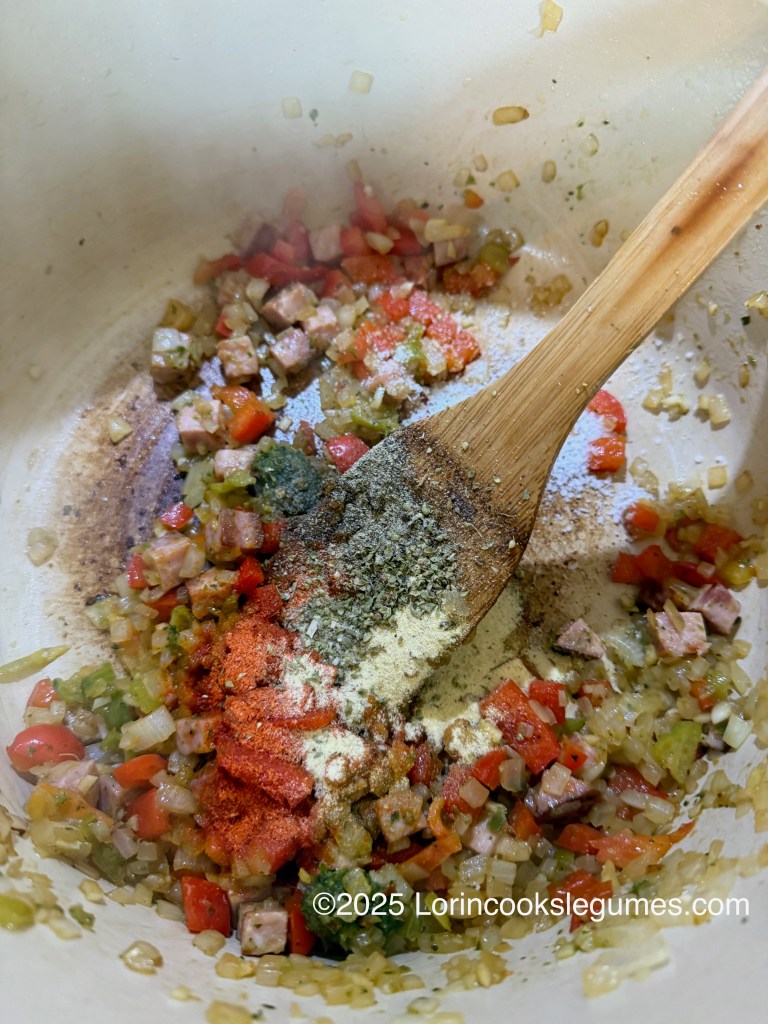
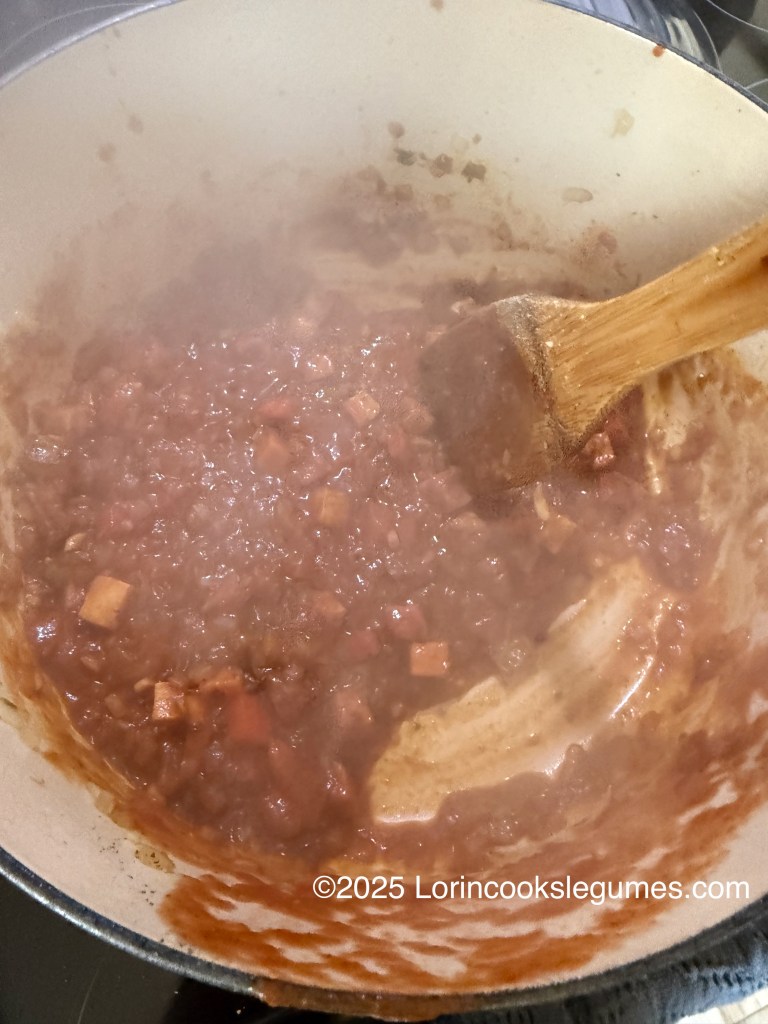
Add the salt, sazon, black pepper, oregano, adobo, and cumin. Mix well. Add the tomato sauce or tomato paste and cook for 2-3 minutes, stirring. Add the cooked pigeon peas and mix well.
Add water, vegetable broth, culantro, and oregano. Bring to a boil
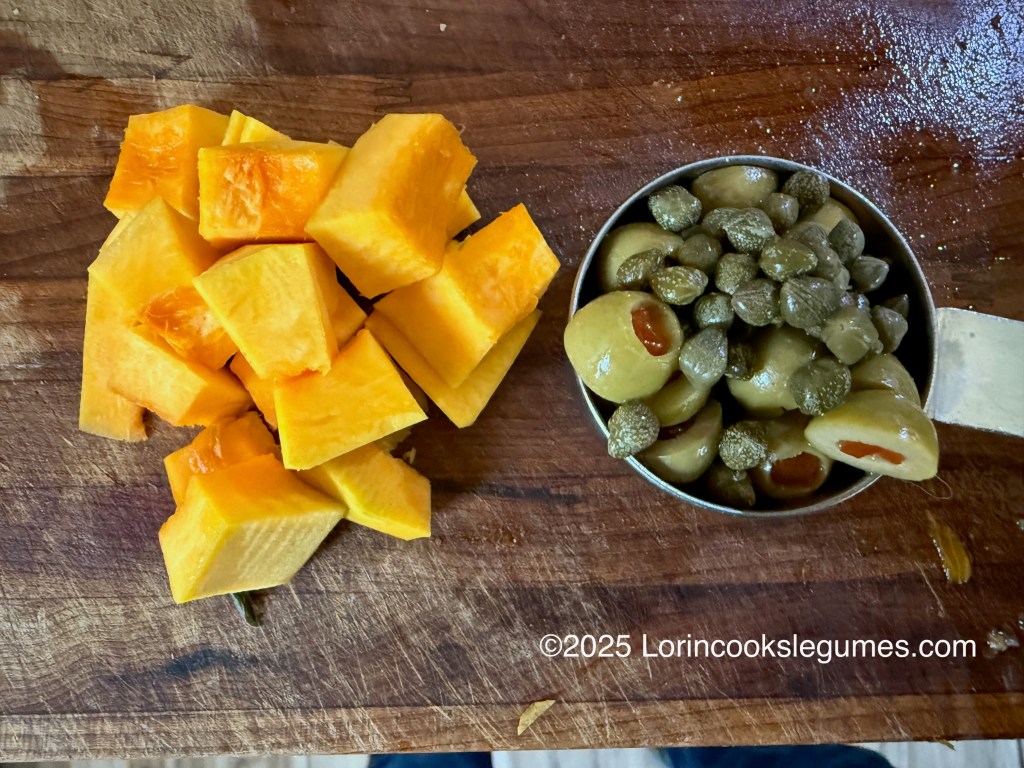
Add the rice, with it’s soaking water, along with the olives, capers, and squash. Return to a boil and lower heat to a simmer.
Scoop small balls of the plantain, and gently drop them into the simmering liquid. Cover and simmer for 15-20 minutes until the soup thickens, the rice and squash are tender and the dumplings are cooked.
Remove the culantro and taste for seasoning.
Serve garnished with cilantro and sliced avocado.
*As an Amazon Associate I earn from qualifying Amazon purchases.
I receive no compensation for mentioning any other websites or product.
 Lorin cooks Legumes
One Comment Add yours