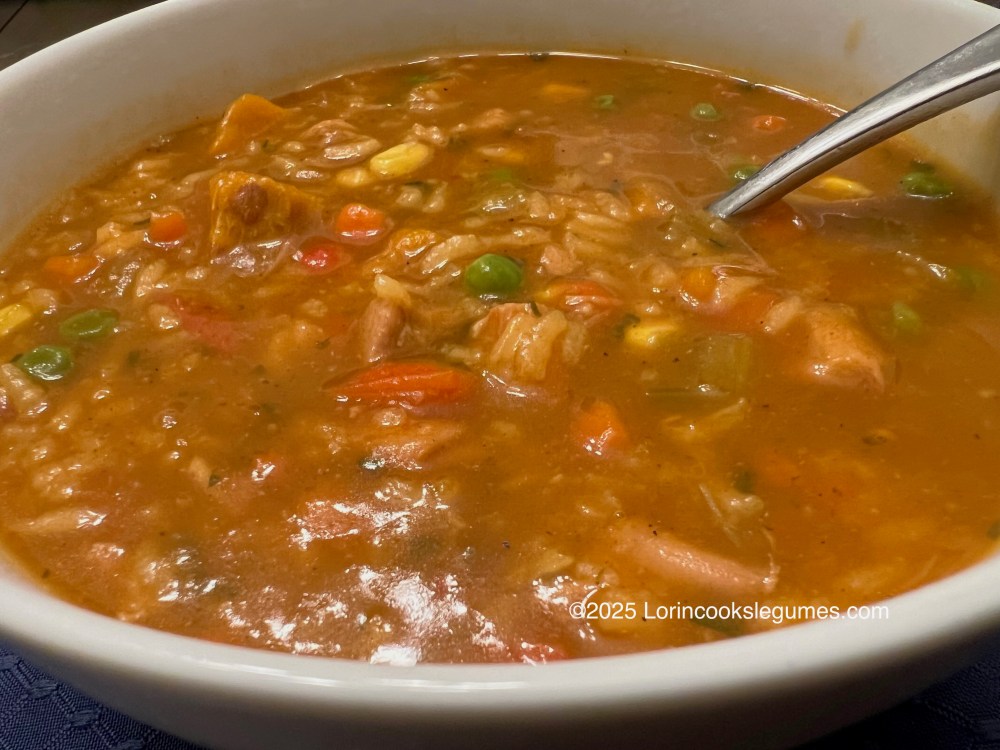
Asopao is a family of stews that can be made with chicken, pork, beef, shrimp seafood, vegetables, or any combination of the above.
https://en.wikipedia.org/wiki/Asopao
Versions of asopao are found in many Caribbean locales, including the Dominican Republic, where the addition of chicharrones de pollo (small bits of fried chicken or chicken skin) is characteristic or coconut milk and shrimp.
https://en.wikipedia.org/wiki/Asopao
As promised, we’ve left India behind, and I’m even going to abandon legumes for a little while! Asopao is a kind of rice soup or pottage popular throughout the Caribbean. Yes, there is a version made with pigeon peas, which I’ll get to eventually, but the Wikipedia article also lists several other variations that don’t use legumes, so I’m going to explore all of them for a while.
The Wikipedia article mostly talks about variations of this soup in Puerto Rico but starts with a paragraph about the Dominican Republic, so that’s where I started. I wasn’t too surprised to find that this is one of those “everyone’s mother has their own secret recipe” kinds of dishes, and I suspect that I won’t necessarily find any identifiable trends that differentiate one country’s version from the other, but we’ll see! I am calling BS on Wikipedia’s sources for the Dominican paragraph though: not one of the recipes I looked at said anything about fried chicken skin, and a cursory glance at the top hits for Dominican asopao de camarones (shrimp) recipes doesn’t show me any coconut milk. Of course, I was originally only going to do one post for Dominican asopao, so I was just searching for asopao Dominicano, so maybe adding pollo to the search would have brought up a few recipes that did call for crispy chicken, but since the search without was still dominated by chicken recipes, I kind of doubt it.
Some variation of chicken rice soup seems to pop up in different cultures all over the world. It’s a relatively cheap combination, and easy to spice with your local flavors, so that’s not too surprising. This version uses common Caribbean flavors like peppers, onions, tomato, squash, smoked pork, and sofrito to create a warm, flavorful, filling bowl of goodness, perfect for a cold winter day, whether that’s a cool, rainy winter day on a Caribbean island, or below zero weather here in Northern Minnesota.
Traditionally in the Dominican Republic, this recipe would be made with bone-in chicken, but I followed the lead of several bloggers whose recipes I employed and used boneless thighs. When making soupy dishes, eating meat off the bone gets extra messy, so using boneless chicken allows you to cut it into bite-sized pieces and avoid dirty fingers.
Several of the recipes I looked at specifically called for Dominican oregano. I failed to take the time to research that before making the recipe and just used regular ground oregano. A quick Google search now tells me that Dominican oregano is, in fact, a different plant. It’s still delicious with the regular stuff, but you could get the real deal* if you are inclined.
Soy sauce probably isn’t particularly authentic, but it managed to sneak in there, appearing in a couple different source recipes. Probably the same ones that the tofu in the optional ingredients list comes from.
Ajicitos, aka aji dulce or aji cachucha, is a type of sweet pepper. It is related to, and looks a lot like, habaneros or scotch bonnet chilies, but lacks any heat. I don’t know that I’d ever consciously paid close attention to the flavor profile of habaneros beyond “hot”, but it was a bit of a weird experience tasting that flavor without the heat. I purchased a small package of them from USAPinton*. Shipping did cost more than the peppers, but getting fresh, exotic Caribbean peppers in Duluth in January for under $20 seemed like a deal to me. Although the sales page has information in English, the checkout page and all correspondence from the seller were in Spanish, so I was a little nervous about the transaction, but the peppers were in excellent condition, arrived on time, well wrapped, and late enough in the day that I could bring them in immediately on arrival so they didn’t freeze (which obviously isn’t something in control of the seller, but still). I’ve put the leftover peppers in the freezer to use another time.

Sofrito is basically the flavor of the Caribbean. It’s a blend of different aromatics, used as the base of many dishes. As mirepoix is to French cuisine, sofrito is to Caribbean cooking. Unlike mirepoix, which is fairly rigidly defined, sofrito varies from island to island and cook to cook. I searched for Dominican sofrito recipes and I don’t think I found two that were anywhere close to being the same. Many cooks make big batches of their favored blend and puree it, keeping it in the refrigerator to use all week. I based my batch on this recipe*, using the suggested substitutes for the culantro and cubanelle peppers. (Someday I’m going to get my hands on some culantro and see what the fuss is about). The recipe made almost a quart of sofrito. I portioned the excess into ice cube trays and froze it for easy use later.
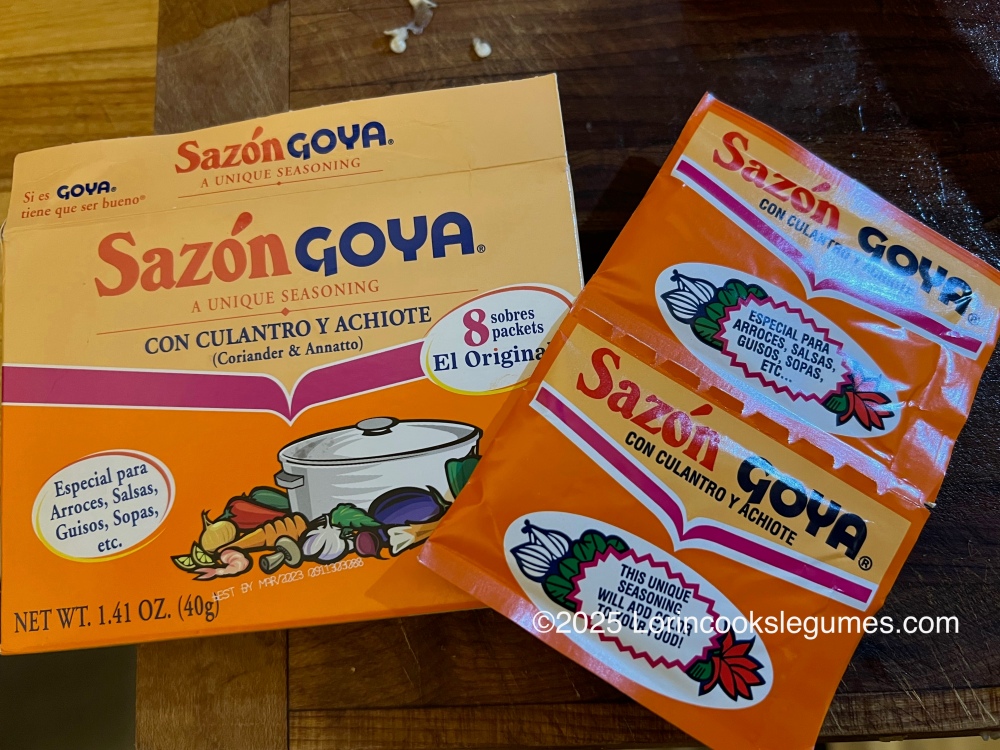
Sazon is a popular spice blend in various Caribbean cuisines. Its primary flavors are coriander and annatto, which gives dishes using it a nice red color (careful, it will stain your skin and any clothing it gets on). It often comes in little packets and has several flavor variations. If you are lucky enough to find it outside of a community with a sizable Puerto Rican or Caribbean population, it will probably be the Goya brand, which is mostly MSG. There are several other brands listed on Amazon, but this version* from Goya is the one I already had in my pantry. In the future, I will probably try one of the other brands.
Several recipes called for chicken bouillon cubes, but measured it in Tablespoons, and if they had images or video, they seemed to show powder. I happened to have cubes in the pantry and figured one cube = one Tablespoon.
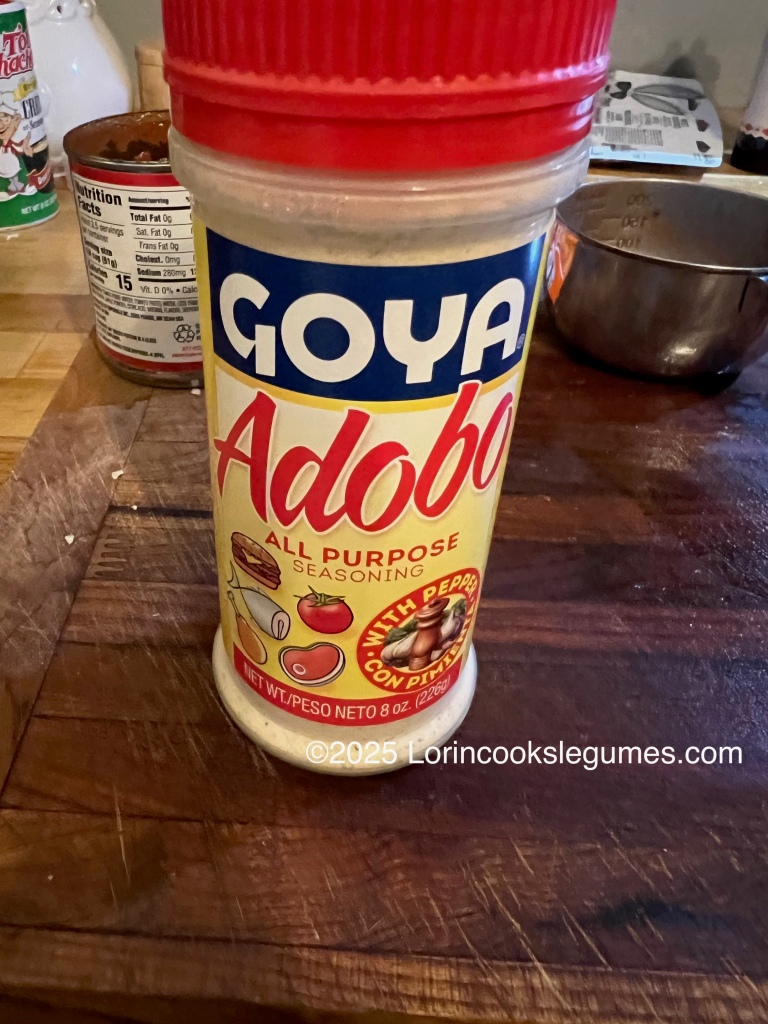
Adobo seasoning is another popular seasoning blend in the region. It’s basically garlic salt, with traces of black pepper, oregano, and turmeric. Again, Goya is the brand you’ll likely find in your local grocery store in the smaller cities in America, and in that brand, those secondary flavors fall below the anti-caking agent on the ingredient list, so if you’re looking for a healthier option try Amazon.
Auyama is a type of squash or pumpkin popular around the Caribbean. I’m not entirely clear if it is the same as the buttercup/ kabocha squash available here in the States, or if that’s just the closest equivalent.
Medium or long-grain white is the traditional rice to use, but if you have something else in your pantry, feel free to use it. Brown rice will take significantly longer to cook and change the flavor a bit, but would probably still work. One revisionist TikTok recipe I saw used quinoa. (No, I didn’t add that one to my recipe calculations).
Asopao usually has a nice red-orange color to it. Three ingredients can be used to create that color. First of all, tomato, secondly, the annatto in the Sazon seasoning, and finally, if you allow the squash to cook down until it falls apart it will create a nice orange color. Some recipes use just one of these while others use two or even all three (like mine!)
Many people don’t consider asopao complete without a few slices of fresh avocado on the side. Unfortunately, I was making my shopping list late at night before bed and didn’t read down to the end where I had my serving suggestions. I forgot all about the avocado until the asopao was halfway cooked the following evening, too late to stop and buy one. While it was still delicious without it, I can see that a little avocado would have taken it over the top.
The other traditional accompaniments with asopao are tostones (fried plantain slices) and agrio de naranja, a spicy vinegar sauce made with bitter oranges. (Your favorite hot sauce is an acceptable substitute- a few drops of Tobasco definitely added something to my servings, since avocado wasn’t the only thing I forgot about).






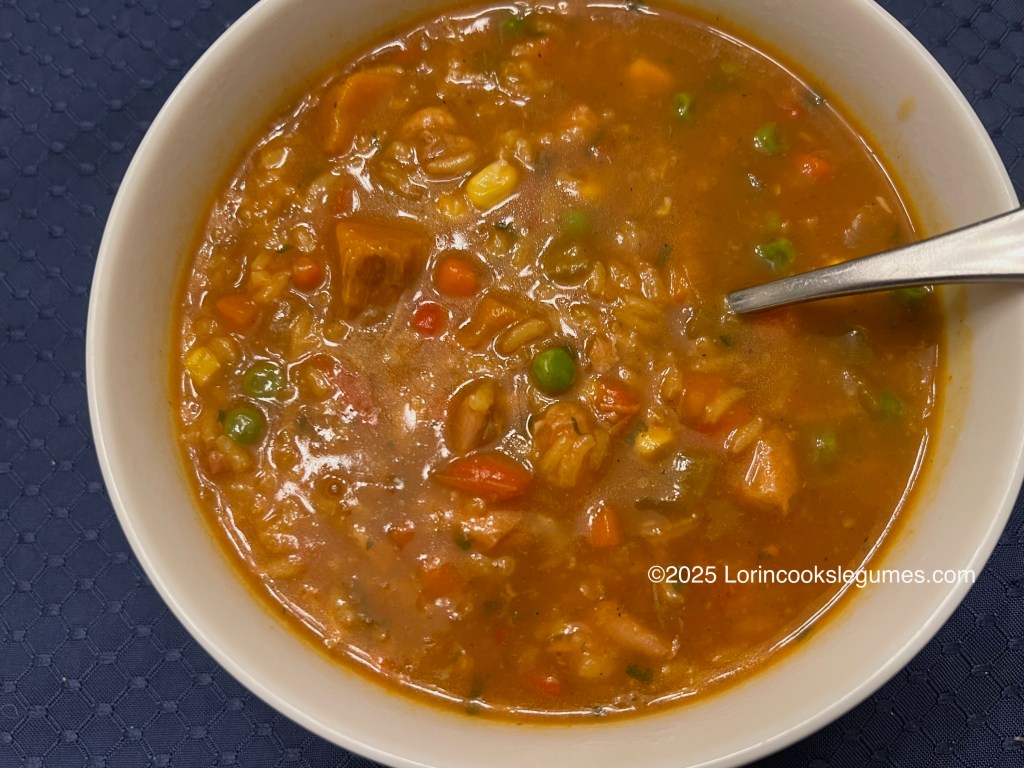
Asopao de Pollo Dominicano
Serves: 4-6
Prep: 30 minutes
Cook: ~1:00
Total: ~1:30
(As an Amazon Associate I earn from qualifying purchases.)
1 ½ lb boneless chicken, cut into small pieces
1 teaspoon ground oregano
⅓ teaspoon ground black pepper
½ Tablespoon salt
4 cloves garlic, mashed
1 ½ Tablespoons fresh lime juice
¾ Tablespoon soy sauce
¾ Tablespoon oil, or as needed.
1 large smoked pork chop, diced, bone reserved
1 medium onion, diced
2 medium carrots, diced
1 ½ celery stalks, diced
1 medium red bell pepper, diced
OR
1 medium green bell pepper, diced
2-3 ajicitos*, chopped
2 Tablespoons sofrito
¾ cup tomato sauce
OR
2 ⅔ Tablespoons tomato paste
1 Tablespoon sazon seasoning
2 Tablespoons chicken bouillon
1 teaspoon adobo seasoning
½ teaspoon smoked paprika
5 cups hot water, plus more as needed
1 ½ cups kabocha squash (auyama), diced
¼ cup cilantro, chopped
1 cup white rice, rinsed
½ cup frozen sweet corn
⅓ cup frozen peas
Optional:
1 Tablespoon brown sugar (melt in hot oil to brown chicken)
2 Tablespoons parsley, chopped
1 block extra firm tofu, pressed and torn into bite-size pieces, in place of chicken
1 Tablespoon avocado oil, in place of vegetable oil
⅓ teaspoon dry thyme
1 cube vegetable bouillon, in place of chicken bouillon
1 cubanelle pepper, diced
2 Tablespoons green olives, sliced
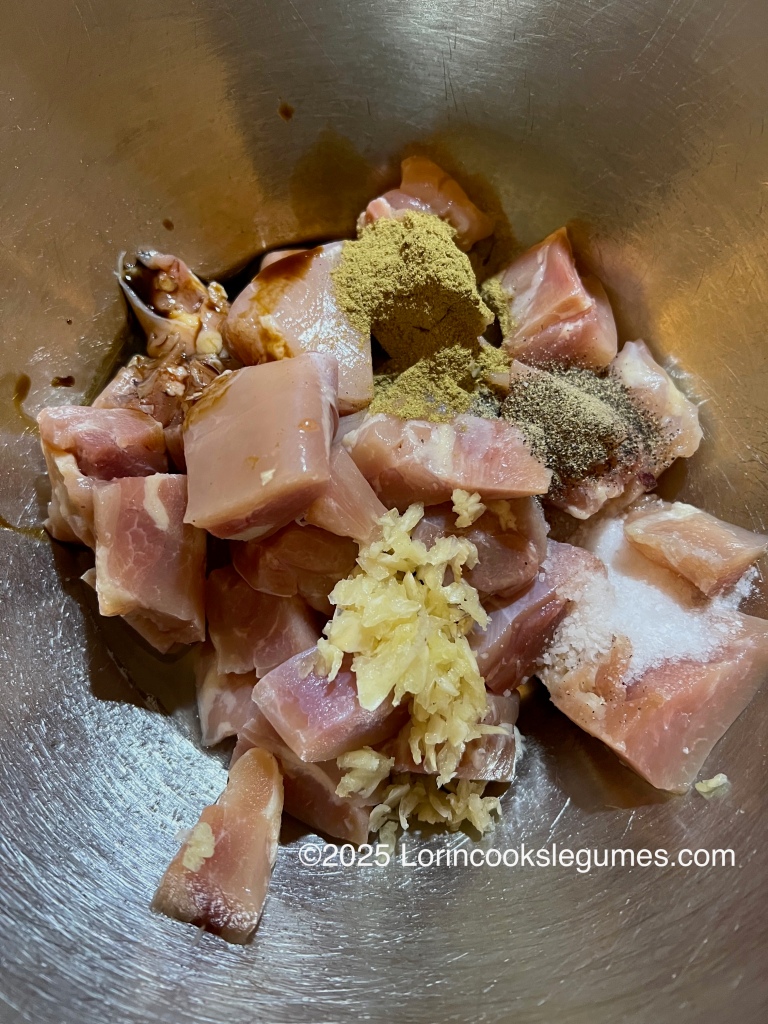
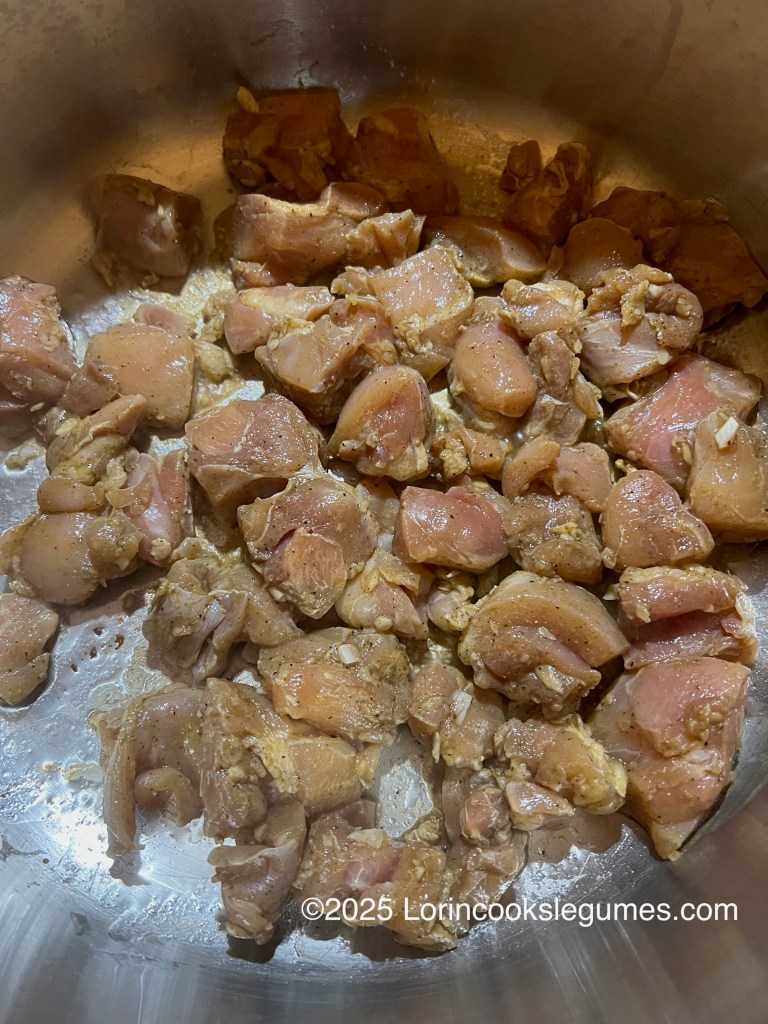
Put the chicken in a large bowl and season with oregano, black pepper, salt, garlic, lime juice, and soy sauce. Mix well and set aside to marinate for about 20 minutes while you prepare the remaining ingredients.
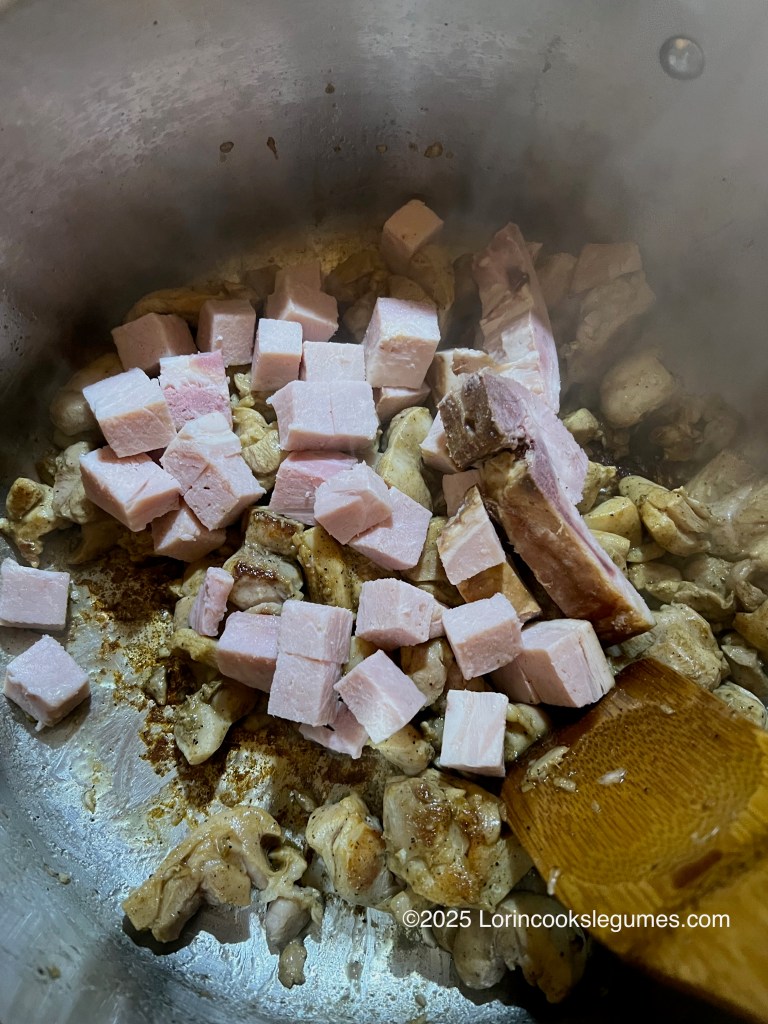
Heat oil in a large pot. Add the chicken and brown on all sides. Add the diced pork chop and bone and brown for a few minutes.
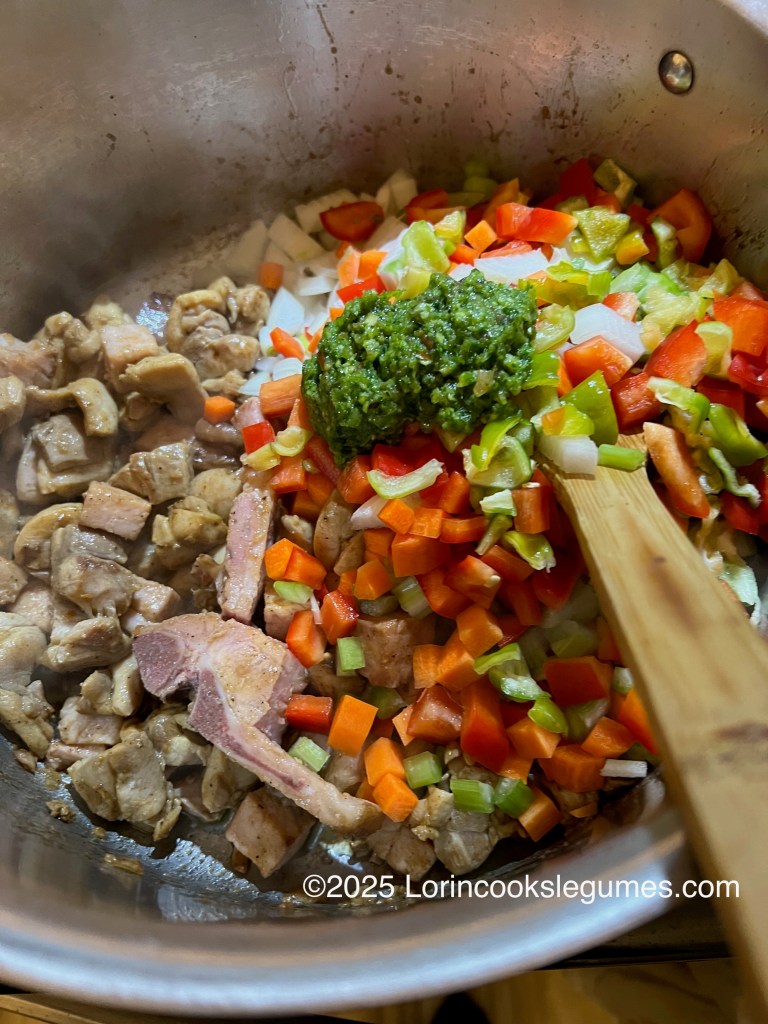
Add the onion, carrot, celery, peppers, and sofrito. Saute until vegetables are soft, 8-10 minutes or so.
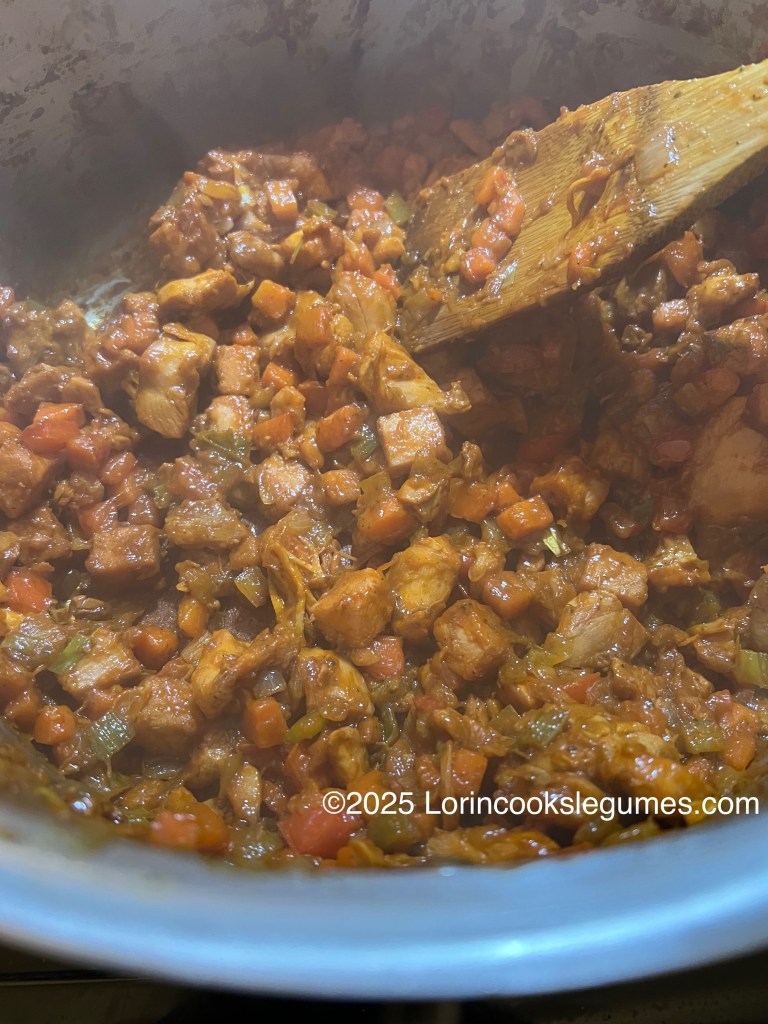
Add tomato sauce and mix well. (If using tomato paste you may need to add a splash of water to help it break down and coat the chicken and vegetables). Continue to cook for 5 minutes or so, stirring frequently.
Add the sazon, bouillon, adobo, and smoked paprika. Mix well and cook for another 5 minutes or so.
Add the water, kabocha squash, and cilantro. Bring to a boil, stirring occasionally.
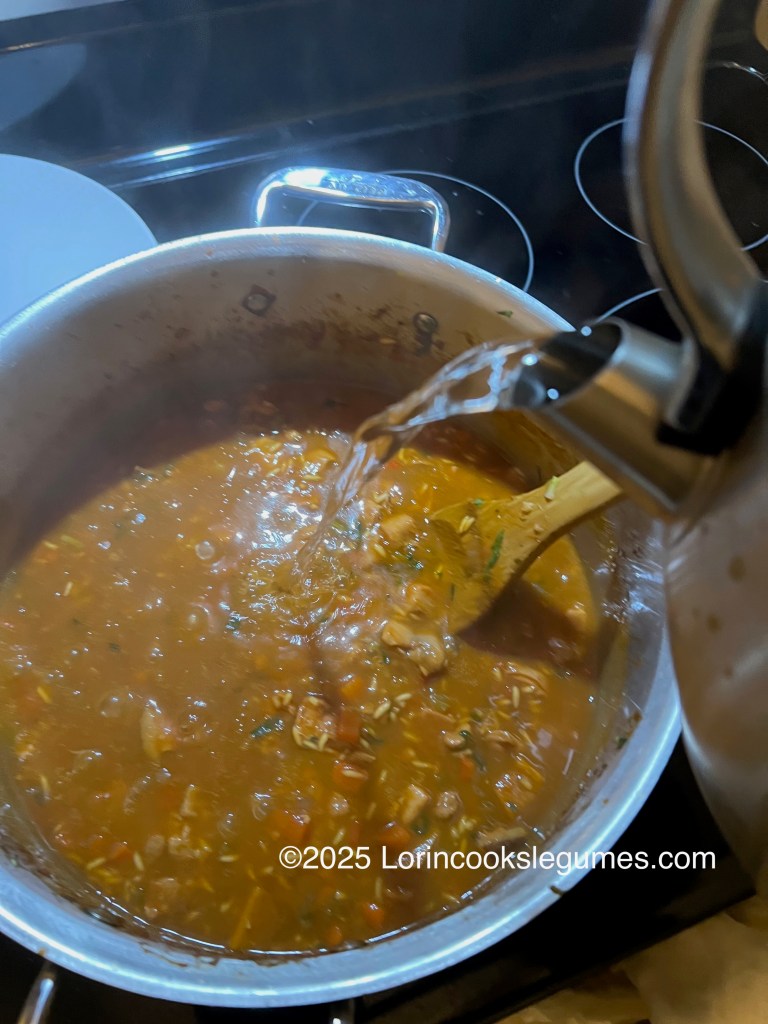
In a separate saucepan or kettle, bring additional water to a boil, and keep it simmering in case you need to add extra water to the asopao
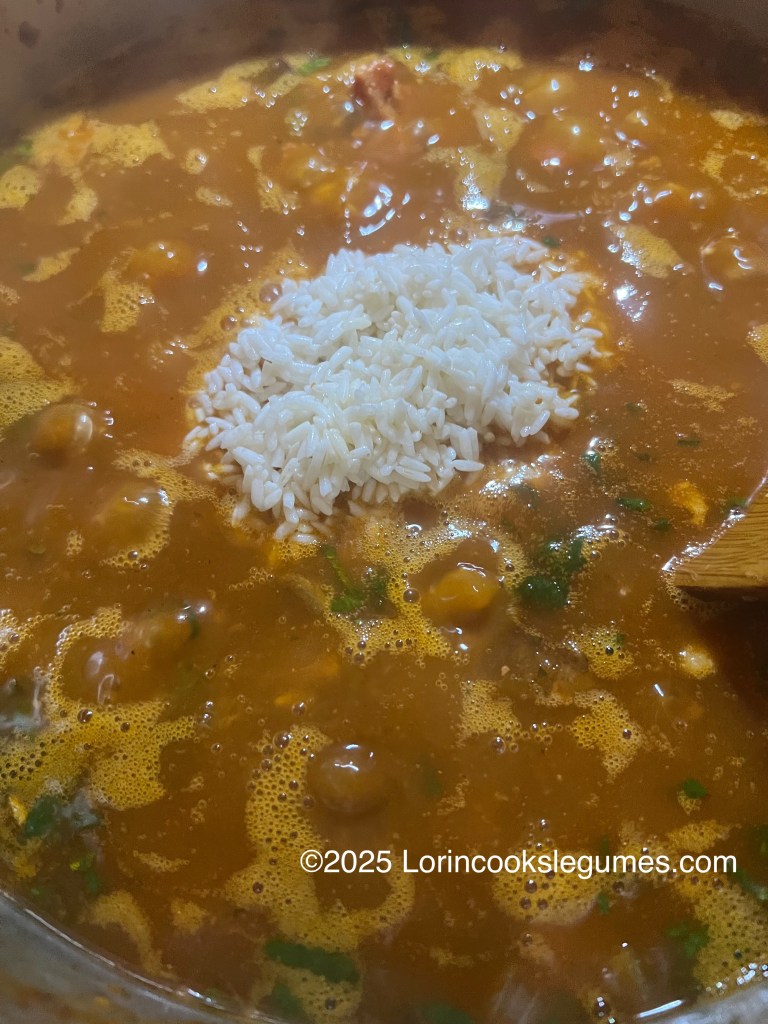
When the water boils, add the rice. Mix well, lower the heat, and simmer until the rice is tender. Stir frequently to prevent the asopao from sticking to the pot, and add additional boiling water if the asopao is getting too thick.
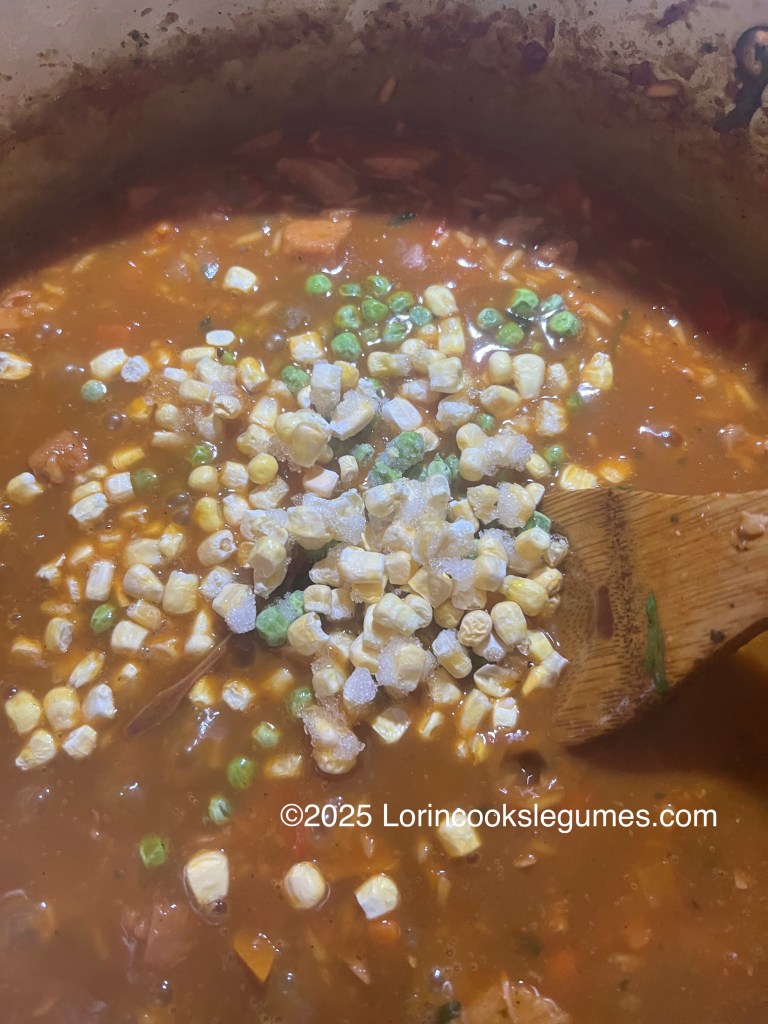
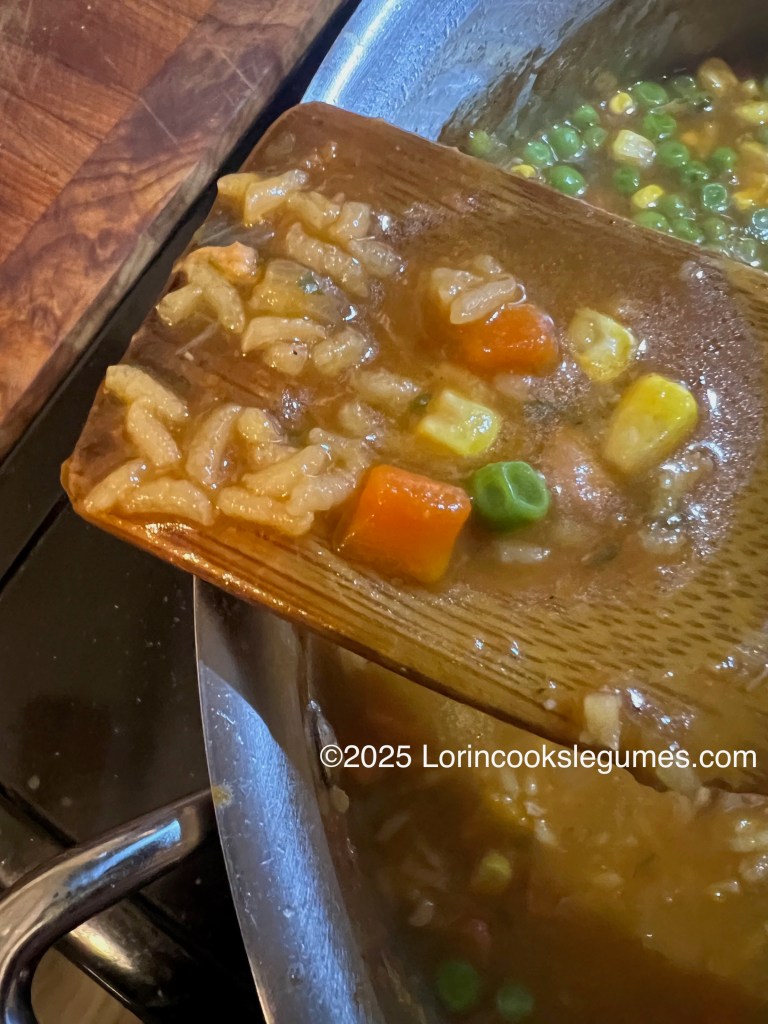
After 15 minutes, when the rice is tender, add the peas and corn. Continue to cook until the rice is very soft and beginning to split, and the squash is soft, another 10-15 minutes. Continue to stir frequently, and add additional hot water as needed to adjust asopao to your desired consistency.
Remove the pork bone, and serve with slices of avocado, tostones, and agrio de naranja or your favorite hot sauce.
*As an Amazon Associate I earn from qualifying Amazon purchases.
I receive no compensation for mentioning any other websites or product.
 Lorin cooks Legumes
One Comment Add yours