
A bhaji or bajji is a type of fritter originating in the Indian subcontinent. It is made from spicy hot vegetables, commonly onion, and has several variants. It is a popular snack food in India and is also very popular in Pakistan. It can be found for sale in street-side stalls, especially in tapris (on streets) and dhabas (on highways). It is also a common starter or side dish in Anglo-Indian cuisine across the United Kingdom.
https://en.wikipedia.org/wiki/Bhaji
Onion bhaji is India’s answer to onion rings. Bhajis are crispy fried fritters, made with vegetables and a batter made of besan, aka gram flour or chickpea flour. Depending on what part of India you’re in, you might also hear these called pakodi or pakora. Wikipedia says they are made with “spicy hot vegetables”, and yes, onions and chili peppers are common base ingredients but things like eggplant and potatoes also get turned into bhaji, so I think the spicy hot has more to do with the spices used in the batter than the vegetables.
To make matters more confusing, there is a plant in the amaranth family that is called bhaji in the Marathi language, and, in Maharashtra, there is a dish called pav bhaji that is a vegetable stew served with bread and has nothing fried or fritter-like about it.
I chose to make onion bhaji because that seems to be the most common version, and it is an especially popular appetizer in Indian restaurants in the West (especially the UK). The sweet and sour sauce that snuck into my recipe as a recommended dipping sauce doesn’t seem very Indian and probably came from a few recipes from non-Indians that showed up in my search.
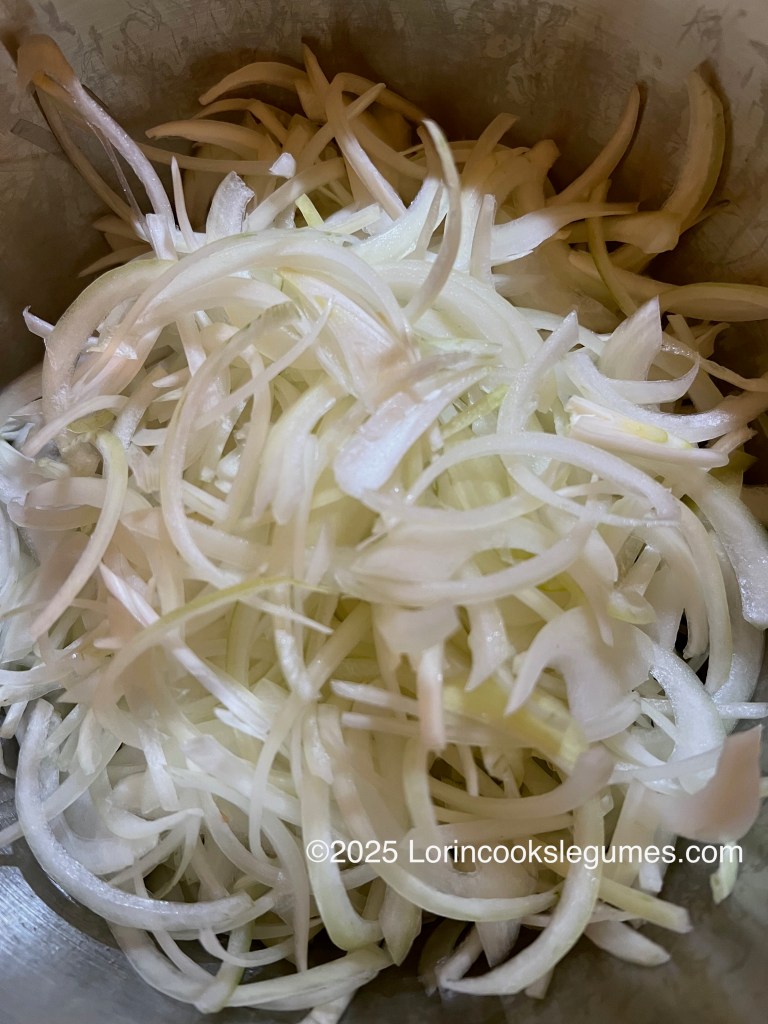
You’ll want to slice your onions relatively thinly so they will cook through in a few minutes of frying, but thick enough that they won’t completely fall apart as you mix the batter. You can use any variety of onions you like. The flavors will be slightly different, but with all the other spices in the mixture, you probably won’t notice that much. Red onion seems to be the onion of choice in most recipes that I looked at, but I used yellow onion because I already had them in the house.
Adding cornstarch to the batter helps make a crispier bhaji, that even retains a little bit of crispness in the refrigerator! If you have leftovers you can reheat them in a 400F oven for about 5-6 minutes.
Most of the recipes I looked at used water in the batter, but a couple just called for squeezing the onions with some salt to extract their natural juices. I followed the latter method with great success and didn’t need any additional water. I’m sure that there is a texture difference between the two methods, but I haven’t experimented to see what it is. I did leave a little water in the recipe, as needed, if you want to try that method, prefer not to make your hands smell like onion, or find that there isn’t enough water from the onions.
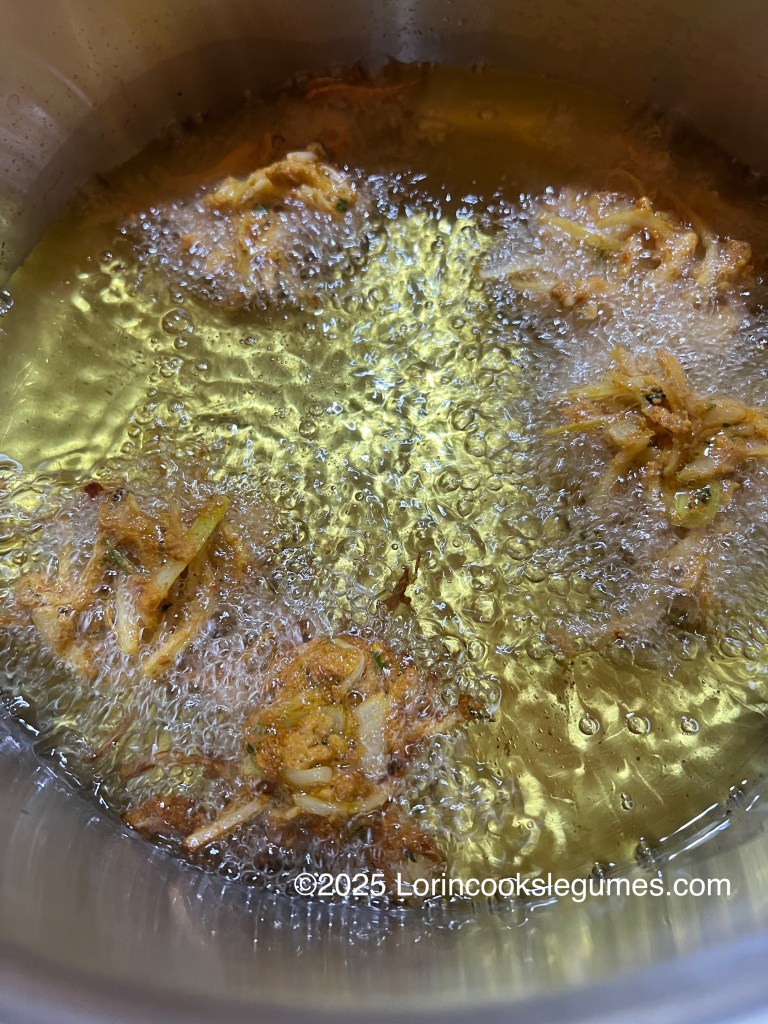
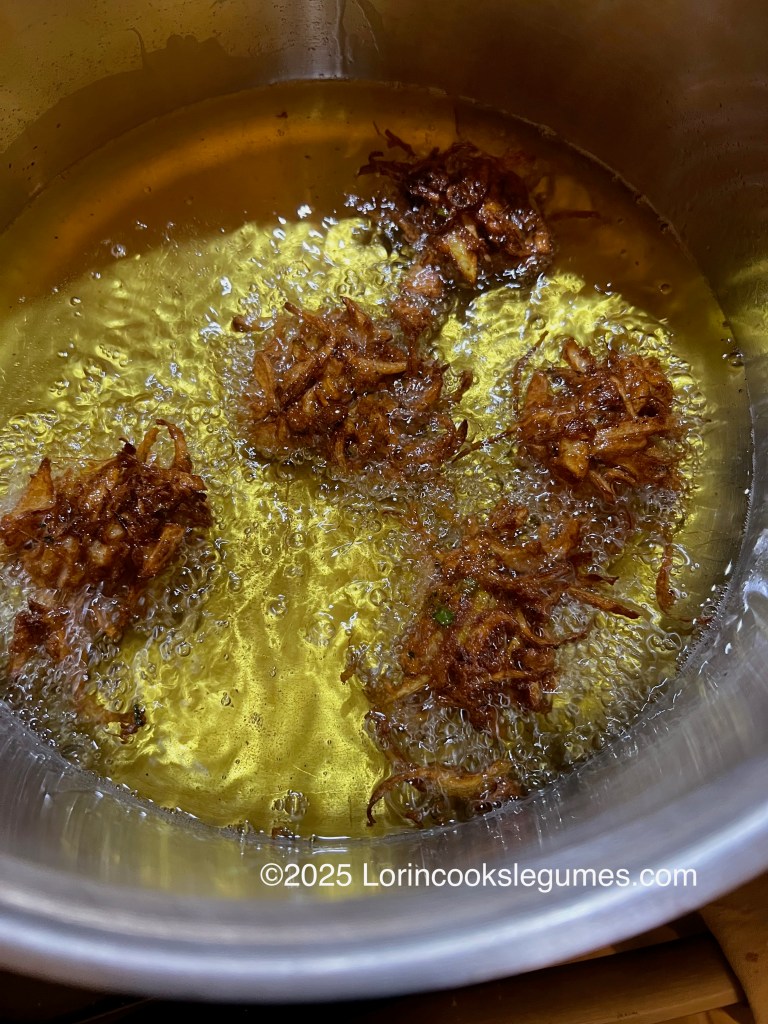
To fry your bhajis, you’ll need at least an inch of oil in a wide pan with deep sides. You could use a smaller saucepan but would have to fry in smaller batches to avoid overcrowding. You’ll want your oil between 350-365F. Too hot and the bhajis will burn before they cook through, and too cold will leave you with soggy, greasy bhajis. If you don’t have a thermometer, dip a wooden skewer (a wooden chopstick or the handle of a wooden spoon also works) into your oil, setting the end on the bottom of the pot. If bubbles form around the skewer and then rise up the skewer to the surface, you’re at a good temperature for frying. If they boil up rapidly you’re too hot. Once the oil is hot, you’ll want to turn the heat to medium and adjust as needed to maintain a good temperature. Remember that the oil will cool down when you add the bhajis so don’t add too many at once and let the oil come back to temperature between batches if necessary.
Besides sweet and sour sauce, I also made a yogurt-based, cilantro chutney, which was the more delicious choice, in my opinion. I just threw everything into the beaker that came with my immersion blender and blended it all together. In the future, I would probably blend everything except the yogurt and then mix it into the yogurt by hand, as blending yogurt at high speed breaks it down so my sauce was quite a bit runnier than I would have liked. My recipe has been adjusted to reflect that.






Onion Bhaji
Yield: ~20 bhajis, depending on size
Prep: 30 minutes
Cook: 30 minutes
Total: 1 hour
(As an Amazon Associate I earn from qualifying purchases.)
2 large onions
1 ¼ teaspoons ground coriander
1 ¼ teaspoon ground cumin
½ teaspoon ground turmeric
1 ¼ teaspoons Kashmiri chili powder
1 teaspoon ground fenugreek
½ teaspoon garlic salt
⅔ teaspoon garam masala
1 teaspoon chili flakes
⅔ teaspoon salt
¼ cup cilantro, finely chopped
OR
1 Tablespoon dried cilantro
1 green chili, finely chopped
1 Tablespoon minced ginger
120 g besan (aka gram flour or chickpea flour)
1 Tablespoon cornstarch
½ teaspoon baking soda
Water, if needed (up to ~ 1/3 cup)
~3 cups oil for deep frying
1 Tablespoon cilantro, minced
Sweet and sour sauce
Optional:
1 ½ teaspoon lemon juice
Optional cilantro-yogurt chutney:
½ cup + 2 Tablespoons yogurt
¾ cup cilantro
Juice of ½ lemon
¼ teaspoon salt
1 clove garlic
⅜ teaspoon ground cumin
1 ½ teaspoons sugar
2-3 Tablespoons water
Peel your onions and cut in half, root to stem. Slice the onion into thin half-moons. Place onion in a large bowl and use your hands to separate the slices into individual slivers.
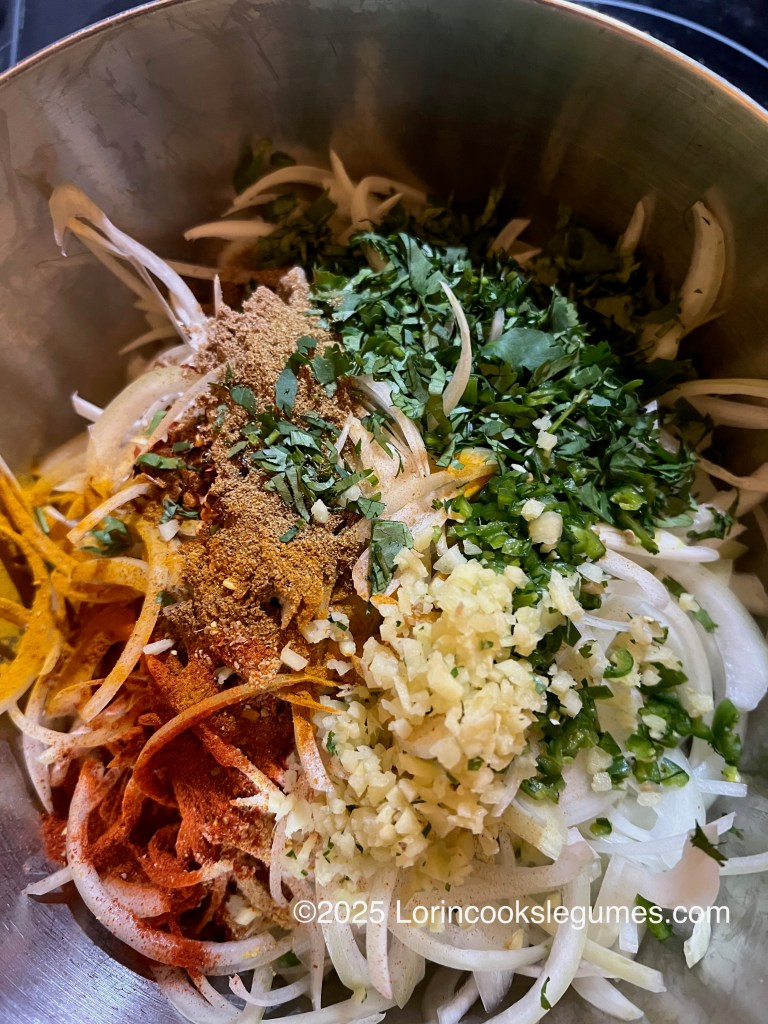
Add all the powdered spices, chili flakes, salt, ¼ cup cilantro, green chili, and ginger. Mix well, squeezing to extract juice from the onions, for several minutes, until the onion is limp and wet-looking.
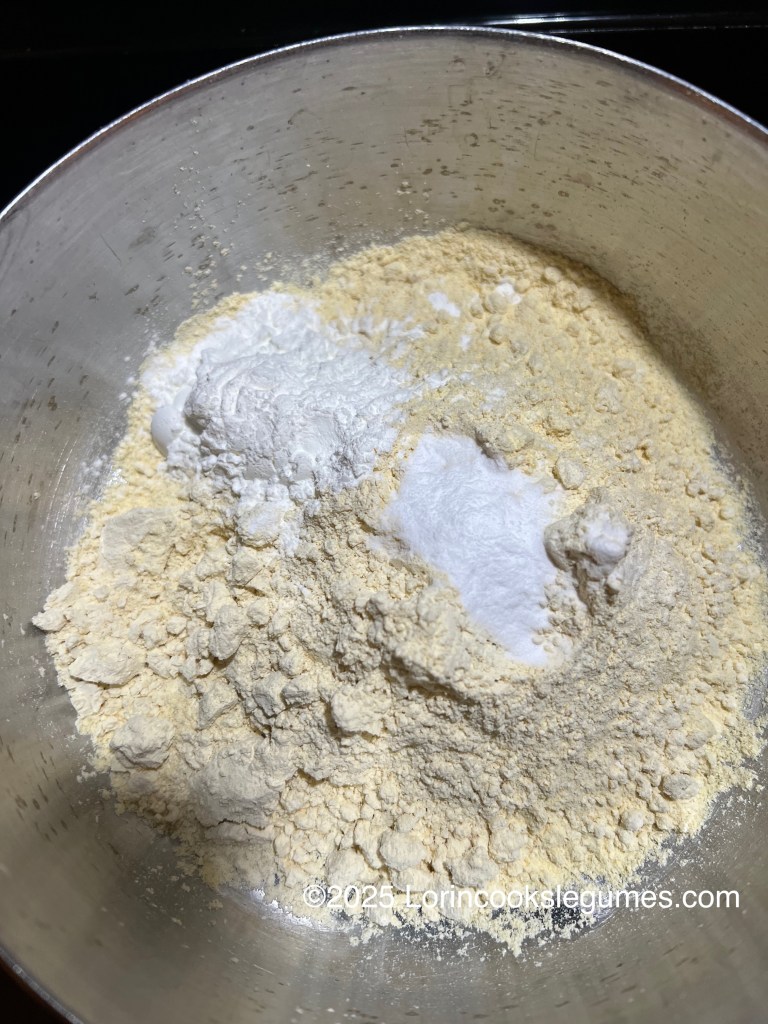
In a small bowl, mix together the besan, cornstarch, and baking soda.
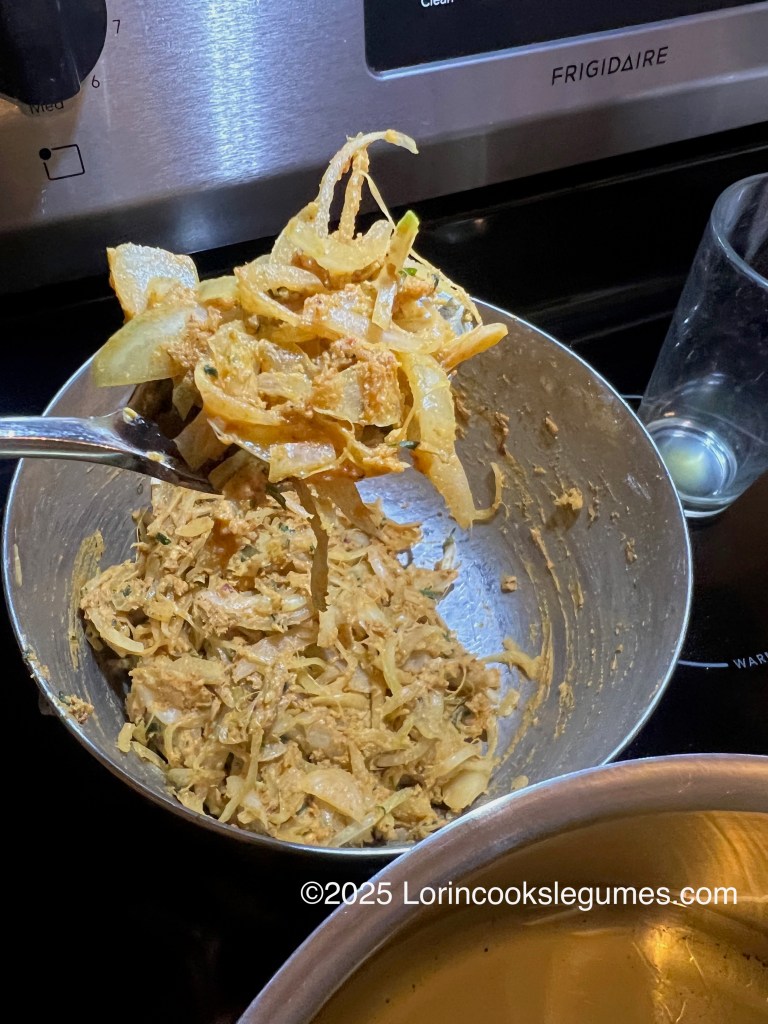
Add the besan mixture to the onions and continue to mix, squeezing, until a thick batter is formed. If necessary, add additional water, a teaspoon or two at a time. All the dry ingredients should be wet, and you should be able to pick up the whole mixture like a ball of bread dough. so don’t add too much water.
Heat oil in a wide, deep pan or wok, to between 350 and 365 F. If you don’t have a thermometer, put a wooden skewer into the oil, and you should see bubbles form at the base and slowly rise up to the surface. If they rise quickly the oil is too hot. Or you can drop a small blob of batter into the oil; if it rises to the surface within a couple seconds, the oil is hot enough. Adjust the heat as necessary throughout the frying process to maintain this temperature.
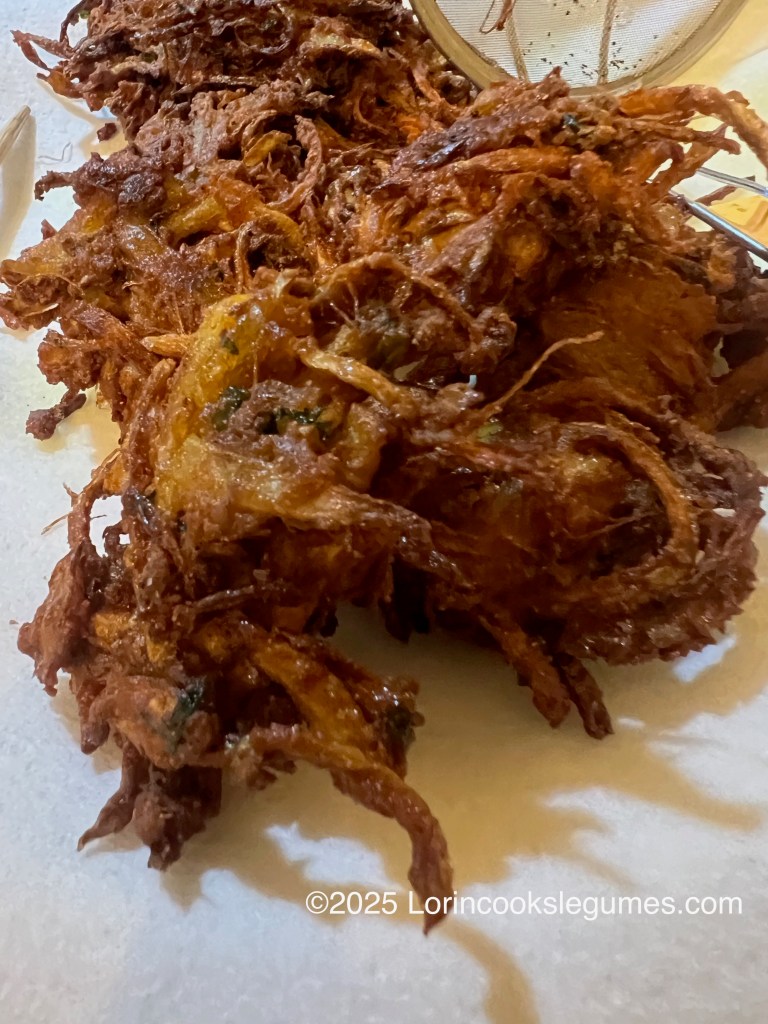
Once the oil is hot, scoop small balls of the onion mixture, about 2 Tablespoons, and drop them into the oil. Work in batches, 4-5 bhaji at a time, to avoid overcrowding the oil, which will cool the oil, causing soggy bhajis, and could cause the oil to boil over. Fry for about 6 minutes, turning once, until golden brown all over. Use a spider, tongs, or slotted spoon to remove the bhajis from the oil, and drain off any excess oil. Place on a wire rack or paper towels to finish draining.
Garnish with minced cilantro and serve hot with sweet and sour sauce, sweet chili sauce, or the cilantro chutney recipe in the optional ingredients (or any other chutney or sauce you prefer.)
For optional cilantro chutney: place yogurt in a small bowl. Combine the remaining ingredients in a deep container and use an immersion blender to puree. (you can also use a regular blender if you don’t own an immersion blender.) Mix the cilantro puree into the yogurt by hand.
 Lorin cooks Legumes