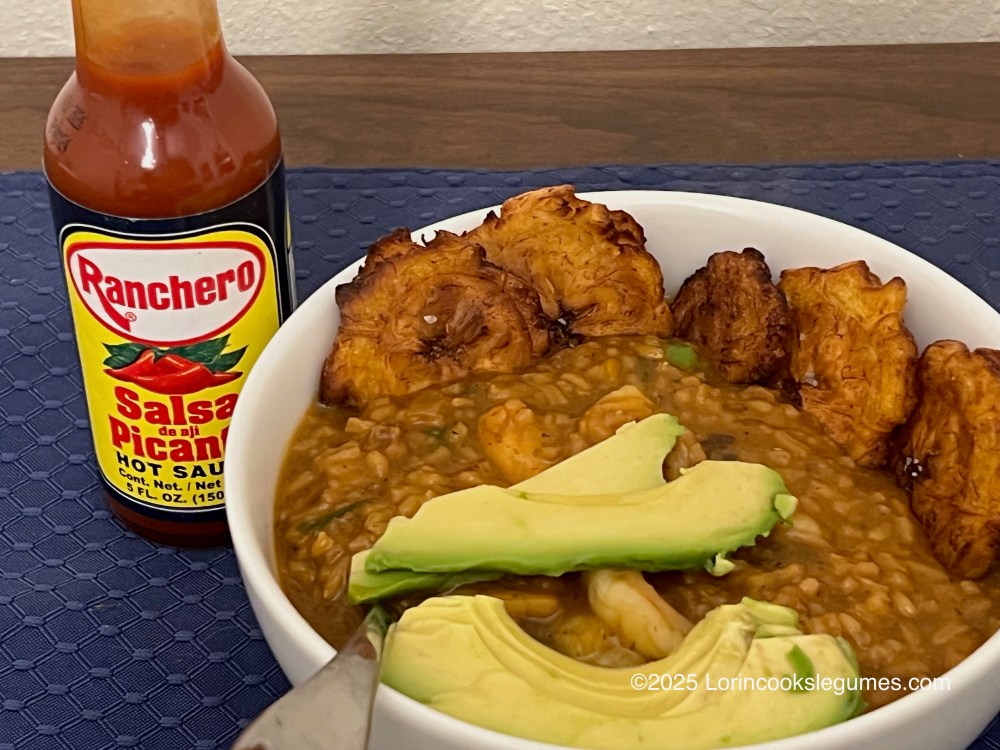
Versions of asopao are found in many Caribbean locales, including the Dominican Republic, where the addition of chicharrones de pollo (small bits of fried chicken or chicken skin) is characteristic or coconut milk and shrimp.
https://en.wikipedia.org/wiki/Asopao
I’m back! Sorry to have disappeared without notice for so long. I took the last couple of months off work to deal with a family crisis, and chose to also put my blog on hold during that time so that I could give my whole attention to that.
I’ve been back home and at work for a couple of weeks now, and I finally got some unique ingredients I had to order delivered, so I was able to make this recipe!
If you remember, two and a half months ago, when I last posted, I was embarking on a little quest to explore variations of asopao. Asopao, short for asopado (which translates roughly as “soup-like”), is a popular dish in Puerto Rico, the Dominican Republic, and across the Caribbean. Its basic ingredients are rice, some form of protein, tomato, and the basic flavor building blocks of Caribbean cuisine- onions, peppers, etc.
Camarones is Spanish for shrimp, which is probably the second most common version of this dish, after chicken.
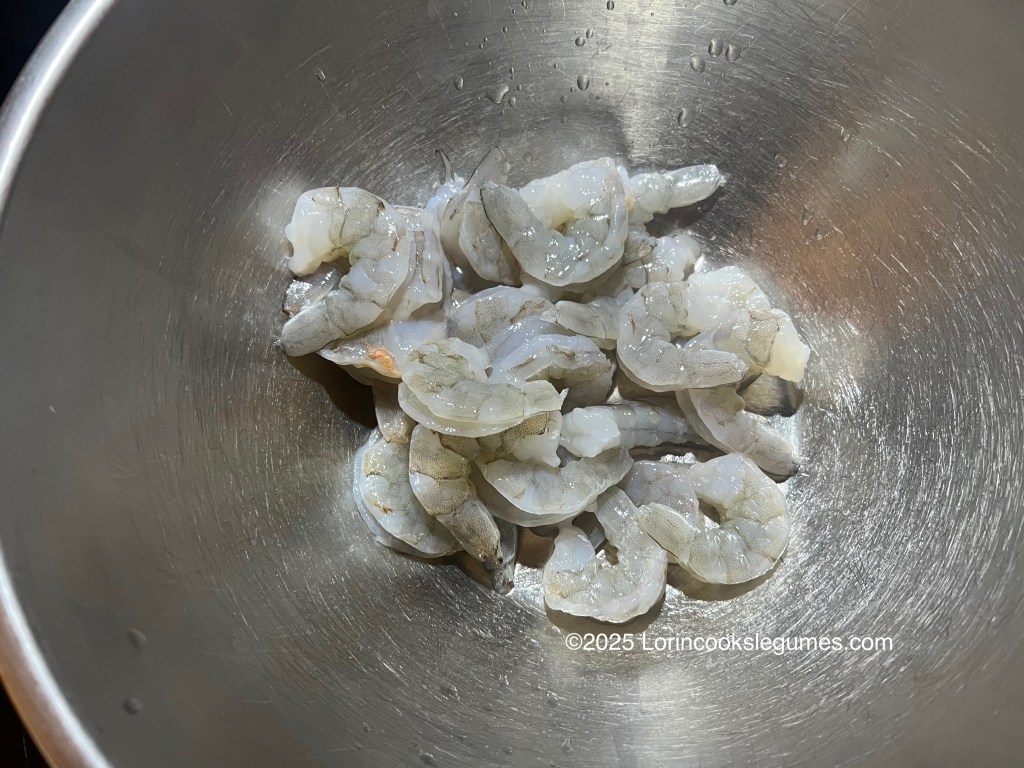
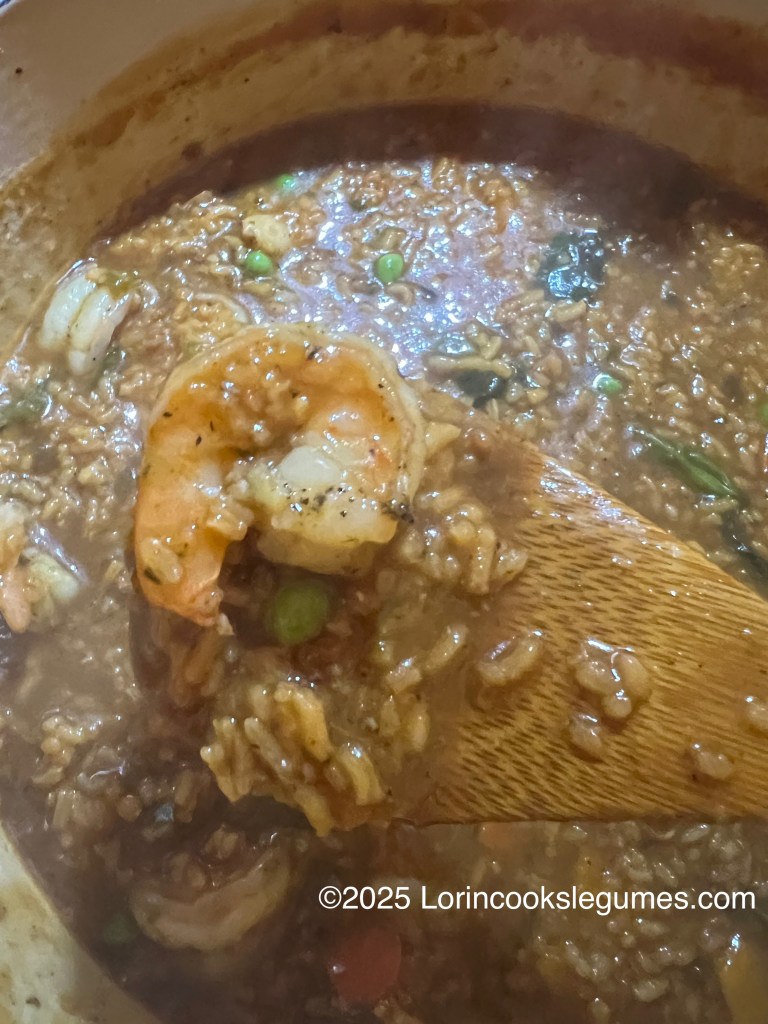
A lot of the recipes I looked at followed what seems to be the traditional method, adding the shrimp early in the cooking process to get lots of shrimp flavor into the dish. Of course, if you know anything about cooking shrimp, you know that means you’re going to get tough, rubbery shrimp. To find a balance between flavor and enjoyable texture, I minced a quarter of the shrimp and added them early to infuse the dish with flavor without leaving large pieces of chewy shrimp, then added the remaining shrimp after the pot comes off the flame and let the residual heat cook them once the rice was done. I also bought shell-on shrimp and used the shells to make simple shrimp stock to use as my cooking liquid.
The unusual ingredients I mentioned above are sour oranges, culantro, and Dominican oregano.
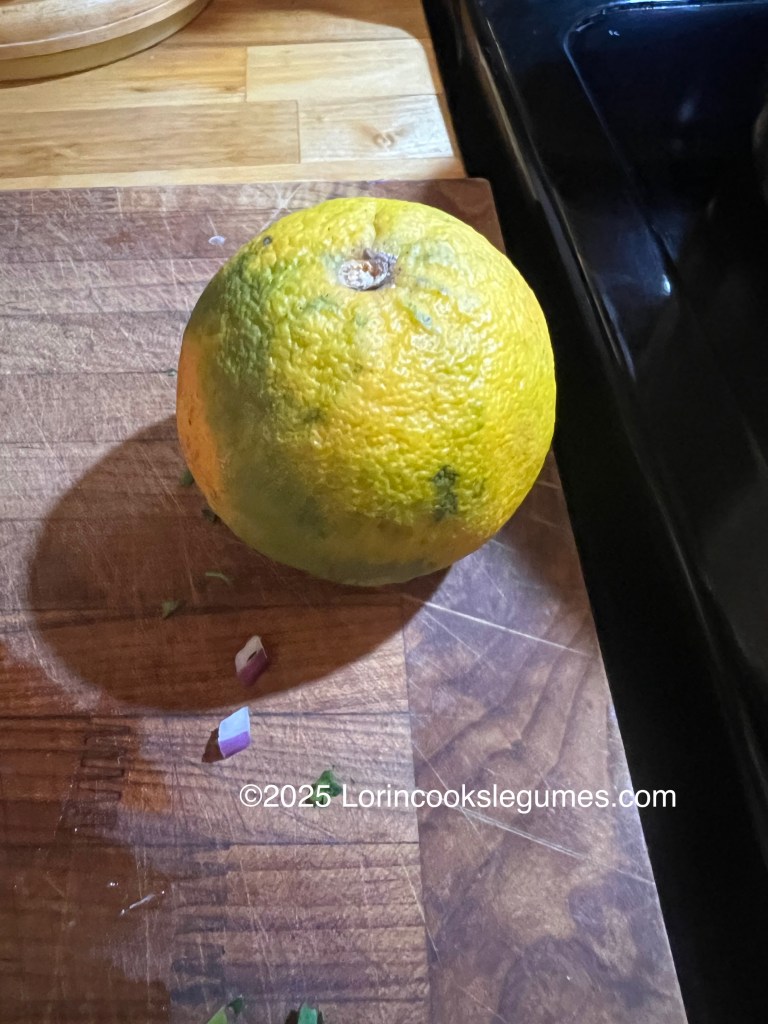
Sour oranges (aka Seville oranges or bitter oranges) look more or less like a standard orange, although the color is often more green/yellow mottled than uniform orange. The flesh, at least in the one I cut open, looks more like a lemon, and is full of seeds, and the taste is somewhere between orange and lemon. It tastes very much like orange juice, but without any sweetness. At the same time, I didn’t find it as acidic as lemon or lime juice. I purchased them from Food For Negus*. At $0.90 each, I bought 10 of them (and a couple of other items not related to this recipe) to justify the shipping cost. Juicing and freezing the rest of them for later use is on my list of things to accomplish in the next few days. If you don’t have sour oranges, the common recommendation is a mixture of lime juice and orange juice. Or just substitute lime juice.

Culantro, aka recao or chado benni, is a popular herb in Caribbean cuisine, as well as some other Latin American and Southeast Asian countries. It has long leaves similar in shape to dandelion leaves, and a similar flavor to cilantro, but stronger. (If you’re in the group of people to whom cilantro tastes like soap, culantro is probably going to cause the same reaction.) I searched, but could only find one supplier with fresh product in stock- the Congo Since 1979 store on Amazon*. Given that the product description says shipping included, but it clearly showed an additional shipping charge, and a delivery date almost two weeks out, I was a little worried that I was going to receive a box of rotten herbs shipped from China or somewhere, but since it was the only one I could find I went for it. I’m happy to say that the two-week lead was likely to ensure that they had fresh product to ship, and that it didn’t actually enter the USPS system until a couple of days before I received it, right on time for the originally promised delivery date. Given that it wasn’t packaged with any sort of insulation or ice packs, it arrived in remarkably good condition. 13 oz. was significantly more than I needed, but I tried freezing some of it, wrapping small bundles of 3-4 leaves each in aluminum foil, as I saw one of the vloggers whose recipe I watched do. The remaining couple of bunches are still in the fridge, and I should research other things to do with them. My impression, so far, is that using regular cilantro is probably a more than adequate substitute, and I wouldn’t suggest ordering it for just one or two recipes.

Dominican oregano is actually an entirely different family of plants from standard Greek oregano- Dominican oregano is in the verbena family, whereas Greek oregano is in the mint family. They do have somewhat similar appearance and flavors, but, unlike the culantro/cilantro situation, I would say that it was worth buying the Dominican variety for this recipes (It helps that its a jar of dry powdered product, rather than ¾ lb of fresh leaves that will spoil in a week or so.) I also bought this on Amazon*, along with some Dominican hot sauce*.
Two and a half months after writing this recipe, I no longer remember why I put both red and white onions in the recipe. Looking back at my notes, I only see one source recipe that had both varieties, which I think was from a vlogger who said she was using both because she had half an onion in the fridge that needed to be used. Since that’s how I cooked it this time, I’ll leave it as is, but feel free to use one or the other (red onion was the slightly more popular choice among the recipes I looked at).
If you recall my last post, you’ll remember that sofrito is the mirepoix of the Caribbean. Every cook has their own recipe, but it’s essentially a mixture of onion, peppers, and herbs that is used as the flavor base of almost every dish, and most cooks make up a whole blender full at a time and then use it all week. I had made a big batch following a recipe I found online, and froze the excess in ice cube trays, which made it super easy to just throw a couple of cubes in the pot for this recipe.








Asopao de Camarones Dominicano
Serves: 6
Prep: 30 minutes
Cook: 1 hour
Total: 1:30
1 ⅓ lb. raw shrimp, with shells
2 ¼ quarts water
¼ teaspoon black pepper
¾ Tablespoon salt
½ teaspoon Dominican oregano
2 Tablespoons sour orange juice*
OR
1 lime, juiced
2 Tablespoons olive oil
1 medium red onion, diced
½ small white onion, diced
½ cup carrot, chopped
¾ cup bell pepper, diced
OR
½ cubanelle pepper, diced
¾ Tablespoon parsley, minced
1 ½ Tablespoons sofrito
2 teaspoons mashed garlic
1 ¼ Tablespoon chicken bouillon
¾ Tablespoon sazon with achiote
2 Tablespoons tomato paste
OR
1 ⅔ cups tomato sauce
½ cup auyama (kabocha squash)
1 ⅓ cups white rice, rinsed
¼ cup cilantro,
3 culantro leaves,
½ cup canned or frozen peas
Hot sauce, to taste
½ lime
Optional:
1 ½ fish bouillon cubes, in place of chicken bouillon
¾ teaspoon achiote, in place of sazon
¾ cup beer
1 small potato, diced
3 ajicitos*
¾ teaspoon adobo
Peel the shrimp. Put the shells into a medium saucepan, and the shrimp into a bowl.
Add the water to the shrimp shells, and bring to a boil. Turn the heat to low and keep the shrimp stock hot until needed. You can add additional water as you use the stock to continue extracting flavor from the shells.
Mince ⅓ lb. of the shrimp and set aside. Season the whole shrimp with black pepper, salt, Dominican organo, and sour orange or lime juice. Set aside to marinate while you prepare the rest of the dish.
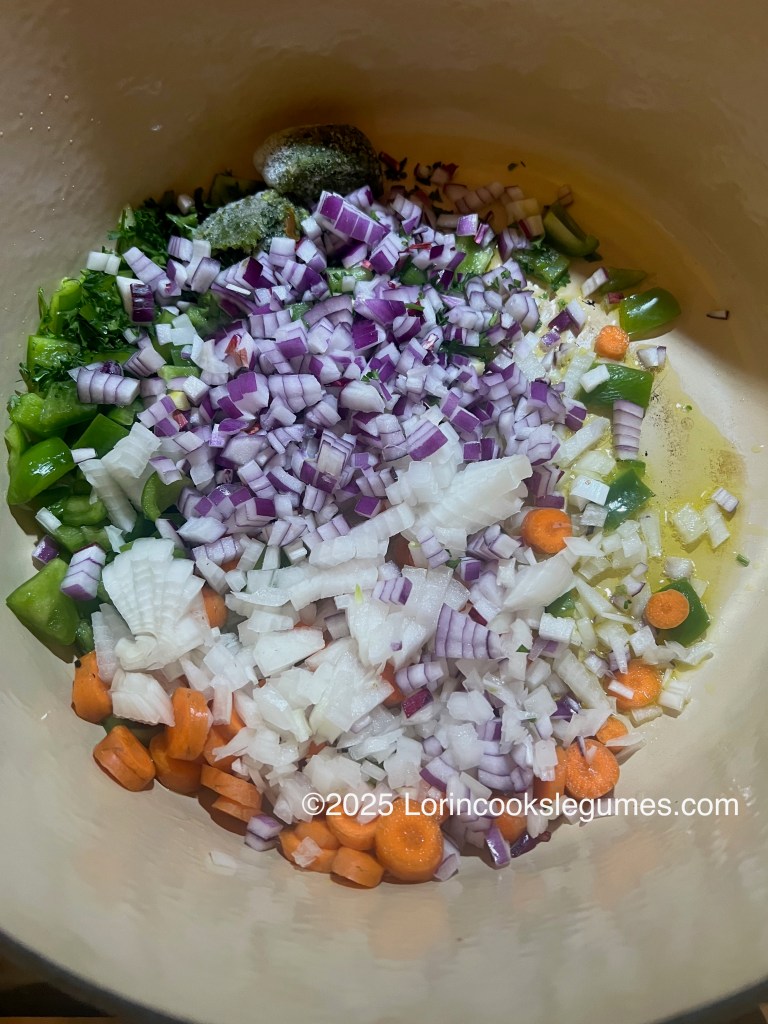
Heat olive oil in a large, heavy pot. Add onions, carrots, peppers, parsley, and sofrito. Sauté until the onion is translucent. Add the minced shrimp and cook, stirring, until it is opaque, about 2 minutes.
Add the garlic and sauté for one minute. Add the bouillon, sazon, and tomato paste or sauce. Mix well until the vegetables are coated in tomato. You may need to add a splash of the shrimp stock to help get the tomato paste evenly distributed. Cook for 5-10 minutes to build flavor.
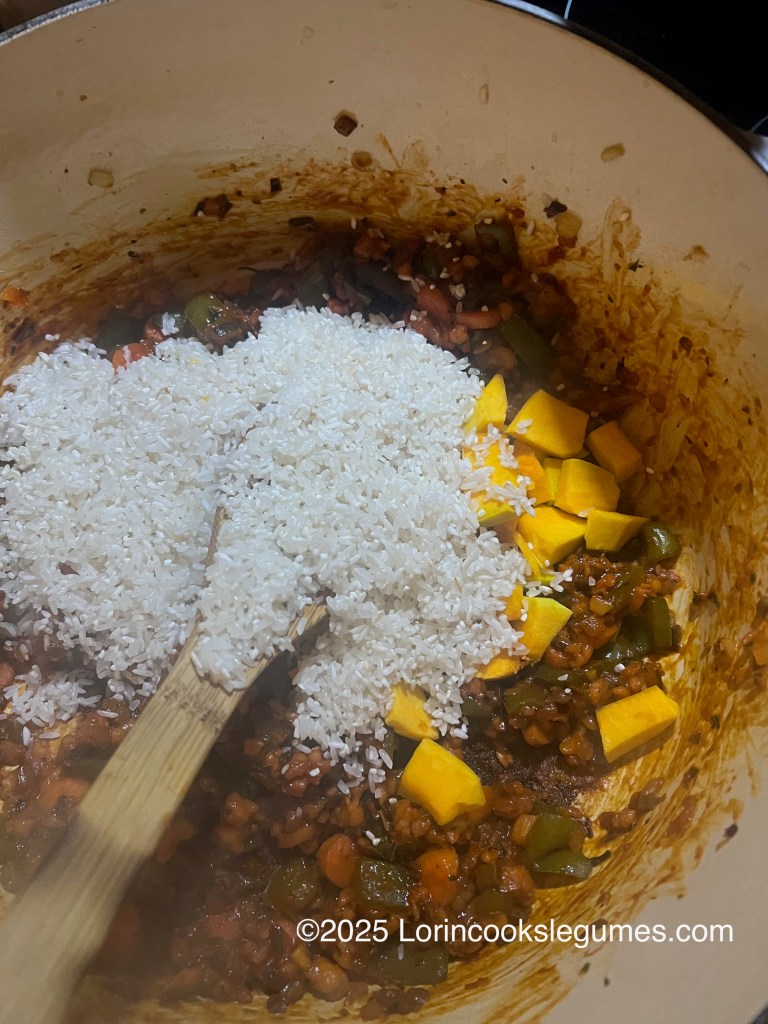
Add the auyama and rice, and mix well, coating the rice with the mixture in the pot. Ladle in enough hot shrimp stock to cover the rice by about ½ inch. Add the cilantro and culantro. Bring to a boil and reduce heat to simmer. Cook, stirring frequently and adding additonal shrimp stock (or hot water) as needed, until the rice has doubled in volume and is very soft.
Stir in the whole shrimp and peas. Turn off the heat and cover. Leave for 2-3 minutes, until shrimp is cooked through.
Remove cilantro and culantro stems. Check for seasoning and add hot sauce and lime juice to taste.
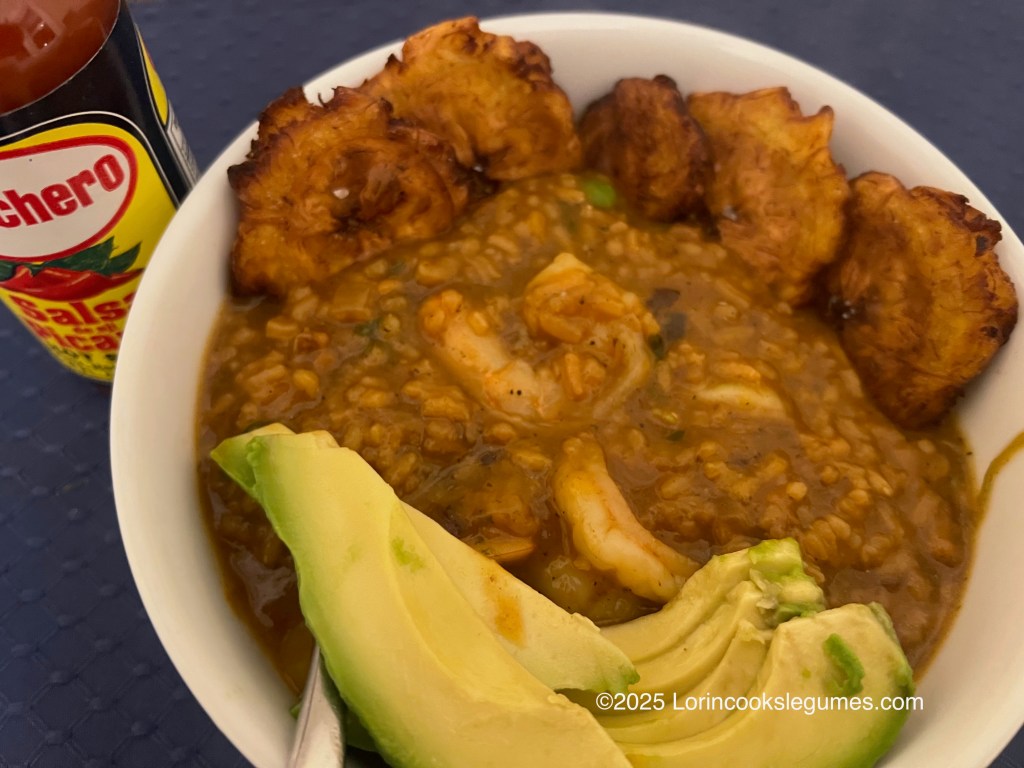
Serve with sliced avocado, tostones, and hot sauce on the side.
*As an Amazon Associate I earn from qualifying Amazon purchases.
I receive no compensation for mentioning any other websites or product.
 Lorin cooks Legumes
One Comment Add yours